
A rib eye fillet and a scotch fillet are the same piece of beef. So are rib fillet and cube roll.
Australian butchers use all four names for one cut from the rib primal, which is why the question comes up constantly and why Google currently answers it with a Reddit thread.
This guide sets out what each name means, the one distinction that genuinely changes the steak, why rib eye is not eye fillet, and what the cut should cost per kilo.
The Short Answer, and What Each Name Means
In Australia, scotch fillet, rib fillet, rib eye fillet and cube roll all describe the same muscle from the rib primal, and ribeye is the international name for the same steak.
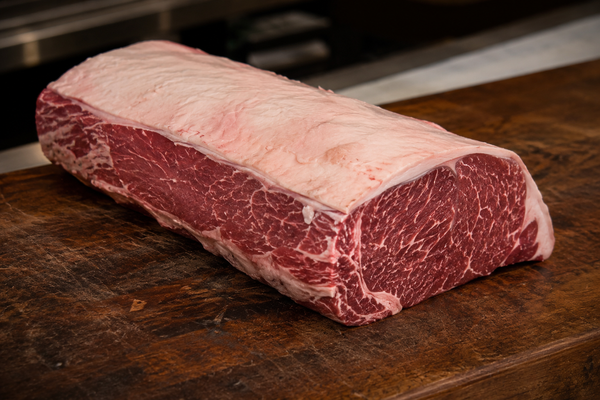
The names tell you how the cut has been prepared rather than what animal or muscle it came from. Cube roll is the whole boneless primal, before anyone has portioned it. Scotch fillet and rib fillet are the steaks sliced from that primal. Rib eye fillet sits somewhere between the two in everyday use.
| Name | Where you see it | Bone in or out | What it refers to |
|---|---|---|---|
| Cube roll | Australia, wholesale and butchers | Boneless | The whole rib primal muscle, unportioned |
| Scotch fillet | Australia and New Zealand | Boneless | A steak cut from the cube roll |
| Rib fillet | Australia | Boneless | The same steak, different butcher preference |
| Rib eye fillet | Australia | Usually boneless | The same steak, occasionally used for bone-in |
| Ribeye | United States, United Kingdom | Boneless | The standard international name for the boneless steak |
| Rib eye on the bone, cutlet, tomahawk | Australia | Bone in | The same muscle with the rib bone left attached |
The only real distinction in that list is bone in or bone out. Everything else is naming preference. Our guide to scotch fillet covers how the cut eats in more detail.
Where the Cut Comes From

Scotch fillet comes from the rib primal, running roughly from the sixth to the twelfth rib, which is the most heavily marbled section of the animal.
Two muscles make up most of a scotch fillet steak. The large central eye is the longissimus dorsi, the same muscle that continues down the back and becomes the striploin. Curling around one side of it is the spinalis dorsi, known to butchers as the rib cap, and it is the most marbled and most flavoursome piece of beef on the carcass.
That cap is the reason a scotch fillet eats richer than a porterhouse cut from the same long muscle a few ribs further back. It is also the first thing to look at when you are judging a steak. A generous, well-marbled cap is worth paying for. A steak cut from the far end of the primal, where the cap thins out, is a lesser steak at the same price.
Because the rib section does very little work, the muscle stays tender and the fat sits inside it rather than only around the edge, which is what marbling means in practice. Our explainer on beef marble score covers how that fat is graded.
Cube Roll, Scotch Fillet and Bone-In Rib Eye
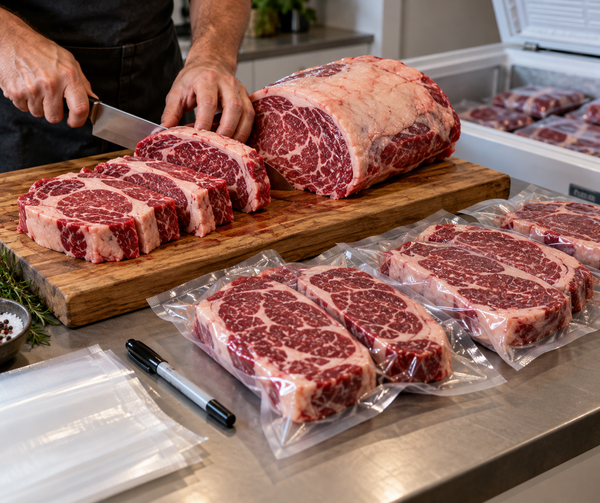
Cube roll, scotch fillet and bone-in rib eye are the same muscle presented three ways: whole, portioned, and left on the bone.
Buying the cube roll whole is the cheapest route per kilo and gives you control over thickness, which matters more on this cut than most. Cut your own steaks at 3cm and you get a steak that takes a hard sear without overcooking through the middle. Supermarket scotch fillet is often cut at 2cm, which is too thin to build a crust and hold a pink centre.
Leaving the bone in changes very little about the meat and quite a lot about the cooking. Bone-in steaks cook slightly more slowly next to the bone, hold heat longer, and look considerably better on the plate. The tomahawk is the same cut again, with the rib bone left long and frenched.
None of these presentations makes the beef itself better or worse. Grade, breed, feeding and the size of the rib cap decide that.
Rib Eye Fillet Is Not Eye Fillet
Rib eye fillet and eye fillet are completely different muscles from different parts of the animal, and the similar names cause the most expensive mix-up in the butcher shop.
Rib eye comes from the rib primal along the animal's back and is heavily marbled. Eye fillet, also called tenderloin, sits underneath the spine in the loin section and is the leanest and most tender muscle on the carcass. One is rich and beefy, the other is soft and mild. They cook differently and cost differently.
| Comparison | Rib eye fillet (scotch fillet) | Eye fillet (tenderloin) |
|---|---|---|
| Where from | Rib primal, along the back | Loin, under the spine |
| Marbling | Heavy | Very light |
| Texture | Rich, with bite | Soft and fine |
| Flavour | Strong and beefy | Mild |
| Price from | $39/kg | $45/kg |
| Best for | Pan searing, barbecue | Whole roasts, occasions |
If a recipe calls for rib eye and you buy eye fillet, you will end up with a leaner, milder steak that overcooks faster. The two are not substitutes.
How Scotch Fillet Compares to Porterhouse and Rump
Scotch fillet is the richest and most marbled of the three, porterhouse is the leaner all-rounder, and rump is the value option with the strongest beef flavour.
Scotch fillet earns its price through intramuscular fat. That fat melts during cooking, which is why the cut stays juicy even when it drifts past medium rare, and why it is more forgiving than a lean steak. The trade-off is flare-ups on a barbecue and a heavier eat if you are cooking two steaks each.
Porterhouse is firmer, leaner and cheaper, with its fat sitting mainly in a cap along one edge. It suits the grill better and slices more cleanly. Rump is the most affordable of the three and rewards accurate cooking, since it has the least fat to hide a mistake.
For most cooks the honest answer is to keep both scotch fillet and porterhouse in the freezer and choose by occasion rather than by loyalty.
What to Look For When Buying

Buy on marble score, cap size and thickness, and buy the cube roll whole if you want the best price per kilogram.
Marble score is the most reliable signal on this cut. MSA grading sets a floor on eating quality across Australian beef, and a marble score of 2 or above will noticeably outperform an ungraded steak. Beyond that, look at the rib cap. A thick, well-marbled cap curling generously around the eye is the sign of a steak cut from the better end of the primal.
Thickness comes next. Ask for 3cm, or cut your own from the whole piece. At Cost Cut Meats, whole scotch cube roll starts from $39/kg for the grass-fed AMG budget line, moving up through $49/kg for AMG Prime and $53/kg for the Southern Ranges grass-fed and finished, with bone-in Wagyu ribeye steaks at $77/kg. Those are entry prices at the largest box size, so smaller boxes cost more per kilogram.
You can see the boneless range in the scotch and rib fillet collection, and the bone-in options in the ribs and rib eye collection.
Conclusion
Rib eye fillet, scotch fillet, rib fillet and cube roll are one cut under four names, so buy on marble score, cap size and thickness rather than on the label. Bone in or bone out is the only distinction that changes anything. See the current scotch fillet range.