
Grass-Fed Wagyu Beef
Our Wagyu comes from Roam, an Australian program that raises cattle with full blood Wagyu genetics on open pasture in Queensland and New South Wales. It is grass fed rather than grain finished, graded at marble score 2+ and aged before dispatch.
That gives you finer, more even marbling than standard grass-fed beef, with a cleaner flavour than grain-fed Wagyu. Every cut is sold whole or in boxes and priced per kilo, so you portion it at home.
Wagyu cut by cut
- Wagyu eye fillet (tenderloin), MB2-3+: the most tender cut, with more marbling than a standard grass-fed fillet. Each fillet weighs 1.5kg to 2.5kg and is halal certified. Cut medallions or roast it whole.
- Wagyu porterhouse (striploin), MB2-3+: a whole striploin of about 3.5kg with a firm fat cap. Cut thick porterhouse steaks for the barbecue or roast it whole.
- Bone-in Wagyu ribeye steaks, MB2+: 350g to 450g steaks, dry aged on the bone, frenched and individually sealed. Halal certified.
What marble score means
Marble score measures the fine fat running through the meat, on the Australian scale from 0 to 9+. MB2+ sits at the moderate end of the beef marble score scale: enough marbling to keep each steak juicy and rich, without the heaviness of very high grain-fed scores.
Wagyu beef price per kg
Prices checked 18 October 2026.
| Wagyu cut | Smallest order | Full box | Double box |
|---|---|---|---|
| Eye fillet (tenderloin), MB2-3+ | 5kg (2 fillets), $66/kg | 20kg, $56/kg | 40kg, $53/kg |
| Porterhouse (striploin), MB2-3+ | 3.5kg piece, $44/kg | 20kg, $34/kg | 40kg, $29/kg |
| Bone-in ribeye steaks, MB2+ | 9kg half box, $82/kg | 18kg, $77/kg | 36kg, $72/kg |
Half boxes sit in between: $61/kg for eye fillet (10kg) and $39/kg for porterhouse (10kg).
How to cook grass-fed Wagyu
Treat it like a premium scotch or porterhouse: a hot pan or barbecue, medium rare to medium, then a five-minute rest. The marbling makes it more forgiving than a lean eye fillet, and the difference between Wagyu and Angus shows most in how juicy it stays.
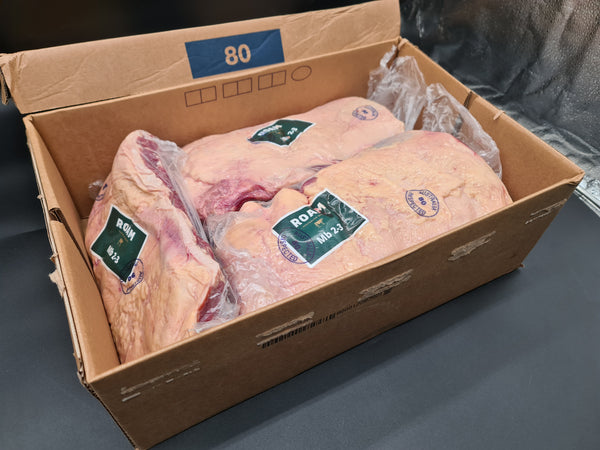
Porterhouse from $42/kg - Grass-Fed Wagyu MB2-3+ - Roam
The kind of porterhouse that costs three times this much at most butchers. This wagyu porterhouse striploin gives you 100% grass-fed Wa...

Oven Prepared Ribeye Steaks (bone-in) from $77/kg - Grass-fed Wagyu MB2+ - Roam
Tender, richly marbled, and ready to roast. These bone-in Wagyu ribeye steaks are cut from premium grass-fed Wagyu MB2+ cube ...
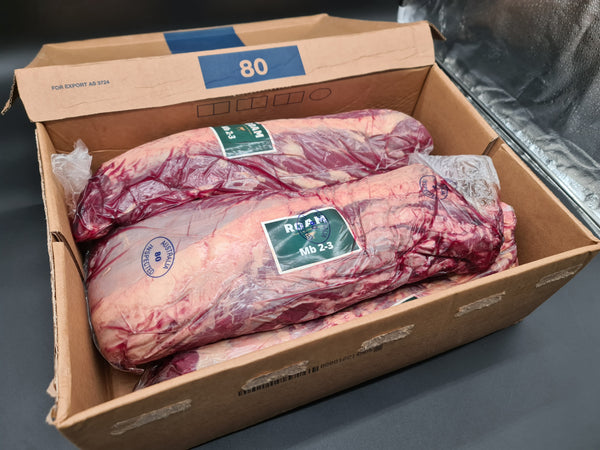
Scotch Cube Roll from $54/kg - Grass-fed beef MB2+ - Roam
Steakhouse quality from a brand that lets the cattle do the work. This MB2+ scotch cube roll is grass-fed Australian beef sold whole at r...
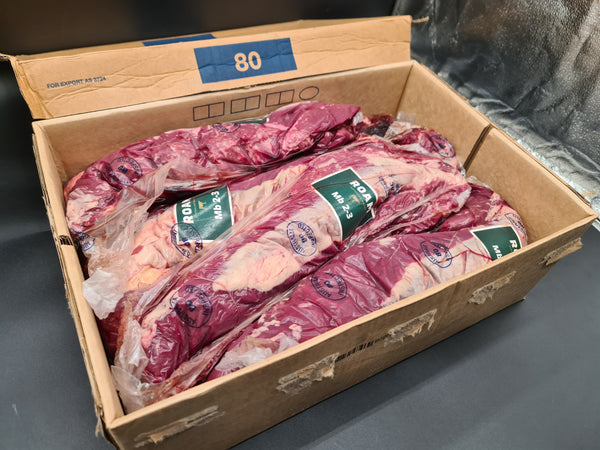
Tenderloin Wagyu from $56/kg - Grass-fed Beef MB2-3+ - Roam
The most tender cut on the animal, now in a price bracket that finally makes sense. This MB2 grass-fed tenderloin is Australian beef grad...
Learn More
More about grass-fed wagyu beef
Is your Wagyu grass fed?
Yes. Our Wagyu comes from Roam, whose cattle carry full blood Wagyu genetics and are raised on open pasture in Queensland and New South Wales rather than finished on grain in a feedlot. The result is finer marbling than standard grass-fed beef with a cleaner flavour than grain-fed Wagyu.
What marble score is your Wagyu?
Our Roam Wagyu is graded at marble score 2+, with the eye fillet and porterhouse at MB2 to MB3+. That is moderate, even marbling suited to steaks and roasts, rather than the very high scores seen in grain-fed Wagyu.
How much does Wagyu beef cost per kg?
As of 18 October 2026, Roam Wagyu porterhouse is $34/kg in a 20kg full box or $44/kg for a single 3.5kg piece, Wagyu eye fillet is $56/kg in a full box, and bone-in Wagyu ribeye steaks are $77/kg in an 18kg full box.
Is your Wagyu halal certified?
Some of it. The Roam Wagyu eye fillet and the bone-in Wagyu ribeye steaks are in the Halal Certified collection. Check that collection, or ask us, before ordering for a Halal requirement.
How do I cook Wagyu steak?
Cook it hot and fast in a heavy pan or on the barbecue to medium rare or medium, then rest it for five minutes. Season simply with salt and pepper. The marbling keeps it juicy, so there is no need for heavy sauces or marinades.