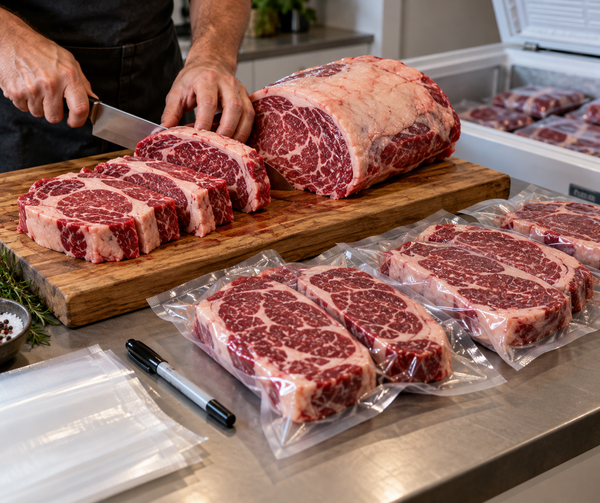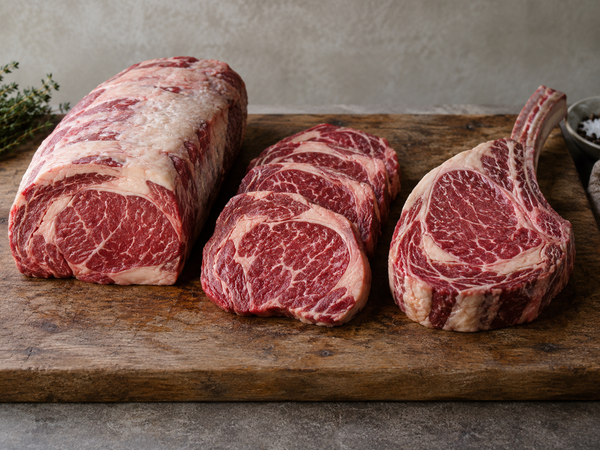

Choosing between Wagyu vs Angus beef comes down to one honest question: where is your money best spent?
Both are premium options, but they suit very different moments.
This guide compares Wagyu and Angus on marbling, flavour, texture, cooking, price and real-world value for Australian buyers. By the end you will know which beef is worth buying for an everyday dinner, a weekend barbecue, or a special occasion, and how to get the most from each cut.
Wagyu vs Angus beef: the quick answer
Wagyu is the richer, more marbled and more tender beef and the better special-occasion splurge, while Angus delivers classic, full beefy flavour and stronger everyday value. For most weeknight meals, Angus is the smarter buy. For a standout meal where tenderness and richness matter most, Wagyu earns its premium.
The table below sums up the core differences at a glance.
| Factor | Wagyu | Angus |
|---|---|---|
| Marbling | Very high, fine and even | Moderate, reliable |
| Flavour | Buttery, rich, umami | Classic, full, beefy |
| Texture | Soft, melt-in-the-mouth | Tender with more bite |
| Best for | Special occasions, gifts, small rich portions | Everyday dinners, BBQ, meal prep |
| Typical marble score | MB 4 to 9+ | MB 0 to 4 |
| Price (AUD, indicative) | Higher, premium | More affordable |
What is Wagyu beef?
Wagyu is beef from Japanese cattle breeds prized for exceptional intramuscular fat, which gives it its signature marbling and buttery texture. The word Wagyu simply means Japanese cow, and the breeds were selected over generations for fine fat distribution rather than size. That genetic marbling is what sets it apart from ordinary beef.
The fat in Wagyu has a lower melting point than standard beef fat, so it begins to soften around body temperature. That is the science behind the famous melt-in-the-mouth bite. The result is a small, rich portion that feels indulgent rather than heavy.
In Australia, most Wagyu is crossbred or fullblood Australian Wagyu, grain-finished to build marbling and graded on a marble score scale. Australian Wagyu has earned a global reputation, and it often gives you most of the Japanese experience at a more approachable price. You can see the range across our Wagyu collection.
What is Angus beef?
Angus is beef from the Aberdeen Angus breed, originally from Scotland, valued for consistent marbling and a deep, traditional beef flavour. It has become the benchmark for quality everyday beef in Australia because it performs so reliably across cuts and cooking methods.
Angus marbles well without reaching Wagyu levels, which keeps it leaner while still tender and juicy. Grass-fed Angus tends to taste cleaner and more savoury, while grain-finished Angus carries a little more richness and fat. Both deliver the hearty, satisfying flavour most people picture when they think of a good steak.
For Australian buyers, Angus hits the sweet spot of quality, versatility and price. It is the cut you reach for on a Tuesday night and still feel good serving to guests. If you want to understand how different Angus cuts behave, our guide to Australian beef cuts is a useful starting point.
Marbling, fat and marble score
Marbling, the thin threads of fat running through the muscle, is the single biggest difference between Wagyu and Angus. More marbling means more flavour, moisture and tenderness, which is exactly why Wagyu commands a premium. In Australia, marbling is measured on the AUS-MEAT marble score, and beef is also assessed through the Meat Standards Australia (MSA) grading system for eating quality.
Angus typically sits lower on the scale, while Wagyu climbs much higher, especially fullblood and Japanese grades. The table below shows roughly where each type lands.
| Beef type | Typical marble score | What it means for eating |
|---|---|---|
| Grass-fed Angus | MB 0 to 2 | Lean, clean, savoury |
| Premium grain-fed Angus | MB 2 to 4 | Richer, juicier, very versatile |
| Crossbred Australian Wagyu | MB 4 to 7 | Noticeably buttery and tender |
| Fullblood Australian Wagyu | MB 7 to 9+ | Intense richness, soft texture |
| Japanese A5 Wagyu | MB 8 to 12 | Ultra-rich, best in small portions |
Flavour and texture compared

Wagyu wins on richness and softness, while Angus wins on traditional, full-bodied beef flavour. They are different experiences rather than better or worse, and the right choice depends on what you enjoy.
Wagyu delivers a buttery, almost custard-like texture as the fat softens, with a sweet, umami depth. It is luxurious in small amounts, and a little goes a long way. Many people find a large Wagyu steak too rich to finish, which is part of why portion size matters.
Angus gives you that satisfying chew and meaty flavour that suits a generous steak. It holds its own with bold seasoning, sauces and sides, and it feels like a proper meal rather than a tasting portion. If you love a classic steakhouse experience, Angus is hard to beat.
Best ways to cook each
Wagyu needs a light touch to protect its fat, while Angus is forgiving across almost any cooking method. Matching your method to the beef is how you get the most from either one.
Cooking Wagyu
Cook Wagyu hot and fast in a dry, heavy pan, and keep portions small and thinner so the fat renders without becoming greasy. Season simply with salt, avoid extra oil, and rest it briefly. Aim for medium-rare so the marbling melts. A premium cut like a scotch fillet shows Wagyu marbling beautifully.
Cooking Angus
Angus suits grilling, pan-searing, roasting and slow cooking equally well, which makes it the versatile everyday choice. A thick porterhouse grills perfectly, while a whole eye fillet roasts into a tender centrepiece. Rest it well and it rewards you every time.
Everyday use and meal prep
Angus is the better choice for regular meals and meal prep, while Wagyu is best saved for occasions. The difference comes down to richness, portion size and cost per serve.
For high-protein meal prep, leaner Angus cuts give you more usable, satisfying portions without the heaviness of heavy marbling. A value cut like beef rump stretches further across the week and reheats well, which makes it a practical staple.
Wagyu, by contrast, is built for impact rather than volume. Serve it in smaller portions, ideally fresh rather than reheated, so the texture stays at its best. Both freeze well when stored properly, so buying in bulk and portioning is smart either way. Save Wagyu for the meals that deserve it, and let Angus carry the everyday cooking.
So which should you buy?

Buy Angus for everyday quality and value, and buy Wagyu when the occasion calls for something special. The decision table below matches each beef to what you actually want from the meal.
| If you want | Buy | Why |
|---|---|---|
| Everyday premium dinners on a budget | Angus | Classic flavour, versatile, better value |
| A weekend BBQ for a crowd | Angus | Feeds more and stands up to the grill |
| A special-occasion centrepiece | Wagyu | Marbling and tenderness justify the splurge |
| A memorable food-lover gift | Wagyu | Feels genuinely luxurious |
| High-protein meal prep | Angus | Leaner and cost-effective per serve |
| A first taste of luxury beef | Australian Wagyu (MB 6 to 7) | Best balance of wow factor and value |
Conclusion
Neither beef is simply better. Angus is the everyday premium choice that delivers classic flavour and real value, while Wagyu is the indulgent splurge worth saving for occasions. Many Australian kitchens are best served by keeping both on hand. Browse the Cost Cut Meats Wagyu range and our Angus cuts to buy the right beef for the moment.