Know Your Beef

Australian Beef Cuts

Tap any part of the animal to explore the cut, how it eats, how to cook it, and what to order.

Interactive diagram · tap a cut to begin
SHORT LOIN &STRIPLOINFILLET/TENDERLOIN

Tap a cut on the diagram to see the details

Select a cut above to see its details.

Beef Cut

Brisket

The king of low and slow, rich, tender and built for barbecue.

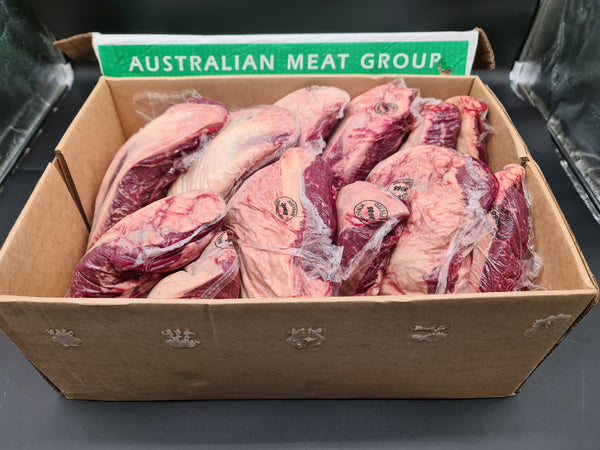
Brisket comes from the underside chest area between the front legs, a well-exercised muscle with ample connective tissue. There are two briskets per animal, accounting for around 7.2% of the carcase. Hard-working and full of collagen, brisket is the definitive low-and-slow cut, rewarding patience with tender, richly flavoured beef that has become the centrepiece of barbecue culture.

Given long, gentle cooking, the connective tissue melts and the meat becomes succulent and deeply savoury, perfect for slicing or pulling apart. Rushed, it stays tough, so time is everything with this cut.

Brisket is made up of two parts. The point end has a high degree of connective tissue and is best for slow, wet methods like braising and casseroling, pulling apart beautifully for shredded beef. The navel end is more square in shape and slices up more neatly, but it too needs the same low, slow cooking. The whole brisket combines both.

Brisket is rich, beefy and full of collagen, which melts over a long cook into tender, moist meat with a luxurious texture. The point end is fattier and ideal for shredding, while the leaner navel end slices cleanly. Cooked low and slow, brisket develops deep, savoury flavour and a tenderness that belies its hard-working origins.

Cook brisket low and slow, whether smoked on a barbecue, braised, or cooked in a casserole. Long, gentle heat breaks down the connective tissue into tender, succulent meat.

Use the point end for shredded and pulled beef, as it falls apart when cooked, and the navel end when you want neat slices.

Pro tip: give brisket all the time it needs and rest it well before slicing or pulling. Slicing across the grain keeps every piece tender and juicy.

  • Low-and-slow barbecue and smoking
  • Pulled and shredded beef
  • Braises and casseroles
  • Corned beef and pastrami styles
How do you cook brisket so it is tender?+
Brisket needs long, slow, moist cooking. Smoke, braise or casserole it low and slow for hours so the abundant connective tissue melts into tender, succulent meat. Rushing it leaves it tough. Rest it well afterwards and slice across the grain for the most tender result.
What is the difference between point end and navel end brisket?+
The point end has more connective tissue and fat, making it ideal for shredding and pulled beef as it falls apart when cooked. The navel end is more square in shape and slices up more neatly. Both come from the chest and both need low, slow cooking.
Why is brisket so popular for barbecue?+
Brisket is a hard-working chest muscle full of collagen. Cooked low and slow, that collagen melts into gelatine, basting the meat and creating tender, deeply flavoured beef. This transformation, plus its generous size, has made brisket the centrepiece of barbecue and smoking culture.
Can I make corned beef from brisket?+
Yes. Brisket is a classic choice for corning and pastrami-style preparations, alongside silverside. Its connective tissue and rich flavour respond well to the slow, moist cooking that curing and simmering provide, producing tender, full-flavoured results ideal for slicing.
Beef Cut

Cheek

A slow-cook secret weapon, rich in collagen and meltingly tender.

Beef cheek is the hard-working facial cheek muscle, a lean cut packed with connective tissue known as collagen. Constant use during the animal's life means it needs slow, moist cooking, but the reward is exceptional, deeply flavoured beef with a silky, melting texture that has made cheek a favourite on restaurant menus.

As the collagen breaks down over a long, gentle cook, it enriches the meat and the sauce around it, giving braises and curries a luxurious body that is hard to achieve any other way.

Beef cheek is typically sold whole or diced. It is perfect in curries, braises and stews, and also holds its shape well when cooked whole, making it as suited to an elegant plated dish as to a rustic, comforting one.

Cheek is lean but loaded with collagen, which transforms over a long cook into a rich, gelatinous, melt-in-the-mouth texture. The flavour is deep and intensely beefy, and the meat takes on the character of its braising liquid beautifully. Few cuts deliver such a luxurious result from such a humble starting point.

Braise or slow-cook beef cheek for hours in a moist environment. Gentle, extended heat is essential to break down the collagen into that signature silky texture.

Cook it diced in curries and stews, or keep it whole, where it holds its shape and makes an impressive plated centrepiece in a rich sauce.

Pro tip: do not rush beef cheek. The magic happens slowly, so give it the long, low cook it needs and the collagen will reward you with a tender, glossy result.

  • Slow-braised beef cheeks
  • Rich curries and stews
  • Restaurant-style plated dishes
  • Deeply flavoured winter cooking
How do you cook beef cheeks?+
Beef cheeks need long, slow, moist cooking. Braise them for several hours so the abundant collagen breaks down into a silky, melting texture. They work diced in curries and stews or cooked whole as a plated centrepiece, taking on the rich flavours of their braising liquid.
Why are beef cheeks so tender when slow-cooked?+
Beef cheeks are full of collagen from constant use as a facial muscle. Over a long, gentle braise that collagen converts to gelatine, enriching the meat and giving it a luxurious, melt-in-the-mouth texture. Cooked quickly they would be tough, but slow cooking makes them exceptional.
Can I cook beef cheek whole?+
Yes. While beef cheek is often diced for curries and braises, it also holds its shape well when cooked whole. A whole braised cheek in a rich sauce makes an elegant, restaurant-style centrepiece, glossy and tender after a long, slow cook.
What does beef cheek taste like?+
Beef cheek has a deep, intensely beefy flavour and, once slow-cooked, a rich, silky texture. The collagen melts into the meat and sauce, giving dishes a luxurious body. It readily absorbs the flavours of its braising liquid, making it a favourite for full-flavoured slow cooking.

Beef Cut

Chuck & Blade

The hard-working shoulder, deeply flavoured and made for low, slow cooking.

Chuck and blade come from the shoulder region, a hard-working area made up of multiple muscles with layers of fat and connective tissue. Together they offer some of the most flavoursome, versatile and great-value beef on the animal. The balance of meat and fat is exactly what gives slow-cooked dishes their rich, gelatinous body.

These cuts are the backbone of curries, stews and braises, rewarding time and gentle heat with full, savoury flavour and a wonderfully tender texture. The shoulder also yields a few surprisingly tender steaks for those who know where to look.

From the chuck come the chuck roll, popular for slow cooking and thinly sliced Korean-style grilling; chuck ribs, rich and meaty; chuck steak for slow cooking; and the tender chuck eye log. From the blade come the bolar blade roast and blade steak, both versatile, plus the oyster blade, which can be cut into oyster blade steak or trimmed of its connective tissue and silver skin to become the lean, tender flat iron steak.

Chuck and blade are rich and full-flavoured, with plenty of fat and connective tissue that melt into a gelatinous, satisfying texture over a long cook. Most of these cuts are best slow-cooked, where they turn meltingly tender, while the flat iron and chuck eye log offer genuine tenderness for quicker methods. The flavour throughout is deep and beefy.

Slow-cook the majority of chuck and blade cuts. Braising, casseroling and stewing break down the connective tissue into tender meat with a rich, full-bodied sauce.

For the tender exceptions, flat iron steak and oyster blade steak can be barbecued or pan-fried. Score the line of gristle in an oyster blade steak to stop it curling.

Pro tip: the chuck roll and blade also shine thinly sliced for fast Korean-style grilling, a quick way to enjoy the shoulder's big flavour without a long cook.

  • Curries, stews and braises
  • Slow-cooked pulled beef
  • Korean-style thin grilling
  • Flat iron steak for quick cooking
What is the best way to cook chuck?+
Chuck is best slow-cooked. Its connective tissue and fat break down over a long, gentle braise or stew into tender meat with a rich, gelatinous sauce, making it perfect for curries and casseroles. Thinly sliced, the chuck roll also works for fast Korean-style grilling.
What is flat iron steak?+
Flat iron steak is cut from the oyster blade in the shoulder, with the central line of connective tissue and silver skin removed. This leaves lean, easy-to-use portions that are extremely tender, juicy and full of flavour, one of the few shoulder cuts suited to quick cooking.
What is the difference between oyster blade and flat iron?+
They come from the same muscle on the shoulder blade. Oyster blade steak keeps the thin line of gristle running through it, which should be scored to stop curling. Flat iron steak has that connective tissue removed and is cut into lean, tender portions ideal for the pan or grill.
Why is chuck so good for slow cooking?+
Chuck is a hard-working shoulder area with multiple muscles, fat and connective tissue. During a long, slow cook that connective tissue melts into gelatine, basting the meat and creating a rich, full-bodied result. This balance of meat and fat is what makes chuck a slow-cooking favourite.

Beef Cut

Cube Roll

Home of the scotch fillet and rib roast, richly marbled and full of flavour.

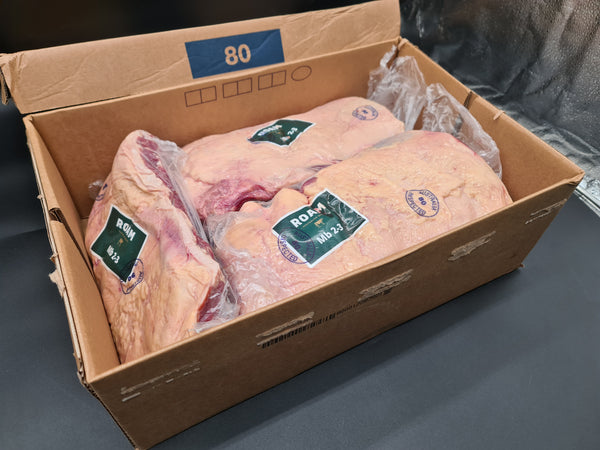
Raw 100% grass-fed Black Angus scotch cube roll, AMG grass-fed ribeye beef
From $39/kg

Scotch Cube Roll (A Budget) from $39/kg - 100% Grass-Fed Angus Beef - AMG

Grass-Fed & Finished100% Hormone & Antibiotic Free

Real grass fed beef at supermarket prices, without the supermarket compromise. This budget scotch cube roll is 100% grass-fed Black Angu...

$147.00/ 3kg
Raw 100% grass-fed Black Angus scotch cube roll, AMG Prime ribeye beef
From $49/kg

Scotch Cube Roll (Prime) from $49/kg - 100% Grass-Fed Angus Beef - AMG

Grass-Fed & Finished100% Hormone & Antibiotic Free

The cube roll most Aussie cooks should be reaching for. This AMG Prime scotch cube roll is 100% grass-fed Black Angus from Victoria's r...

$236.00/ 4kg
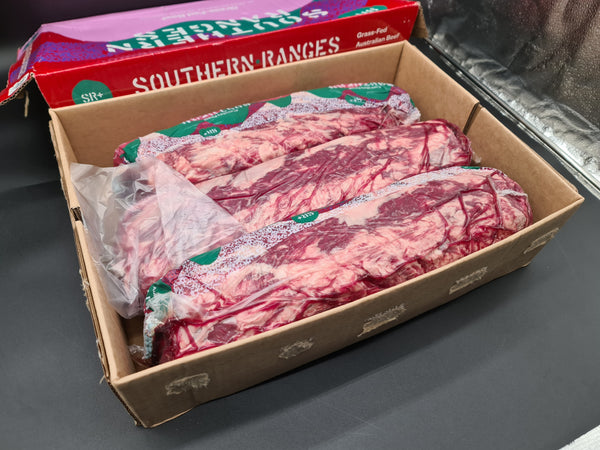
Raw grass-fed and finished Angus scotch cube roll from Southern Ranges, MSA graded ribeye beef
From $53/kg

Scotch Cube Roll from $53/kg - 100% Grass-Fed & Finished Angus - Hormone Antibiotic Free - Southern Ranges SR+

Grass-Fed & Finished100% Hormone & Antibiotic Free

Steakhouse quality at a fair price. This grass-fed scotch cube roll gives you around 4kg of 100% grass-fed and finished Australian Angus...

$315.00/ 5kg
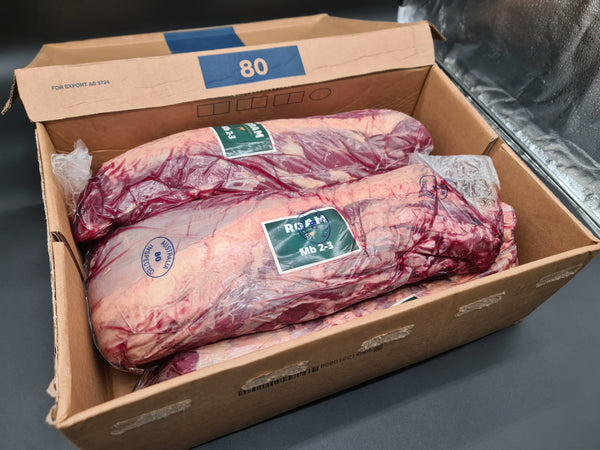
Raw grass-fed MB2+ scotch cube roll from Roam, whole marbled ribeye beef
From $54/kg

Scotch Cube Roll from $54/kg - Grass-fed beef MB2+ - Roam

Grass-Fed & Finished100% Hormone & Antibiotic Free

Steakhouse quality from a brand that lets the cattle do the work. This MB2+ scotch cube roll is grass-fed Australian beef sold whole at r...

$320.00/ 5kg

The cube roll, also known as the rib-eye roll, is prepared from the forequarter, running along the back of the animal from the 4th to the 13th rib, between the chuck and the striploin. It is a support muscle that does little heavy work, which keeps it tender, while generous marbling gives it a rich, full flavour that buyers love.

This is one of the most prized eating cuts on the animal, equally impressive as a roast or portioned into steaks. Its marbling melts during cooking, basting the meat from within for a juicy, flavoursome result.

From the cube roll come the scotch fillet steak, a boneless, tender and tasty steak that excels with fast, hot cooking; the scotch fillet roast for a special roasting occasion; the standing rib roast, which is the scotch fillet with the rib bones left on for extra flavour; and the rib cutlet, a bone-in steak cut from the standing rib roast. Remove the bone from a cutlet and you have a scotch fillet.

The cube roll is rich, tender and generously marbled. The fine threads of fat running through the muscle melt as it cooks, delivering a juicy, full-flavoured bite with real depth. The texture is tender and yielding thanks to the muscle's light workload, making it one of the most satisfying cuts to eat.

Cook scotch fillet steaks fast and hot in a pan or on the grill. The marbling renders into the meat, so aim for medium-rare to medium to enjoy it at its juiciest.

For a standing rib roast or scotch fillet roast, roast in a hot oven and rest well. The rib bones on a standing rib roast add extra flavour during cooking.

Pro tip: let the marbling work for you. Avoid cooking scotch fillet past medium, as the rendered fat is what makes this cut so juicy and flavoursome.

  • Scotch fillet steak dinners
  • Standing rib roasts for entertaining
  • Special-occasion roasting
  • Rich, marbled steak on the grill
What is the difference between cube roll and scotch fillet?+
They are the same primal at different stages. The cube roll, or rib-eye roll, is the whole boneless muscle from the back of the animal. Sliced into steaks it becomes scotch fillet, and kept whole it makes a scotch fillet roast. Add the rib bones and it is a standing rib roast.
How should I cook scotch fillet?+
Cook scotch fillet fast and hot in a pan or on the grill, aiming for medium-rare to medium. Its generous marbling melts during cooking to baste the meat from within. Avoid cooking past medium, as the rendered fat is what makes this cut so juicy.
What is a standing rib roast?+
A standing rib roast is the scotch fillet with the rib bones still attached. The bones add extra flavour as it cooks, and the tender, well-marbled meat makes it a spectacular centrepiece. Roast it in a hot oven and rest well before carving between the bones.
Is cube roll a tender cut?+
Yes. The cube roll is a support muscle that does little heavy work, keeping it tender, and its generous marbling adds richness and juiciness. It is one of the most prized eating cuts on the animal, excellent as both a steak and a roast.

Beef Cut

Flank

A lean, full-flavoured steak that loves both quick searing and slow cooking.

Flank, also known as bavette, is a long, flat steak taken from a single muscle beneath the loin in the abdominal area. It is lean and full of robust beef flavour, and remarkably versatile, performing well both seared quickly over high heat and braised low and slow. For buyers who want big flavour and flexibility, flank delivers.

Its open grain soaks up marinades beautifully and carries flavour right through the meat, which is part of what makes flank such a favourite for stir-fries, fajitas and quick weeknight cooking.

The main preparation is the flank steak itself. Sliced thin it is perfect for a fast stir-fry, while a longer, slower cook lets it be shredded with a fork for burritos, tacos and salads. However you cook it, slicing across the grain is essential for tenderness.

Flank is lean with a pronounced, robust beef flavour and a distinctive long, open grain. That grain makes slicing across it essential, as cutting with the grain leaves it chewy. Cooked quickly and sliced thin, or braised until shreddable, flank turns tender and intensely savoury, with very little fat to get in the way.

For a quick result, sear flank fast over high heat to medium-rare, then rest and slice thinly across the grain. This keeps the lean meat tender and juicy.

For a different approach, braise or slow-cook flank until it can be shredded with a fork, ideal for burritos, tacos and salads.

Pro tip: always slice flank thinly and across the grain. Its long muscle fibres can eat tough if cut the wrong way, so the slicing matters as much as the cooking.

  • Stir-fries and fajitas
  • Fast, high-heat searing
  • Shredded beef for tacos and burritos
  • Marinated, full-flavoured steak
How do you cook flank steak so it is tender?+
Flank is lean, so either cook it fast over high heat to medium-rare, or braise it slowly until shreddable. In both cases, slice it thinly across the grain before serving. The slicing is crucial, as flank's long, open grain eats tough if cut the wrong way.
What is flank steak best used for?+
Flank is hugely versatile. Sliced thin it is perfect for stir-fries and fajitas, while a slow cook lets it be shredded for burritos, tacos and salads. Its robust flavour and open grain also make it excellent for marinating before a quick, hot sear.
What is bavette?+
Bavette is another name for flank steak. It is a long, flat steak from a single muscle beneath the loin in the abdominal area, prized for its robust flavour and versatility. Whether labelled flank or bavette, it is best sliced thinly across the grain.
Should I marinate flank steak?+
Marinating works very well with flank. Its lean, open grain absorbs marinades deeply, carrying flavour right through the meat and helping to tenderise it. After marinating, sear it quickly over high heat, then rest and slice thinly across the grain.

Beef Cut

Inside Skirt

Well-marbled and bursting with flavour, a high-heat hero for the grill.

Skirt steak sits on the inside of the abdomen wall, just below the ribs. It can come from either of two long, flat, well-marbled muscles, the diaphragm and the abdominal muscle, and is famous for its outstanding, concentrated beef flavour. For cooks who chase flavour above all, skirt is a cut to know.

The marbling running through skirt is its secret weapon, rendering under high heat to deliver a rich, savoury punch. Like flank, it has a coarse grain that demands slicing across the grain for tenderness.

The main preparation is skirt steak, versatile and full of flavour, best cooked on high heat and sliced thick against the grain before serving. Closely related is the hanger steak, also known as thick skirt, of which there is only one per animal, hanging from the last rib against the diaphragm. Not especially tender but robustly flavoured, hanger is also best cooked quickly over high heat.

Skirt is intensely flavoured and noticeably marbled, with a loose, coarse grain. The marbling melts under high heat to baste the meat, while the open texture means it is best cut thick across the grain for tenderness. The flavour is among the most pronounced of any cut, bold, savoury and deeply satisfying.

Cook skirt fast and hot. A ripping-hot grill or pan renders the marbling and builds a flavourful crust, with the inside kept to medium-rare for tenderness.

Hanger steak follows the same rule, cook it quickly over high heat, as it is robustly flavoured but not particularly tender.

Pro tip: rest the steak, then slice it thick against the grain. Skirt's coarse grain can eat tough if sliced thin or the wrong way, so cutting it correctly is key.

  • High-heat grilling and barbecue
  • Fajitas and tacos
  • Bold, full-flavoured steak
  • Quick-cooked hanger steak
How do you cook skirt steak?+
Cook skirt steak fast and hot on a grill or in a heavy pan. The high heat renders its marbling and builds a flavourful crust while keeping the inside medium-rare. Rest it, then slice thick against the grain, which is essential for tenderness given the coarse, open grain.
Why is skirt steak so flavourful?+
Skirt steak comes from well-marbled muscles on the abdomen wall. Under high heat, that marbling melts and bastes the meat, delivering one of the most concentrated, savoury beef flavours of any cut. Its bold taste makes it a favourite for fajitas, tacos and high-heat grilling.
What is hanger steak?+
Hanger steak, also called thick skirt, is a single muscle that hangs from the last rib against the diaphragm, with only one per animal. It is robustly flavoured though not especially tender, and like skirt it is best cooked quickly over high heat and sliced across the grain.
Why must I slice skirt against the grain?+
Skirt has a loose, coarse grain with long muscle fibres. Slicing thick across the grain shortens those fibres, making each bite tender. Cut with the grain or too thin, and the same steak can eat tough, so the way you slice it is as important as how you cook it.

Beef Cut

Long Fillet / Tenderloin

The most tender cut of all, lean, refined and effortlessly impressive.

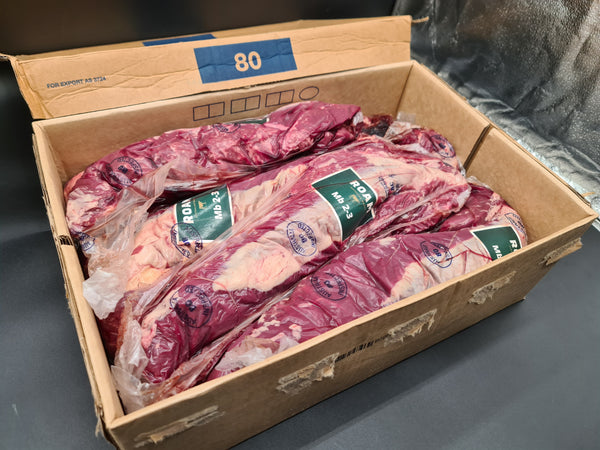
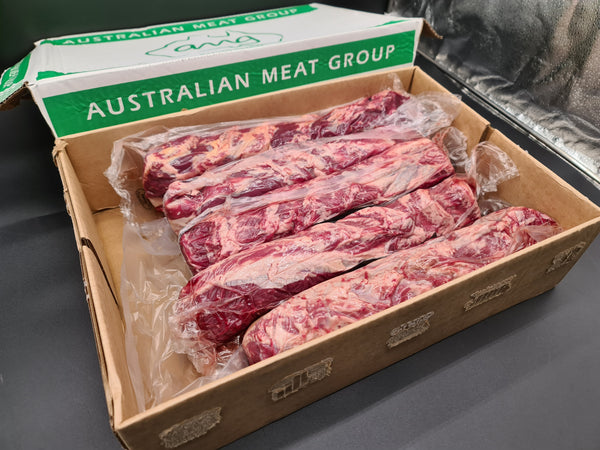
Raw grass-fed MB2-3+ beef tenderloin, whole eye fillet from Roam, marbled
From $56/kg

Tenderloin Wagyu from $56/kg - Grass-fed Beef MB2-3+ - Roam

Grass-Fed & Finished100% Hormone & Antibiotic Free

The most tender cut on the animal, now in a price bracket that finally makes sense. This MB2 grass-fed tenderloin is Australian beef grad...

$330.00/ 5kg
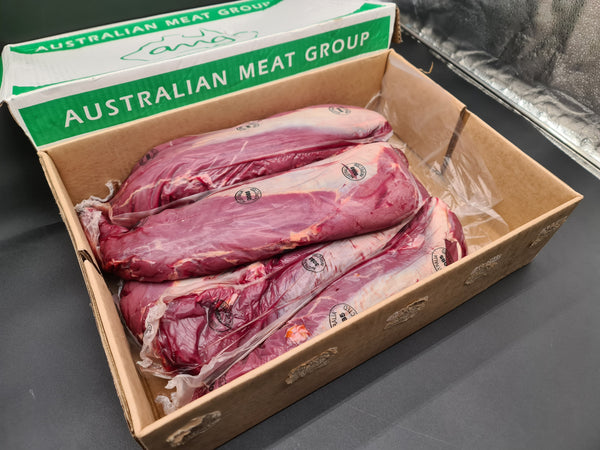
Raw grass-fed Angus beef tenderloin, whole eye fillet, AMG
From $45/kg

Tenderloin from $45/kg - Grass-Fed Beef - AMG

Grass-Fed & Finished100% Hormone & Antibiotic Free

The most tender cut on the animal at a price that finally makes weeknight steak nights possible. This grass-fed beef tenderloin is grass-...

$300.00/ 6kg

The tenderloin is a long, lean muscle that sits tucked along the spine, and it is quite simply the most tender cut of beef available. Because it does almost no work during the animal's life, it carries very little connective tissue, giving it that famously soft, buttery texture. It is the source of premium steaks and a centrepiece cut for special occasions.

The tenderloin is also a component of other celebrated cuts, contributing the fillet side of the T-bone and sitting near the scotch fillet. On its own, it is the height of refinement on the plate.

From the tenderloin come the fillet steak, also known as filet mignon, with little or no fat and unrivalled tenderness, and the butt fillet, taken from the larger end and ideal for roasting whole or portioning into steaks. Both are lean and best suited to fast, hot cooking that locks in moisture, flavour and that signature tenderness.

The tenderloin is exceptionally tender, with a fine, smooth grain and almost no connective tissue. Its flavour is mild and elegant rather than bold, letting the texture take centre stage. This is a cut you can cut with a fork, refined and luxurious, which is why it commands a premium and suits a special meal.

Cook fillet steaks fast and hot. A quick sear in a screaming-hot pan or grill builds a crust while keeping the centre soft and pink. Because it is so lean, take care not to overcook it.

Roast the butt fillet whole for a showpiece centrepiece, or wrap it for a Beef Wellington. Sear the outside first, then roast briefly and rest well.

Pro tip: the tenderloin is lean and unforgiving of overcooking. Aim for rare to medium-rare and use a light touch, as there is little fat to protect it from drying out.

  • Filet mignon and fine-dining steaks
  • Beef Wellington
  • Special-occasion roasts
  • Elegant, lower-fat steak dinners
Why is the tenderloin the most tender cut?+
The tenderloin sits tucked along the spine and does almost no work during the animal's life. Muscles that work less stay more tender, and with very little connective tissue, the tenderloin develops its famously soft, fork-tender texture, the most tender cut of beef you can buy.
What is the difference between fillet and filet mignon?+
They are essentially the same cut. Fillet, or filet mignon, is portioned from the tenderloin. It has little or no fat and unrivalled tenderness, best cooked fast and hot. The butt fillet comes from the larger end and suits roasting whole or cutting into steaks.
How do I cook fillet steak without drying it out?+
Cook it fast and hot, and aim for rare to medium-rare. The tenderloin is very lean with little fat to protect it, so overcooking dries it out quickly. Sear for a crust, keep the centre pink, and rest before serving for a moist, tender result.
Can I use tenderloin for Beef Wellington?+
Yes, the butt fillet or a centre-cut tenderloin is the classic choice for Beef Wellington. Its even shape and tenderness make it ideal wrapped whole. Sear the outside first to build flavour, then wrap and roast briefly so the fillet stays tender and pink.

Beef Cut

Round / Knuckle

Lean, tender and weight-bearing, a smart pick for roasts and medallions.

The knuckle sits above the knee joint at the front of the hind leg and is made up of three muscles. It is prepared from the thick flank by removing the cap muscle and the fat that comes with it, leaving a lean, even cut that buyers value for its tenderness and low waste.

Despite being a working part of the leg, the eye of knuckle is the lean, central weight-bearing muscle and carries little connective tissue. That makes it more tender than many other leg cuts and a versatile option for the kitchen.

The key cut here is the eye of knuckle, used for roasting whole or prepared further into medallions. It produces a notably tender and delicious result when cooked with moist, slow methods, and its clean, even shape makes it easy to portion.

Round and knuckle cuts are lean and fine-grained with a mild, clean beef flavour. The eye of knuckle in particular is tender for a leg muscle, with little connective tissue to work through. The texture is smooth and even, which is why it carves so neatly into roasts and medallions.

Roast the eye of knuckle whole using gentle, moist heat to keep the lean meat tender and juicy. Sear first for colour, then roast low so it does not dry out.

For medallions, slice the eye of knuckle into even rounds and cook them quickly on a hot surface, or keep them whole and tie for a uniform roast.

Pro tip: because round cuts are lean, avoid overcooking. Pull them while still pink in the centre and rest well, so the meat stays moist rather than drying out.

  • Lean roasts with minimal waste
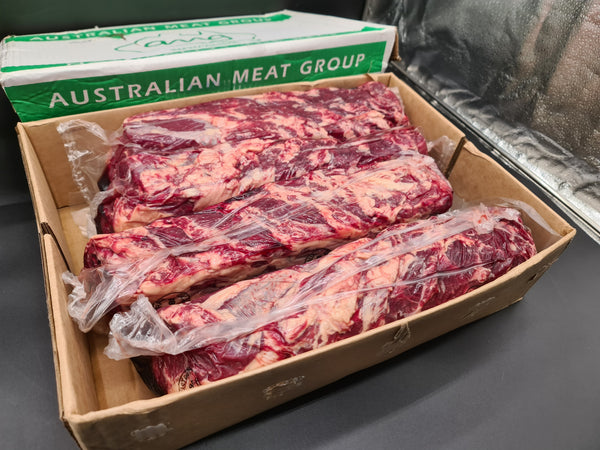
  • Beef medallions
  • Thinly sliced roast beef
  • Healthy, lower-fat beef meals
Is the knuckle a tender cut?+
The eye of knuckle is surprisingly tender for a leg muscle, as it is the lean central weight-bearing muscle with little connective tissue. Cooked with moist, slow heat or sliced into medallions, it delivers a notably tender, clean-tasting result with very little waste.
What is the eye of knuckle used for?+
The eye of knuckle is ideal for roasting whole or preparing into medallions. Its lean, even shape makes it easy to portion and carve. Cook it with gentle, moist heat for roasts, or slice into rounds for quick-cooked medallions.
How do I keep round cuts from drying out?+
Round and knuckle cuts are lean, so they dry out if overcooked. Use moist, gentle heat, sear for colour first, and pull the meat while still pink in the centre. Rest it well before carving thinly across the grain to keep every slice tender.
Where does the knuckle sit on the animal?+
The knuckle sits above the knee joint at the front of the hind leg and is made up of three muscles. It is prepared from the thick flank by removing the cap muscle and its fat, leaving the lean eye of knuckle as the standout cut.

Beef Cut

Rump

A versatile all-rounder hiding one of beef's best-kept secrets, the rump cap.

Raw 100% grass-fed Black Angus whole rump primal including picanha, AMG beef
From $26/kg

Rump from $26/kg - 100% Grass-Fed Angus Beef - AMG

Grass-Fed & Finished100% Hormone & Antibiotic Free

The best value beef buy in the shop. This whole rump primal gives you the entire grass-fed Black Angus rump in one piece, including pic...

$216.00/ 6kg
Raw grass-fed and finished Angus rump cap (picanha) from Southern Ranges with thick fat cap
From $33/kg

Rump Cap from $33/kg - 100% Grass-fed and finished Angus beef - Southern Ranges

Grass-Fed & Finished100% Hormone & Antibiotic Free

The Brazilian steakhouse cut that finally cracked the Aussie market. This grass-fed rump cap is 100% grass-fed and finished Angus, ...

$266.00/ 7kg
Raw 100% grass-fed and finished Angus rump cap (picanha) with thick fat cap, AMG beef
From $28/kg

Rump Cap from $28/kg - 100% Grass-Fed and Finished Angus beef - AMG

Grass-Fed & Finished100% Hormone & Antibiotic Free

The Brazilian steakhouse cut that finally cracked the Aussie market. This AMG rump cap is 100% grass-fed and finished Angus, MSA gr...

$231.00/ 7kg

The rump is a boneless, five-muscled primal that sits between the sirloin and the topside. It is one of the most versatile cuts you can buy, equally at home sliced into steaks, diced for kebabs or cut into strips for a stir-fry. For buyers who want flavour and flexibility at a fair price, rump is hard to beat.

Because it is made up of several muscles with varying textures, the rump can be broken down into a range of cuts, each with its own strengths. That makes it a favourite for cooks who like options.

Within the rump you will find the rump steak, a reliable everyday steak; the rump roast, lean and economical for feeding a crowd; and the prized rump cap, known in Brazil as picanha, with its rich flavour and signature fat cap. There is also the rump centre steak, best cooked quick and no more than medium-rare, the rump medallion or eye of rump, ideal for fast cooking or Beef Wellington, and rostbif, excellent roasted whole or sliced for stir-fries.

Rump delivers a bold, full beef flavour with a satisfying bite. It is leaner than the richly marbled loin cuts but carries enough character to stand up on the grill or in the pan. Texture varies across its muscles, from the tender rump cap to the firmer centre, which is part of what makes the rump such a rewarding cut to explore.

For rump steak, cook quick and hot on a grill or in a heavy pan, and aim for medium-rare to medium for the best balance of tenderness and flavour. Rest before slicing across the grain.

For the rump cap or picanha, roast it whole in a hot oven or barbecue it with the fat cap on, letting the fat render and baste the meat. Carve into thick slices across the grain.

Pro tip: keep rump centre steak no thicker than 1.5cm and no more than medium-rare. Cooked this way it stays tender, while overcooking can firm it up.

  • Everyday grilling and pan-frying
  • Picanha on the barbecue (rump cap)
  • Kebabs and stir-fries
  • Lean, economical roasts for a crowd
What is the rump cap and why is it special?+
The rump cap is the prized muscle on top of the rump, famous in Brazil as picanha. It has a rich flavour and a signature fat cap that bastes the meat as it cooks. Roast or barbecue it whole with the fat on, then carve into thick slices across the grain for an outstanding result.
How should I cook a rump steak?+
Cook rump steak quick and hot on a grill or in a heavy pan, aiming for medium-rare to medium. Rest it before slicing across the grain. Rump has a bold flavour and good bite, making it a dependable everyday steak that takes well to high heat.
Is rump tender?+
Rump is moderately tender with a satisfying bite, leaner than richly marbled loin cuts. Tenderness varies across its five muscles, with the rump cap and eye of rump among the more tender. Cooking to medium-rare and slicing across the grain keeps it at its best.
What can I make from a whole rump?+
Plenty. A whole rump can be sliced into rump steaks, cut into the rump cap for picanha, portioned into medallions for fast cooking or Beef Wellington, kept as a lean roast, or sliced into strips for stir-fries. Its five muscles give you real flexibility.

Beef Cut

Shin

Lean, rich in collagen and the secret to a silky, full-bodied braise.

Shin comes from a well-exercised leg muscle, so it has little fat but abundant connective tissue. That collagen is its great strength, melting over a slow, moist cook to give dishes a rich, full-bodied texture and tender, flavoursome meat. For braises, casseroles and the classic osso buco, shin is a cut that delivers exceptional value and depth.

Constant use during the animal's life means shin needs gentle, moist cooking to soften, but the payoff is meat that is rich in flavour and beautifully tender once the connective tissue has broken down.

Shin is prepared bone-in or boneless. Bone-in shin is often cut across the bone into osso buco, where the marrow adds extra richness, and is taken from the bottom of either the front or rear leg. Boneless shin comes from the shin area or the heel muscle in the silverside. Both reward the same slow, moist cooking.

Shin is lean yet rich, thanks to its abundant connective tissue. Slow, moist cooking converts that collagen into gelatine, giving braises a glossy, full body and the meat a tender, almost silky texture. The flavour is deep and full-bodied, making shin a favourite for hearty, warming dishes.

Braise or casserole shin low and slow. The moist, gentle heat softens the connective tissue and enriches both the meat and the sauce around it.

For osso buco, cook bone-in shin slowly so the marrow melts into the dish, adding richness and depth to the braising liquid.

Pro tip: shin is not a cut to hurry. Give it a long, slow cook and the connective tissue will transform into a silky, gelatinous richness that no quick method can match.

  • Osso buco
  • Rich braises and casseroles
  • Hearty soups and stocks
  • Full-bodied winter cooking
What is shin best used for?+
Shin is ideal for slow, moist cooking, braises, casseroles and the classic osso buco. Its abundant connective tissue melts over a long cook into a rich, gelatinous body, while the meat becomes tender and full of flavour. It is a high-value cut for hearty, warming dishes.
What is osso buco?+
Osso buco is bone-in shin cut across the bone, traditionally braised slowly so the marrow melts into the dish. The connective tissue softens into a rich, gelatinous texture and the marrow adds depth to the sauce, producing a tender, full-bodied result that is deeply satisfying.
How do I cook shin until tender?+
Cook shin low and slow in a moist environment, such as a braise or casserole. Its connective tissue needs time and gentle heat to break down into tender, silky meat. Rushing it leaves it tough, so a long, slow cook is essential for the best result.
What is the difference between bone-in and boneless shin?+
Bone-in shin is often cut across the bone into osso buco, with the marrow adding richness during cooking. Boneless shin is prepared from the shin area or the heel muscle in the silverside. Both are rich in connective tissue and suit the same slow, moist cooking methods.

Beef Cut

Shin Bone-In (Osso Buco)

Marrow-rich and made for osso buco, deep flavour from a long, slow braise.

Shin bone-in is prepared from the bottom portion of either the front or rear leg. Because it comes from a muscle used constantly for movement, it contains a high amount of connective tissue, which breaks down during slow, moist cooking to impart a rich, full-bodied flavour and a delicious gelatinous texture. With the bone left in, it is the classic cut for osso buco.

The bone and its marrow are central to this cut's appeal. As it cooks slowly, the marrow softens and enriches the surrounding sauce, while the connective tissue melts into the meat for a tender, luxurious finish.

This is essentially shin at its most traditional, cut across the bone for osso buco. Prepared with slow, moist methods such as casseroling and braising, it delivers a depth of flavour and a silky texture that few cuts can match, ideal for slow Sunday cooking and special winter meals.

Shin bone-in is lean meat wrapped around a marrow-filled bone, with abundant connective tissue throughout. Slow cooking turns that tissue gelatinous and draws richness from the marrow, giving the dish a glossy, full body. The meat becomes tender and deeply flavoured, with a satisfying, almost velvety texture.

Braise or casserole shin bone-in low and slow. The moist, gentle heat breaks down the connective tissue and lets the marrow enrich the sauce around the meat.

For osso buco, cook the cut slowly until the meat is tender and the marrow has melted into the braising liquid, adding richness and depth.

Pro tip: keep the bone in throughout cooking so the marrow can do its work. Serve with the marrow intact, as it is one of the great pleasures of this dish.

  • Classic osso buco
  • Marrow-rich slow braises
  • Hearty casseroles
  • Special-occasion winter cooking
What is shin bone-in used for?+
Shin bone-in is the classic cut for osso buco. Cut across the bone and braised slowly, its connective tissue melts into a rich, gelatinous texture while the marrow enriches the sauce. It is ideal for casseroles and braises where deep flavour and tender meat are the goal.
How do I cook osso buco?+
Braise shin bone-in low and slow in a moist sauce until the meat is tender and the marrow has softened into the liquid. The long, gentle cook breaks down the connective tissue for a silky texture. Keep the bone in throughout so the marrow can enrich the dish.
Why keep the bone in?+
The bone holds marrow, which softens and melts into the sauce during a long, slow cook, adding richness and depth. Keeping the bone in during cooking is what gives osso buco its signature full-bodied flavour and luxurious texture, so it is best left in until serving.
Is shin bone-in the same as osso buco?+
Osso buco is shin bone-in cut across the bone. The cut comes from the bottom of the front or rear leg and is full of connective tissue. Prepared with slow, moist cooking, it becomes the tender, marrow-rich dish known as osso buco, deeply flavoured and meltingly tender.

Beef Cut

Short Ribs

Rich, meaty and fall-off-the-bone tender after a long, slow cook.

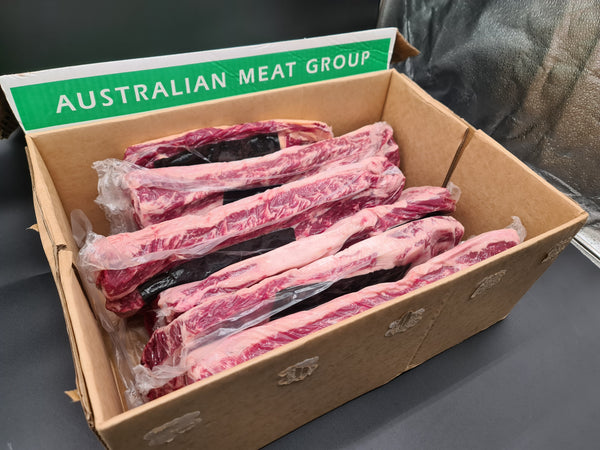
Short ribs are taken from the forequarter once the brisket has been removed. They are made up of the rib bone with layers of well-marbled rib meat and fat, a combination that delivers deep, satisfying flavour when given time to cook. For buyers who love slow-cooked, comforting beef, short ribs are a standout.

The bone and surrounding fat do important work here, keeping the meat moist and adding richness throughout a long cook. The result is tender, succulent beef that pulls easily from the bone.

Short ribs are available both bone-in and boneless. Bone-in ribs reward slow roasting and braising with extra flavour from the bone, while boneless short ribs offer the same rich, meaty eating with easier portioning and serving.

Short ribs are rich, beefy and full of flavour, with layers of fat and meat that turn meltingly tender over a long cook. Cooked quickly they are tough, but given time and gentle heat the connective tissue breaks down into succulent, fall-off-the-bone meat with a luxurious, almost unctuous texture.

Slow-roast or braise short ribs for the best result. Low, moist heat over several hours melts the fat and connective tissue, leaving tender meat that slips off the bone.

They can also be grilled when cut thin, but their natural home is a long, slow cook in a rich braising liquid that turns them succulent and deeply flavoured.

Pro tip: give short ribs plenty of time. They are not a cut to rush, the longer and gentler the cook, the more tender and flavoursome they become.

  • Slow-braised, fall-off-the-bone ribs
  • Rich winter casseroles
  • Low-and-slow barbecue
  • Comforting, hearty dinners
How do I cook beef short ribs until tender?+
Cook short ribs low and slow. Braise or slow-roast them for several hours in a moist environment so the fat and connective tissue break down into tender, succulent meat. Rushing them over high heat leaves them tough, so patience is the key to that fall-off-the-bone result.
Are short ribs available boneless?+
Yes. Short ribs come both bone-in and boneless. Bone-in ribs gain extra flavour from the bone during a slow cook, while boneless short ribs offer the same rich, meaty eating with easier portioning. Both suit braising and slow roasting.
What makes short ribs so flavourful?+
Short ribs carry layers of well-marbled meat and fat around the rib bone. As they cook slowly, the fat renders and the connective tissue softens, basting the meat and building deep, rich flavour. The bone itself adds further savouriness during a long braise.
Where do short ribs come from on the animal?+
Short ribs are taken from the forequarter, after the brisket has been removed. They consist of the rib bone with layers of rib meat and fat, making them ideally suited to the long, slow cooking that brings out their richness and tenderness.

Beef Cut

Silverside

The classic corned beef cut, rich and meltingly tender when cooked with care.

Silverside comes from the outside of the rear leg, sitting between the knuckle and the topside. It takes its name from the silver wall of connective tissue that runs along one side of the cut, which is trimmed away before cooking. Made up of five distinct muscles, it is a hard-working group that needs gentle, moist cooking to reach its best.

This is the cut most Australians know as corned beef, and for good reason. Cured and simmered slowly, silverside becomes tender enough to fall apart against the fork, with a savoury depth that suits both a traditional dinner and the next day's sandwiches.

The standout preparation here is corned silverside. Because the muscle is used heavily for walking, it benefits from the slow, moist cooking that corning provides, producing a tender, full-flavoured result that carves cleanly and reheats well through the week.

Silverside is lean and firm with a robust, satisfying beef flavour. On its own the muscle can be tight, but slow, moist cooking, especially corning, transforms it into tender meat that slices neatly and melts on the palate. The flavour is clean and traditional, the texture smooth once the connective tissue has had time to soften.

Corning and simmering is the classic route. Place corned silverside in a pot, cover with water and aromatics, and simmer very gently until tender. Rushing it with a hard boil will tighten the meat, so keep the heat low and steady.

Silverside also works as a slow braise or pot roast. Give it time in a moist environment and the muscle will soften into tender, sliceable beef.

Pro tip: let corned silverside rest in its cooking liquid before slicing. This keeps it moist and makes for cleaner, neater slices across the grain.

  • Traditional corned beef dinners
  • Cold sliced beef for sandwiches
  • Slow pot roasts and braises
  • Make-ahead meals for the week
What is silverside best known for?+
Silverside is the classic corned beef cut. Cured and simmered slowly, it becomes tender and full of flavour, perfect for a traditional dinner served hot with vegetables, then sliced cold for sandwiches the next day. It is a hard-working leg muscle that rewards gentle, moist cooking.
How do I stop corned silverside being tough?+
Keep the heat low and the cooking moist. Silverside is a well-exercised muscle, so a hard boil tightens it. Simmer it very gently until tender, then rest it in its liquid before slicing across the grain. Patience is the difference between chewy and meltingly tender.
Why is it called silverside?+
The name comes from the silver wall of connective tissue that runs along one side of the cut. This silvery membrane is trimmed away before cooking. The cut sits on the outside of the rear leg, between the knuckle and the topside.
Can I cook silverside without corning it?+
Yes. While corning is the most popular method, silverside also makes a good slow pot roast or braise. The key in every case is low, moist heat over time, which softens the connective tissue and delivers tender, sliceable beef.

Beef Cut

Striploin / Short Loin

The quintessential premium steak, tender, well-marbled and built for the grill.

*SPECIAL *Porterhouse Striploin from $31/kg (Was $40/kg) - 100% Grass-Fed and Finished Angus Beef - Southern Ranges SR+
From $31/kg

*SPECIAL *Porterhouse Striploin from $31/kg (Was $40/kg) - 100% Grass-Fed and Finished Angus Beef - Southern Ranges SR+

Grass-Fed & Finished100% Hormone & Antibiotic Free

The classic steakhouse cut at a price that lets you eat like this every week. This grass-fed striploin is 100% grass-fed and grass-finish...

$205.00/ 5kg
Raw grass-fed Wagyu MB2+ porterhouse striploin from Roam, marbled beef
From $34/kg

Porterhouse from $34/kg - Grass-Fed Wagyu MB2-3+ - Roam (Sold out until 30 July)

Grass-Fed & Finished100% Hormone & Antibiotic Free

The kind of porterhouse that costs three times this much at most butchers. This wagyu porterhouse striploin gives you 100% grass-fed Wa...

$154.00/ 3.5kg
Raw 100% grass-fed Black Angus porterhouse striploin, AMG MSA graded beef
From $32/kg

Porterhouse from $32/kg - 100% Grass-Fed Angus Beef - AMG

Grass-Fed & Finished100% Hormone & Antibiotic Free

Real grass fed beef at supermarket prices, without the supermarket compromise. This grass-fed porterhouse steak is 100% grass-fed Black A...

$168.00/ 4kg

The striploin is located along the spine in the hindquarter, running from the ribs to the rump and sitting just above the tenderloin. It comes from an area where the muscles do little heavy work, which is exactly why it is so tender, flavourful and sought after. For many buyers, this is the benchmark premium steak.

Sometimes referred to as the short loin or sirloin, this primal is the source of several iconic steaks. It strikes a near-perfect balance of tenderness, marbling and bold beef flavour, making it a confident choice for a special meal at home.

From the striploin come the sirloin steak, taken from the area above the loin and well suited to grilling or roasting, and the legendary T-bone, where the fillet and sirloin sit on opposite sides of a T-shaped bone. With little fat or connective tissue, these are quintessential steaks for pan-frying and barbecuing. The closely related porterhouse is cut from the same region with a larger portion of tenderloin.

The striploin offers a superb balance of tenderness and flavour. A fine seam of fat and even marbling give it richness without heaviness, while the muscle's light workload keeps it tender. The texture is firm yet yielding, with a satisfying bite and a clean, deep beef flavour that needs little more than salt and heat.

Cook striploin and sirloin steaks quick and hot. A ripping pan or grill builds a deep crust while keeping the inside tender and juicy. Aim for medium-rare to let the marbling do its work.

For a T-bone, sear over high heat and watch both muscles, the leaner fillet side cooks faster than the sirloin, so position it away from the hottest point.

Pro tip: rest the steak for several minutes after cooking. This lets the juices settle back through the meat, so the first cut is moist rather than running onto the board.

  • Premium steak dinners
  • Grilling and barbecuing
  • Pan-seared steaks at home
  • Special occasions and entertaining
What steaks come from the striploin?+
The striploin is the source of the sirloin steak and the T-bone, where the fillet and sirloin sit either side of a T-shaped bone. The closely related porterhouse comes from the same region with a larger tenderloin portion. All are tender, flavourful steaks built for fast, hot cooking.
How should I cook a striploin steak?+
Cook it quick and hot on a grill or in a heavy pan to build a deep crust, aiming for medium-rare to medium. The even marbling keeps it juicy. Rest the steak for a few minutes before serving so the juices settle back through the meat.
Why is the striploin so tender?+
The striploin runs along the spine in an area where the muscles do little heavy work. Muscles that work less stay more tender, which is why this cut, along with the tenderloin and cube roll, sits among the most prized steaks on the animal.
What is the difference between a T-bone and a porterhouse?+
Both are cut from the loin and feature the T-shaped bone with sirloin on one side and tenderloin on the other. The porterhouse is taken from further back where the tenderloin is

Beef Cut

Topside

Lean, generous and made for slow Sunday roasting.

Topside comes from the inside of the hind leg, sitting between the thick flank and the silverside. It is one of the leanest cuts on the animal, prized by buyers who want honest value and plenty of meat for the money. Because the muscle works hard during the animal's life, it carries very little fat, which makes it a smart choice for lean family meals and batch cooking.

This is a cut that rewards patience. Treated gently and given time, topside turns into a tender, deeply savoury roast that carves into neat slices for a crowd. Pushed too fast or too hot, it can tighten up, so low and slow is the rule.

Within the topside you will find the topside roast, the classic centrepiece for a roast dinner, and topside steak, which is sliced from the same primal. Both come from the same lean muscle, so both do their best work when cooked slowly in a casserole, braise or covered roast rather than seared hard and served rare.

Topside is lean, firm and full of clean, beefy flavour without heavy richness. With little marbling running through it, the texture is best coaxed open by moisture and time, which break down the muscle into tender, sliceable meat. Cooked well, it carves beautifully and holds its shape on the plate, making it a reliable choice for a traditional roast.

Slow roasting is where topside shines. Season generously, sear the outside to build colour, then roast low and covered with a little stock so the lean meat stays moist. Rest it well and carve thinly across the grain for the most tender result.

For everyday meals, dice topside and cook it slowly in a hearty casserole or braise. The gentle, moist heat softens the muscle and lets it soak up the flavours around it.

Pro tip: always carve topside thinly and against the grain. Thick slices cut with the grain will feel chewier, while thin slices across it eat far more tenderly.

  • A lean, generous Sunday roast
  • Slow casseroles and braises
  • Carving cold for sandwiches and platters
  • Budget-friendly family meals
Is topside a good cut for roasting?+
Yes, topside makes an excellent lean roast when cooked low and slow. Sear it first for colour, then roast gently with a little stock to keep it moist. Carve thinly against the grain and it will be tender and full of flavour, ideal for feeding a crowd without a high price per serve.
Why is my topside tough?+
Topside is very lean with little fat, so it turns tough when cooked too fast or too hot. It needs gentle, moist heat and time. Roast it covered and low, or dice it for a slow braise, then carve thinly across the grain for the most tender result.
What is the difference between topside roast and topside steak?+
Both come from the same lean muscle on the inside of the hind leg. The roast is kept whole for slow roasting, while topside steak is sliced from the same primal. Despite being sold as steak, it still performs best diced and slow-cooked rather than seared quickly.
Can I cook topside like a premium steak?+
It is better suited to slow cooking than quick searing. Topside lacks the marbling of cuts like the striploin or cube roll, so fast, hot methods can leave it tough. For a tender steak experience, choose a more marbled cut and save topside for roasts and braises.