
A tomahawk steak is one of the most striking cuts you can put on a plate, which raises a fair question: what are you actually paying for?
In short, it is a thick bone-in ribeye with a long, frenched bone left attached for presentation.
This guide explains what a tomahawk steak is, where it sits on the animal, what drives the price, how it compares to a standard scotch fillet, and how to cook it at home so the size works in your favour.
What Is a Tomahawk Steak?
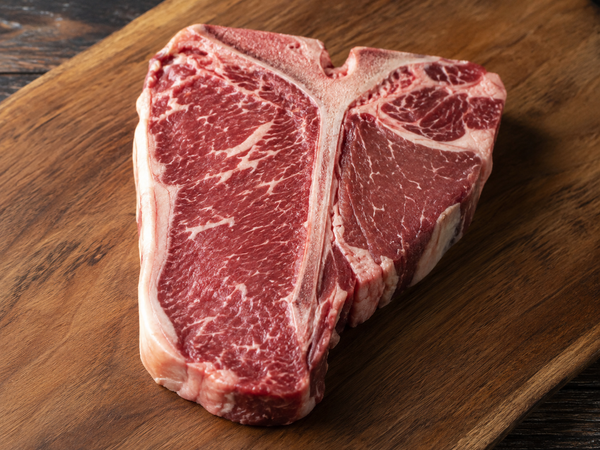
A tomahawk steak is a thick, bone-in ribeye cut from the fore rib of the cow, with the long rib bone trimmed clean so the whole thing resembles the handle of an axe. It is the same prized muscle group that Australians know as scotch fillet or rib eye, simply left on the bone.
The cut comes from the rib section, where the meat is well marbled and tender. A tomahawk is made up of a few muscles, including the large central eye and the spinalis dorsi, better known as the ribeye cap. The cap is widely considered the most flavourful, tender part of the whole animal, which is part of what makes this cut so good to eat.
The long bone is exposed through a process called frenching, where the meat and fat are cleaned away to leave a neat handle. Most tomahawks are cut thick, usually 4cm to 6cm, and weigh between 1kg and 1.5kg with the bone in. That thickness is exactly why the cut needs a slightly different approach in the kitchen, which we cover further down.
What You're Really Paying For
With a tomahawk steak you are paying for three things: a premium ribeye, a long display bone, and the skilled trimming that makes it look the part. Understanding each one helps you judge whether a price is fair.
The meat itself is the main event. A tomahawk is cut from the same well-marbled rib section as scotch fillet, and it includes the ribeye cap, so you are getting one of the best-eating muscles on the animal. Marbling and grading drive most of the price, which is why a grain-fed or MSA-graded tomahawk costs more per kilo than a basic one, and why Wagyu sits higher again.
The bone is where buyers sometimes feel caught out. That dramatic handle adds significant weight, but you cannot eat it, so the price per kilo of actual meat is higher than the same weight of boneless scotch fillet. This is worth knowing rather than a reason to avoid the cut, since the bone is the whole point of the theatre.
Finally, you are paying for presentation and skilled butchery. Frenching the bone cleanly takes time and a good butcher, and the finished steak is built to be a centrepiece, not an everyday dinner.
Tomahawk vs Scotch Fillet, Ribeye and Cowboy Steak
A tomahawk is essentially a bone-in ribeye, so the eating experience is the same as a scotch fillet; the real difference is the long bone and the theatre it brings to the table. If you love a scotch fillet, you will love a tomahawk, because it is the same meat.
The names can be confusing, so here is how the closely related cuts line up.
| Cut | What it is | Bone |
|---|---|---|
| Scotch fillet (rib eye) | The boneless ribeye muscle | None |
| Cowboy steak | Bone-in ribeye | Short bone |
| Tomahawk | Bone-in ribeye | Long, frenched bone |
In flavour and texture there is little to separate them. Some cooks feel the bone helps keep the meat beside it juicy, and it certainly looks impressive, but the bone adds very little actual flavour. Choose a tomahawk when you want the wow factor, and a scotch fillet when you want the same eating quality without the bone or the extra weight.
How to Cook a Tomahawk Steak

The best way to cook a tomahawk steak is the reverse sear: cook it low and slow first, then finish with a hard, fast sear, using a meat thermometer because the cut is too thick to judge by eye. This stops the outside overcooking before the centre is ready.
For the oven and pan method, set your oven low, around 110°C to 120°C, and place the steak on a rack over a tray. Cook it slowly until the internal temperature is about 10°C below your target, which usually takes 30 to 45 minutes depending on size. Then sear it hard in a screaming hot, heavy pan or under the grill for 1 to 2 minutes a side until a deep crust forms.
If you are cooking outdoors, use a two-zone grill. Cook the steak on the cooler side, turning every few minutes, then move it to the hot side to sear once it is almost there. Either way, always rest the steak for at least 10 to 15 minutes before cutting.
Use this guide for doneness, and remember to pull the steak about 3°C early since it keeps cooking as it rests.
| Doneness | Target internal temperature |
|---|---|
| Rare | 48°C to 50°C |
| Medium rare | 52°C to 54°C |
| Medium | 57°C to 60°C |
| Medium well | 63°C to 65°C |
How to Serve a Tomahawk and Who It Suits
A tomahawk steak usually weighs 1kg to 1.5kg with the bone, which is enough to share between two, and it is best treated as a centrepiece for a special occasion rather than an everyday steak. Larger ones will stretch to three lighter eaters.
To serve, carve the meat off the bone first, then slice it thickly against the grain so every piece stays tender. Separate the soft cap and share it around, since it is the tastiest part, then fan the slices on a warm board with a little flaky salt. Done at the table, it makes a real impression.
This is a cut for birthdays, anniversaries, Father's Day, or any dinner where you want a showpiece, which also makes it a strong gift for the steak lover in your life. When buying, look for even marbling, a cleanly frenched bone, and a good thickness of at least 4cm. You can browse our tomahawk steaks or step up to a Wagyu option when the occasion calls for it.
Conclusion
A tomahawk steak is a premium bone-in ribeye built for presentation, so you are paying for top eating quality plus the drama of that long bone. Cook it with a reverse sear, rest it well, and carve it at the table.
Ready to impress? Explore our premium beef cuts delivered across Australia.