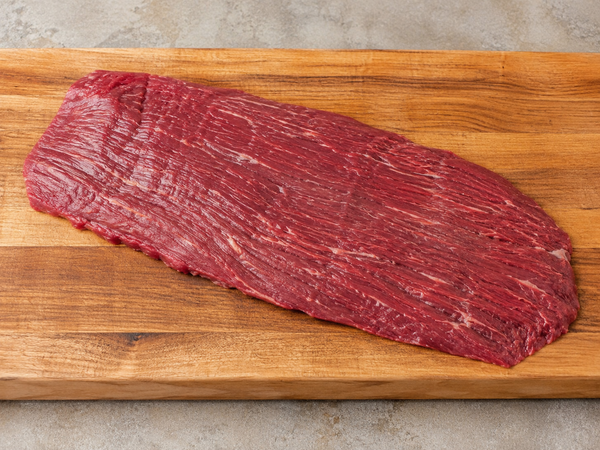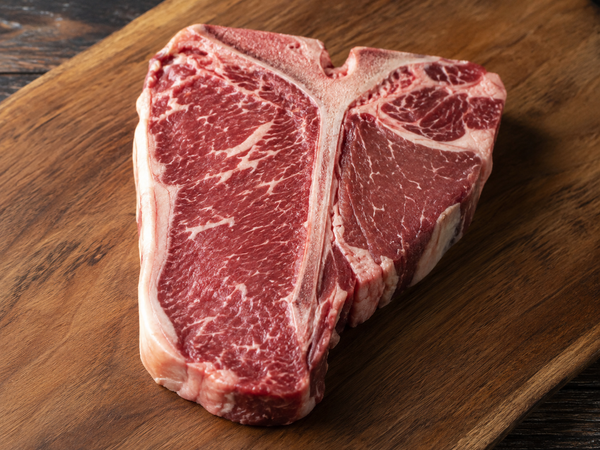

Porterhouse is one of the most popular steaks in Australia, but it also causes a fair bit of confusion, since the name means something different overseas.
In Australia, a porterhouse steak is a boneless sirloin with a firm texture, a rich beefy flavour, and a neat strip of fat along one edge.
This guide covers the cut and where it comes from, what it tastes like, how it compares to other steaks, and exactly how to cook a porterhouse steak so it stays juicy.
The Cut: What Is a Porterhouse Steak?
In Australia, a porterhouse steak is a boneless cut from the short loin, the same cut known elsewhere as striploin, sirloin, or New York strip. They are all the same piece of meat, simply under different names.
The short loin sits along the back of the animal, just behind the ribs. Because these muscles do relatively little work, the meat is tender, while still keeping a satisfying firmness and a deep, beefy taste. It is a true premium steak that is leaner than rib cuts but full of flavour.
You can recognise a porterhouse by its even shape and the distinctive strip of fat that runs along one edge, often called the fat cap. That fat is part of the appeal, since it renders during cooking and adds flavour and moisture to the lean meat beside it.
In Australia the cut is almost always sold boneless and in neat, even steaks, which makes it easy to portion and quick to cook. It is the everyday premium steak many Australians reach for, sitting comfortably between the richness of scotch fillet and the leanness of eye fillet.

Australian Porterhouse vs American Porterhouse
The key difference is the bone: in Australia a porterhouse is a boneless sirloin, while in the United States a porterhouse is a large bone-in steak that also includes a piece of eye fillet. This is the single biggest source of confusion around the cut.
An American porterhouse is essentially a big T-bone. It has the striploin on one side of the bone and a generous section of tenderloin on the other, and by definition that tenderloin must be at least 3.2cm wide. A T-bone with a smaller tenderloin is just called a T-bone.
In Australia, that bone-in steak is sold as a T-bone, and the word porterhouse is kept for the boneless striploin on its own. So if a recipe from overseas calls for a porterhouse, an Australian cook usually wants a T-bone, and if you order a porterhouse here you will get a boneless sirloin.
| Term | In Australia | In the US |
|---|---|---|
| Porterhouse | Boneless sirloin (striploin) | Large bone-in steak with tenderloin |
| T-bone | Bone-in striploin and tenderloin | Bone-in steak with a smaller tenderloin |
The Flavour: Taste, Texture and Fat
A porterhouse has a bold, beefy flavour with a firm, satisfying bite, sitting between the richness of scotch fillet and the leaner tenderness of eye fillet. It is the steak for people who want real chew and flavour rather than a soft, buttery texture.
The meat is leaner than rib cuts like scotch fillet, so it has less marbling running through it. What it does have is that strip of fat along the edge, which carries a lot of flavour and bastes the steak as it cooks. Rendering that fat well is the secret to a great porterhouse.
Texture-wise, a porterhouse is tender but holds its shape, giving each bite a clean, meaty character. Cooked to medium rare and rested, it stays juicy and full of flavour without falling apart.
Quality still matters here. Grass-fed porterhouse tends to be leaner with a clean finish, while grain-fed and higher MSA-graded beef carries more marbling and a richer taste. Wagyu porterhouse takes that richness further again.
The Cook: How to Cook Porterhouse Steak

The best way to cook a porterhouse steak is hot and fast in a pan or on the grill, rendering the fat edge first, then resting it before serving. As a leaner cut, it rewards careful timing so it does not dry out.
Take the steak out of the fridge about 30 minutes before cooking, pat it dry, and season well with salt. Heat a heavy pan or grill until very hot. Before searing the flat sides, hold the steak on its fat edge for a minute or so to render that strip and build flavour.
Cook a steak around 2.5cm to 3cm thick for roughly 2 to 3 minutes a side for medium rare, then rest it for about 5 minutes so the juices settle. Because porterhouse is lean, avoid pushing it past medium, which can make it tough and dry.
Use a thermometer and pull the steak a couple of degrees before your target, since it keeps cooking as it rests.
| Doneness | Remove from heat at |
|---|---|
| Rare | 48°C |
| Medium rare | 52°C |
| Medium | 58°C |
| Medium well | 62°C |
Porterhouse vs Scotch Fillet, Eye Fillet and Rump
Porterhouse is leaner and firmer than scotch fillet, more flavoursome and affordable than eye fillet, and more tender than rump. Each cut suits a slightly different priority.
Scotch fillet, from the rib, is more marbled and richer, so it is the choice when you want maximum flavour and a softer texture. Eye fillet, from the loin, is the most tender of all but leaner and milder, and usually more expensive. Rump is firmer and better value, with strong flavour but more chew.
Porterhouse lands neatly in the middle, which is why it is such a reliable all-rounder for a midweek steak or a weekend barbecue. If you want richer marbling, choose a scotch fillet; if tenderness is everything, go for an eye fillet.
When buying, look for an even thickness, a good fat cap along the edge, and clear marbling through the meat. Thicker steaks are easier to cook to a juicy medium rare. You can browse our porterhouse steaks or explore the full range of Australian beef cuts to find the right option.
Conclusion
A porterhouse steak is Australia's boneless sirloin, lean, firm, and full of beefy flavour, with a fat edge that rewards a good sear. Cook it hot and fast, rest it well, and you have one of the best value premium steaks going. Ready to cook? Order quality porterhouse delivered across Australia.