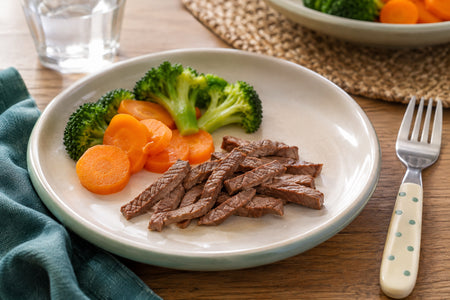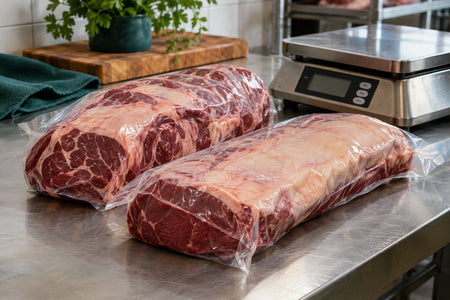

Choose scotch fillet for flavour and juiciness, and eye fillet for the most tender steak you can buy.
That is the short answer to eye fillet vs scotch fillet, and the right pick depends on how you cook and what you want to spend.
This guide compares where each cut comes from and how they differ in tenderness, flavour and fat.
It also explains how to cook each one and lines up Cost Cut Meats box prices per kg, so you can see the real gap.
Eye Fillet vs Scotch Fillet: What Is the Difference?
Eye fillet is the tenderloin, a lean muscle beneath the spine that barely works, while scotch fillet is the boneless rib eye from the cube roll, a richer, more marbled muscle.
The tenderloin runs along the inside of the loin, sheltered from the work of walking, which keeps it soft. The scotch fillet cut comes from the rib section between the chuck and the striploin, where the muscle works a little harder and lays down more fat.
One naming point trips people up: rib eye is not eye fillet. In Australia, rib eye is simply another name for scotch fillet, so rib eye vs eye fillet is this same comparison.
| Quick answer | Eye fillet | Scotch fillet |
|---|---|---|
| Also called | Tenderloin, filet mignon | Rib eye, cube roll steak |
| Where it sits | Under the spine, inside the loin | Rib section, ahead of the striploin |
| Marbling | Low | Medium to high |
| Tenderness | The most tender steak | Tender, with more bite |
| Flavour | Mild and clean | Rich and beefy |
| From (full box) | $45/kg, AMG tenderloin | $39/kg, AMG A Budget cube roll |
| Best for | Medallions, date nights, occasion roasts | Pan, BBQ, crowd roasts |
Prices checked 18 October 2026.
Tenderness, Flavour and Fat
Eye fillet is more tender because the tenderloin does almost no work, while scotch fillet tastes richer because it carries far more intramuscular fat.
A fine grain and very little connective tissue explain why eye fillet is so tender. The trade-off is flavour: with so little fat, a fillet tastes clean and mild.
Scotch fillet's marbling melts as it cooks and bastes the steak from the inside, and the rib cap, the crescent of muscle curling around the eye, is the richest bite of all. The texture has more chew than eye fillet but stays juicy.
All Cost Cut Meats beef is grass-fed, which generally eats leaner and beefier than grain-fed. Marble score matters too: the Southern Ranges SR+ scotch cube roll is MSA graded MB2+ and wet aged for 21 days, while Roam's grass-fed Wagyu tenderloin, graded MB2 to MB3+, adds a touch of richness to the fillet.
Which Is Better for the Pan, the BBQ or a Whole Roast?

Scotch fillet is easier in a hot pan or on the BBQ because its fat buys you time, while eye fillet shines cooked gently to medium rare or roasted whole.
For either cut, take the meat off the heat 3 to 5C below your target and rest it: for medium rare, pull at about 57C so it finishes at 60 to 63C. The Food Safety Information Council recommends cooking whole cuts of beef to at least 63C and resting them for 3 minutes, and mince, sausages and rolled or stuffed roasts to 75C. Rarer beef is a personal choice that pregnant women, older people, young children and anyone with a weakened immune system are safest avoiding.
Steaks in the Pan or on the BBQ
Cut both steaks at least 3cm thick, sear hard over high heat, then finish over gentler heat. Eye fillet has a narrow window and slips past medium quickly, while scotch fillet's marbling keeps it juicy if it runs over.
As a Whole Roast
A tied tenderloin makes an elegant occasion roast, and it is simple to roast a whole eye fillet for a dinner party.
For a crowd, the fat in a cube roll keeps every slice juicy, so roast a whole cube roll with garlic and rosemary.
Price per kg: Is Eye Fillet Worth Paying More For?

Eye fillet usually costs more per kg than scotch fillet, but not always: at full box, the AMG tenderloin is cheaper than the AMG Prime scotch cube roll.
Every carcass yields only two tenderloins, and demand for the most tender steak stays high. Prices below are full box, checked 18 October 2026.
| Line | Full box, per kg | 250g steak, before trimming |
|---|---|---|
| Southern Ranges SR+ eye fillet | $65 | $16.25 |
| Southern Ranges SR+ scotch cube roll | $53 | $13.25 |
| AMG grass-fed tenderloin | $45 | $11.25 |
| AMG Prime scotch cube roll | $49 | $12.25 |
| AMG A Budget scotch cube roll | $39 | $9.75 |
| Roam grass-fed Wagyu tenderloin | $56 | $14.00 |
| Roam MB2+ scotch cube roll (not Wagyu) | $54 | $13.50 |
Eye fillet loses silverskin and the chain when trimmed, so its real cost per usable steak is higher than the sticker price. Box weights differ too: the AMG tenderloin full box is 12kg and the AMG A Budget scotch full box is 20kg.
The Roam scotch cube roll is an Angus and Angus-cross line, so that pairing compares breed as well as cut.
Eye Fillet or Scotch Fillet: Which Should You Buy?
Buy scotch fillet for flavour, forgiveness and feeding a crowd, and eye fillet for tenderness, lean portions and special occasions.
| Situation | Better pick | Why |
|---|---|---|
| Weeknight steak | Scotch fillet | Forgiving and full of flavour |
| BBQ for a crowd | Scotch fillet | Its fat copes with high heat |
| Date night | Eye fillet | Tender medallions, elegant plate |
| Whole roast | Either | Fillet for an occasion, cube roll for a crowd |
| Leaner choice | Eye fillet | Very little intramuscular fat |
| Best value | AMG A Budget scotch | $39/kg at full box |
For halal buyers, the AMG grass-fed tenderloin and the Roam grass-fed Wagyu tenderloin are halal certified, with certificates available on request from orders@costcutmeats.com.au.
Both cuts come whole, so you choose the thickness. Our whole eye fillets portion neatly into medallions or a roast.
The whole scotch cube rolls range from budget grass-fed Angus to the Southern Ranges SR+ and Roam MB2+ lines.
Conclusion
Eye fillet vs scotch fillet comes down to tenderness against flavour.
Eye fillet is the lean, soft choice for special dinners, while scotch fillet is richer, juicier and easier to cook well.
Both arrive chilled, never frozen, as whole grass-fed cuts you portion yourself, so order the one that suits your table.