
Pull a steak out of the freezer, find dry grey patches across one side, and the instinct is to throw it out. You do not need to.
Freezer burn on meat is a quality problem rather than a safety one, and most of what causes it is fixable with better wrapping and a steadier freezer.
This guide covers what those patches actually are, how to tell them apart from real spoilage, what to do with the meat, and how to stop it happening again.
Is Freezer Burnt Meat Safe to Eat?
Yes. Freezer burn affects texture and flavour, not safety, and meat with freezer burn can be eaten.
The clearest authority on this is the United States Department of Agriculture, whose food safety service states that freezer burn does not make food unsafe, merely dry in spots. It describes the affected areas as greyish-brown leathery patches caused by air reaching the surface of the food.
Worth saying plainly: no Australian food authority publishes guidance on freezer burn. I looked at Food Standards Australia New Zealand, the Food Safety Information Council, the NSW Food Authority and CSIRO, and none of them cover it. The guidance above is American, and it is the best available. What Australian authorities do give us is the freezer temperature that prevents it, covered further down.
The reason this is a quality question rather than a safety one is that bacteria do not multiply at freezer temperatures. The same USDA guidance notes that food held constantly at minus 18C stays safe indefinitely, and that only quality suffers over long storage. Meat in a properly cold freezer stops being pleasant to eat long before it stops being safe.
What Causes Freezer Burn on Meat
Freezer burn is dehydration. Ice on the surface of the meat turns straight into vapour, migrates away to the coldest part of the freezer, and leaves dried-out tissue behind.
That process is called sublimation, and it happens whenever frozen water is exposed to dry freezer air. The moisture leaves, oxygen reaches the exposed surface, and the tissue oxidises into those dull grey-brown patches. The meat is not burnt in any literal sense and the freezer is not too cold.
Two things drive it. The first is air contact, which is why loosely wrapped meat, torn cling film and half-open freezer bags produce it fastest. The second is temperature change, because every time the freezer warms slightly, surface ice melts a little and refreezes as larger crystals that push moisture out.
This is also why freezer burn on a vacuum-sealed pack is a warning sign rather than bad luck. If a cryovaced pack has developed it, the seal has usually failed somewhere.
Why Frost-Free Freezers Make It Worse
Frost-free freezers work by periodically warming up to melt frost, and that repeated cycling is the most common domestic cause of freezer burn.
A frost-free or auto-defrost freezer runs a small heater on a timer to stop ice building up on the walls. The temperature rises briefly, then drops back. That is convenient for the freezer and hard on the food inside it, because each cycle nudges surface ice on your meat towards melting and refreezing.
The practical consequence is that meat in a modern frost-free freezer needs better packaging than meat in an old chest freezer, not worse. Chest freezers hold a steadier temperature and are gentler on long-term storage, which is why butchers and serious home cooks tend to use them.
It also explains something that frustrates people. You can follow the storage times exactly and still get freezer burn, because those times assume packaging that keeps air off the meat throughout. Timings for how long you can freeze meat vary by cut, but every one of them makes that assumption.
Freezer Burn or Spoiled? How to Tell

Freezer burn is dry, pale and localised. Spoilage is wet, smelly and spreads across the whole surface.
Sign |
Freezer burn |
Spoilage |
Appearance |
Dry greyish-brown leathery patches, often on one side |
Dull grey-green over the whole surface |
Texture |
Dry, tough, papery where affected |
Sticky or slimy to the touch |
Smell |
None, or slightly stale once thawed |
Sour, foul or ammonia-like |
Ice |
Large crystals on and around the meat |
Not relevant |
Safe to eat |
Yes, quality affected only |
No, discard it |
The freezer burn column follows the USDA description of greyish-brown leathery patches caused by air contact, and its position that freezer burn does not make food unsafe. The spoilage column describes the signs our butchers look for when telling if meat has gone off.
Meat that has stayed frozen at minus 18C or below does not spoil in the freezer. If it smells wrong or feels slimy after thawing, that points to a problem before freezing, or to the meat having thawed and been refrozen at some point.
What to Do With Freezer Burnt Meat
Cut the affected areas away, either before cooking or after. Both work, and the choice is about convenience rather than safety.
The USDA guidance is explicit that freezer-burned portions can be trimmed off before or after cooking, and that heavily affected food may be worth discarding on quality grounds alone. Most pages only mention trimming beforehand, which is worth knowing if you have already started cooking.
Light freezer burn on one face of a steak usually trims off with a thin slice. Once the dry patches run deep or cover most of the cut, the whole piece will eat tough and stale, and it is not worth the effort.
Moisture is the thing you lost, so cook accordingly. Mildly affected meat does far better in a braise, a slow cook, a curry or a mince dish than it does seared as a steak, because the liquid compensates for what the freezer took out. For defrosting meat safely, thaw it in the fridge rather than on the bench.
How to Prevent Freezer Burn

Keep air off the meat and keep the freezer temperature steady at minus 18C or below.
The NSW Food Authority advises keeping freezers at minus 18C or below, with food frozen solid at that temperature. That is the baseline. Everything else is packaging.
Vacuum seal where you can. It removes the air rather than just covering it, which makes it the most effective method available at home. For chilled cryovac packs, it also pays to know how long vacuum sealed meat lasts in the fridge.
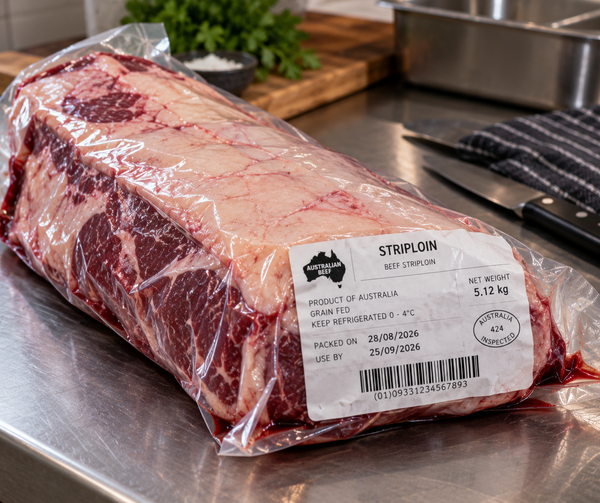
Freeze in the original vacuum pack. If your meat arrived cryovaced and the seal is intact, freeze it as it is rather than rewrapping.
Double wrap anything loose. Cling film tight against the surface, then foil or a freezer bag with the air pressed out.
Portion before freezing. Smaller packs freeze faster, which makes smaller ice crystals, and you only thaw what you need.
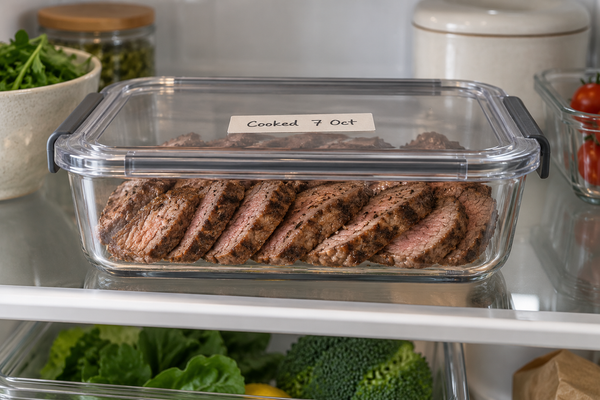
Label with the date. Freezer burn is mostly a function of time plus bad packaging, and undated meat always stays longer than intended.
Do not overfill or constantly reorganise. Every door opening swings the temperature.
Cost Cut Meats cuts arrive vacuum-sealed or cryovac-wrapped and chilled rather than frozen, so if you plan to freeze part of an order, do it while the seals are still intact. Chilled, sealed packing is one of the main differences between fresh and frozen meat delivery, and it is how every order from the current range of cuts arrives.
Conclusion
Freezer burn is a packaging problem wearing the costume of a safety problem. Trim the dry patches, cook what is left in something with liquid, and prevent the next round by keeping air off the meat and the freezer at minus 18C or below.
When the freezer is ready, restock it from the current range of cuts.