
For meat delivery, fresh and frozen are both excellent when the meat is good quality, vacuum sealed and thawed with care, so neither is truly better than the other. There are two ways butchers ship meat, flash-frozen delivery and fresh chilled delivery, and quality flash-frozen meat is almost indistinguishable from fresh once thawed properly. This guide compares fresh vs frozen meat delivery, explains how each method works, busts the supermarket fresh myth, and shows when each one wins.
Fresh vs frozen at a glance
Fresh chilled delivery suits cooking soon or freezing at home, while flash-frozen delivery suits stocking up with less frequent orders. Here is how they compare.
| Factor | Fresh (chilled) delivery | Flash-frozen delivery |
| Quality | Excellent, never frozen | Excellent when flash-frozen |
| Convenience | Cook within days or freeze | Ready to store for months |
| Shelf life | Days chilled, months if you freeze it | Months in the freezer |
| Best for | Cooking soon, freezing at peak | Bulk buying, fewer deliveries |
| Waste | Low, portion and freeze | Low, thaw only what you need |
Flash-frozen meat delivery, explained

Flash-frozen meat delivery means the meat is frozen fast at its peak, then shipped and kept frozen all the way to your door. Flash or blast freezing drops the temperature quickly, forming tiny ice crystals that barely disturb the muscle, so texture and juices are preserved.
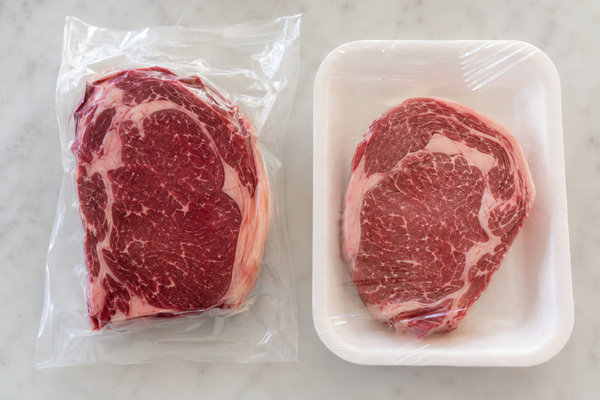
The cuts are vacuum sealed before freezing to lock out air and prevent freezer burn, then packed with dry ice or gel packs to stay frozen in transit. Because the meat never enters the bacterial danger zone, flash-frozen delivery is the safest option for long distances, hot weather and remote postcodes, and it keeps for months in your freezer. The only trade-off is that you plan ahead and thaw before cooking.
Fresh (chilled) meat delivery, explained

Fresh, or chilled, meat delivery means the meat is never frozen. It is cut to order, vacuum sealed, and kept cold with gel packs so it arrives chilled and ready to cook or store. This is how Cost Cut Meats delivers.
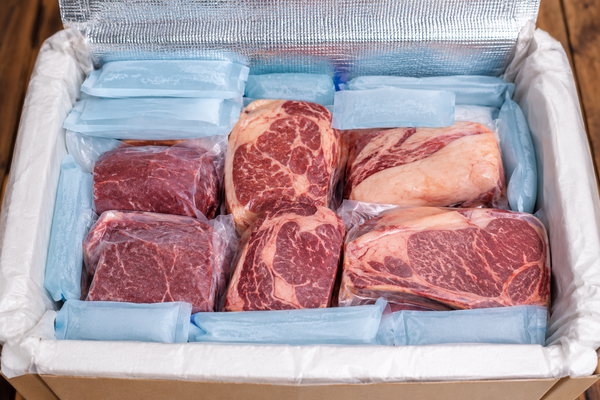
Cuts are portioned to order, vacuum sealed, and packed in an insulated box with chilled gel packs, with dry ice only on the longest routes, arriving cold and ready to refrigerate or freeze. The advantage is flexibility: cook it within a few days at its freshest, or freeze what you will not use at home, at its peak. You get never-frozen meat and the option to freeze on your terms, which is genuinely the best of both worlds. Chilled delivery is ideal for metro and regional runs short enough to hold the meat at or below 5°C.
What fresh really means, and previously frozen supermarket meat
Fresh should mean never frozen, but on a supermarket shelf that is often not the case. A lot of meat sold as fresh was frozen and thawed somewhere in the supply chain, or has sat in a chilled case for days losing quality by the hour.
This changes the real comparison. The honest question is not fresh versus frozen, but how well the meat was handled, how it was frozen if it was, and how quickly it reached you. Vacuum-sealed meat that is cut to order and delivered chilled, or flash-frozen at its peak, is frequently fresher than the fresh label at the shops.
How freezing affects quality and taste
Freezing affects quality mostly through ice crystals, and the speed of freezing decides how big they get. Fast, flash or blast freezing forms tiny crystals that hold texture and juices, while slow freezing in a packed home freezer forms larger crystals that rupture more cells and cause extra drip loss on thawing. Vacuum sealing before freezing is the other half of the story, locking out air and keeping flavour and moisture in.
On the plate, the taste and texture gap between quality fresh and quality frozen is very small. In a blind test, most people cannot reliably pick a well-frozen, well-thawed steak from a fresh one, especially with well-marbled beef. Frozen only falls down when it is frozen slowly, stored badly, or thawed in a rush.
When fresh wins and when frozen wins
Choose fresh chilled delivery when you will cook within a few days, want to portion and freeze at peak freshness, or simply prefer never-frozen meat. It is the pick for a planned weekend roast or a midweek steak.
Choose flash-frozen delivery when you are buying in bulk, ordering less often, live a long way from the city, or want a full freezer to dip into. For most households the smart play is a middle path: order fresh, cook some, and freeze the rest yourself, following how long you can freeze meat so nothing goes to waste.
How to thaw delivered meat without losing quality
The single biggest quality decision is how you thaw, and slow always wins. Move the meat from the freezer to the fridge and let it thaw gently, ideally overnight, still in its vacuum bag so it reabsorbs its juices.
Avoid the bench and hot water, which warm the surface into the danger zone and cost you texture. If you are short on time, a sealed bag under cold running water is the safe quick option. For the full method, see the guide to how to defrost meat safely, and store anything you are not cooking straight away using how to store meat safely.
Order fresh with Cost Cut Meats
Cost Cut Meats delivers chilled, never pre-frozen, so you get fresh meat that you can cook straight away or freeze at home for the best of both. Every cut is 100% grass-fed, MSA-graded and farm-direct, cut to order and vacuum sealed, then packed cold to arrive ready to refrigerate or freeze.
Because the beef is vacuum sealed and graded for consistent marbling, it freezes beautifully and thaws back close to fresh. Browse the full range at Cost Cut Meats, cook what you need this week, and freeze the rest with confidence.
Conclusion
For delivery, fresh and frozen are both excellent when the meat is quality, vacuum sealed and thawed with care, so the choice comes down to how soon you will cook. Cost Cut Meats delivers chilled, MSA-graded beef that freezes just as well at home, giving you the best of both. Order online and taste the difference.