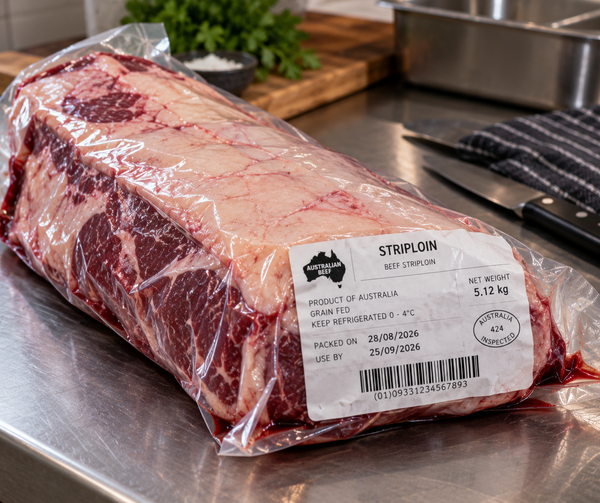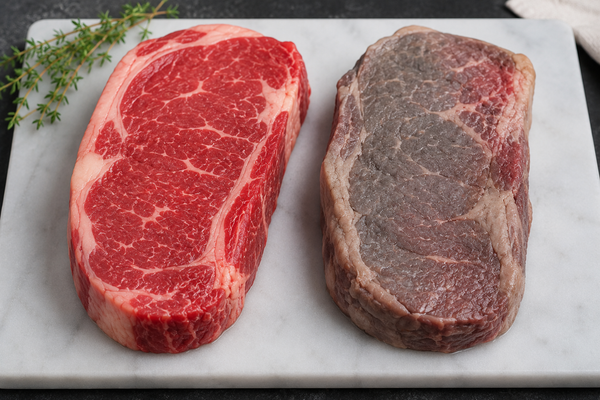

Knowing how to defrost meat the right way protects both your health and the quality of a good cut. Thaw it too fast or leave it on the bench, and you risk uneven results and food poisoning.
This guide covers the safest and quickest defrosting methods, realistic thawing times for steaks, mince and roasts, the exact temperatures that matter for food safety, and whether you can refreeze meat once it has thawed. Get it right and your premium cuts cook beautifully every time.
What Is the Safest Way to Defrost Meat?
The safest way to defrost meat is in the fridge, because it stays below 5°C the whole time and never enters the temperature danger zone where bacteria multiply. It takes planning, but it gives the best, most even result with the least risk.
To do it well, sit the meat on a plate or in a shallow container to catch any drips, then place it on the bottom shelf of the fridge. This stops liquid running onto ready-to-eat foods and causing cross-contamination. Keep the packaging on, or wrap loosely, and make sure your fridge is running at or below 5°C.
The big advantage of fridge thawing is control. The meat thaws slowly and evenly, the surface never warms up, and the texture holds. According to Food Standards Australia New Zealand, the danger zone sits between 5°C and 60°C, so keeping meat under 5°C throughout is what makes this method so reliable.
Fridge thawing also gives you flexibility, since a cut thawed this way can sit safely for a day or two before cooking. If you shop ahead with premium cuts delivered to your door, simply move tomorrow's meat to the fridge the night before.
How Do You Defrost Meat Quickly?

To defrost meat quickly, use the cold water method or the microwave, both of which are far safer than leaving it out on the bench. These suit those nights when dinner was not planned in advance.
Cold Water Method
Seal the meat in a leak-proof bag, removing as much air as possible, then submerge it fully in a bowl or sink of cold tap water. Change the water every 30 minutes, or use a slow trickle of cold running water, so it stays cold. Most steaks and mince portions thaw in about an hour, while larger pieces take two to three. Cook the meat straight after, since SA Health advises completing cold water thawing within about two hours.
Microwave Method
Use the defrost setting and the weight guide, turning the meat partway through. It is the fastest option but thaws unevenly and can start to cook the edges, so cook it immediately afterwards. Microwave thawing works best for mince, sausages and thin cuts rather than a prized eye fillet you want at its best.
Never use warm or hot water to speed things up. It warms the outer layer into the danger zone long before the centre thaws, which is exactly the risk these methods are meant to avoid.
How Long Does It Take to Defrost Meat?
Defrosting time depends on the method and the size of the cut, ranging from a few minutes in the microwave to several days in the fridge for a large roast. Use the table below as a practical guide.
| Cut | Fridge (below 5°C) | Cold water (cold, changed often) |
|---|---|---|
| Steaks, chops, mince (single portion) | 12 to 24 hours | About 1 hour |
| Sausages and thin cuts | 12 to 24 hours | 30 to 60 minutes |
| Whole chicken or larger joint (1 to 2kg) | 24 hours | 2 to 3 hours |
| Large roast or brisket (3kg+) | 3 to 4 days | Not recommended, use the fridge |
Always plan around the largest piece you are thawing. A thick brisket or bone-in roast needs far longer than it looks, and rushing it leads to a frozen middle and an overworked surface. When in doubt, the fridge is forgiving: meat that thaws early simply waits safely until you cook.
Why You Should Never Defrost Meat on the Bench

You should never defrost meat at room temperature on the bench, because the outer layer quickly climbs into the danger zone while the centre is still frozen. This is the most common and most risky thawing mistake.
Once meat sits between 5°C and 60°C, bacteria such as Salmonella and Listeria can grow rapidly, in some conditions doubling roughly every 20 minutes. By the time a cut looks thawed on the bench, its surface may have spent hours in that range.
Australian food safety guidance is consistent on this. The Better Health Channel recommends thawing in the fridge rather than on the counter, precisely to keep food out of the danger zone. Freezing pauses bacteria, it does not kill them, so any present before freezing become active again as the meat warms.
The fix is simple. Plan ahead for the fridge, or reach for the cold water or microwave method when time is short. A few minutes of planning protects an expensive cut and everyone eating it.
Can You Refreeze Meat After Defrosting?
Yes, you can usually refreeze meat that was thawed in the fridge, as long as it stayed below 5°C and was not left out for hours. How you thawed it decides whether refreezing is safe.
The CSIRO confirms it is fine to refreeze defrosted meat as long as it was thawed in a fridge at or below 5°C for no longer than about 48 hours. Whole cuts such as steaks and roasts handle this best, while mince and poultry are more delicate and should be refrozen within a day.
Meat thawed in cold water or the microwave is different. It should be cooked first, then cooled and frozen, rather than refrozen raw, because parts of it may have warmed during thawing.
Expect some quality trade-off. Each freeze and thaw cycle costs a little moisture and tenderness, so thaw only what you plan to cook. Splitting a delivery into meal-sized packs before freezing saves you from refreezing at all.
Conclusion
Defrosting meat well comes down to keeping it cold and planning ahead. The fridge is safest, cold water and the microwave are the quick options, and the bench is always off the menu. Treat your cuts with this care and they will reward you on the plate. Stock up on premium Australian meat delivered chilled and thaw with confidence.