
Knowing how to store meat safely is the difference between meat that stays fresh all week and meat you end up throwing away.
Good storage protects flavour, texture and your money, and it keeps food poisoning bacteria in check.
This guide covers the right fridge and freezer temperatures, how long different cuts last, the best way to freeze and vacuum seal, and how to thaw meat safely. Whether you have just unpacked a delivery or stocked the freezer, these simple habits keep every cut at its best.
How Do You Store Meat Safely?
To store meat safely, keep it cold at or below 5°C in the fridge or frozen at -18°C, wrap it well, and keep raw meat below ready-to-eat food so juices cannot drip down. Those few habits cover most of what matters.
The reason temperature is so important comes down to bacteria. The bugs that cause food poisoning grow fastest between 5°C and 60°C, a range the NSW Food Authority calls the temperature danger zone. Keeping meat colder than 5°C slows that growth right down, and freezing stops it almost entirely.
Storage is also about quality. Air, moisture loss and warm spots dull colour, dry out the surface and shorten shelf life. When you control temperature, wrapping and placement together, you protect both safety and the eating experience. The sections below break each part down so you can store every cut with confidence.
Fridge Storage Guidelines
Your fridge should run at or below 5°C, ideally around 4°C, with raw meat kept in the coldest part. Most people set their fridge and never check it, yet the temperature inside swings as the motor cycles and varies shelf to shelf.
The Food Safety Information Council recommends keeping the main compartment around 4 to 5°C and storing mince, poultry and seafood as close to 0°C as possible, since these spoil fastest. A cheap fridge thermometer takes the guesswork out, especially in summer when kitchens run hot.
Placement matters just as much as the dial. Store raw meat on the bottom shelf in a leak-proof container or tray, always below cooked and ready-to-eat food. This stops raw juices dripping onto items that will not be cooked again, which is one of the most common causes of cross contamination at home.
Keep meat in its original packaging until you are ready to use it, or move it to a clean sealed container. Avoid overpacking the fridge too, since good air circulation helps everything stay cold. The door is the warmest spot, so it is the worst place for raw meat.
Follow these fridge storage guidelines to keep every cut safe and fresh:
- Temperature: keep the fridge at or below 5°C, ideally around 4°C, and store mince, poultry and seafood in the coldest part, close to 0°C.
- Placement: store raw meat on the bottom shelf in a leak-proof tray, always below cooked and ready-to-eat food.
- Packaging: keep meat in its original packaging or a clean sealed container so juices cannot escape.
- Separation: keep raw meat well away from ready-to-eat foods to avoid cross contamination.
- Timing: use fresh cuts within their fridge window, and freeze anything you will not cook within two days.
How Long Does Meat Last in the Fridge?
Most fresh meat lasts 3 to 5 days in the fridge, while mince, sausages and poultry are best used within 1 to 2 days. Mince and poultry have far more surface area for bacteria, so they spoil quicker than a whole steak or roast.
If you will not use raw meat or chicken within about two days, the NSW Food Authority advises freezing it rather than risking it in the fridge. Use the guide below as a general timeframe for quality and safety, and trust your senses too. Off smells, a sticky surface or dull, greying colour mean it is time to let it go.
| Meat type | Fridge (0 to 5°C) | Freezer (-18°C) |
|---|---|---|
| Mince and sausages | 1 to 2 days | 2 to 3 months |
| Steaks, chops and cutlets | 3 to 5 days | 4 to 6 months |
| Roasts (beef, lamb, pork) | 3 to 5 days | 6 to 12 months |
| Raw chicken pieces | 1 to 2 days | up to 9 months |
| Whole chicken | 1 to 2 days | up to 12 months |
| Bacon and cured meats | up to 7 days sealed | 1 to 2 months |
| Cooked meat and leftovers | 2 to 3 days | 2 to 3 months |
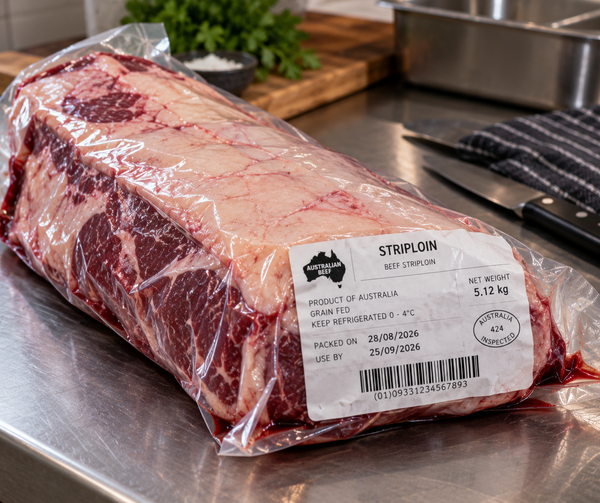
Vacuum-sealed cuts often last longer than loosely wrapped ones because there is far less air to drive spoilage. Always follow the use-by date on the pack, and once a vacuum seal is opened, treat the meat like any fresh cut.
Freezer Storage Guidelines
Freeze meat at -18°C or below, in small portions, wrapped tightly to push out as much air as possible. Freezing is the best way to extend the life of premium cuts, but how you do it decides whether the meat is just as good when it thaws.
Split larger packs into meal-sized portions before freezing. Smaller amounts freeze faster, which protects texture, and you can defrost only what you need rather than refreezing leftovers. Freezing one huge block slows the process and gives bacteria more time to multiply before the centre is solid.
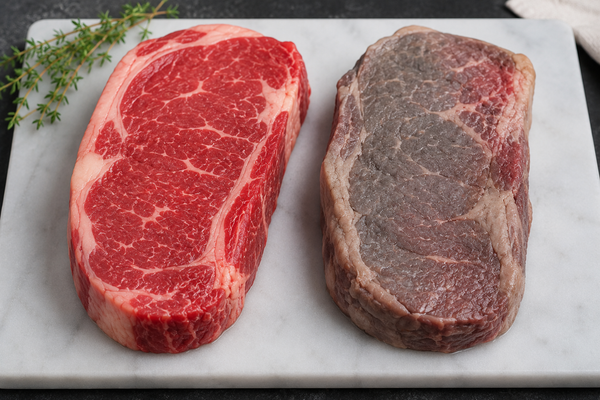
Wrapping is where most quality is won or lost. Air is the enemy, since it causes freezer burn, those dry, greyish patches on the surface. You do not need to unwrap pre-packaged meat on trays, simply slip it into a freezer bag, press out the air, then label and date it. For longer storage, our premium beef cuts are worth protecting properly.
Keep these freezer storage guidelines in mind every time you stock up:
- Temperature: keep your freezer at -18°C or lower so the meat stays frozen solid.
- Packaging: wrap tightly in freezer bags, heavy-duty foil or freezer paper, pressing out as much air as possible. Vacuum sealing gives the best protection against freezer burn.
- Labelling: label every pack with the cut and the date, and use the oldest first.
- Portioning: freeze in meal-sized portions so you only thaw what you need and never have to refreeze.
Why vacuum sealing helps
Vacuum sealing removes almost all the air around the meat, which slows oxidation and prevents freezer burn. It is the closest home cooks get to butcher-grade storage, and it noticeably extends how long cuts like steaks and Wagyu hold their quality in the freezer.
How Long Can You Freeze Meat?

At -18°C, meat stays safe to eat almost indefinitely, but quality is best within a few months to a year depending on the cut. Freezing halts bacterial growth, so the limit is about flavour and texture rather than safety.
According to the Food Safety Information Council, a fridge-freezer combination keeps frozen meat at peak quality for around six weeks, while a separate chest freezer running at -18°C holds quality for three months or more. Fattier cuts have a shorter window, since fat slowly turns rancid even when frozen, so pork and well-marbled beef are best eaten sooner than lean cuts.
The freezer storage column in the table above gives realistic windows for each type. Label everything with the cut and the date, and use the oldest first. Frozen meat that is past its best may look fine but can taste flat, dry or slightly off once cooked.
For the best results, freeze meat while it is fresh rather than on its final fridge day. Starting from a high-quality, well-handled cut means it comes out of the freezer in great shape, ready to cook.
How Do You Thaw Meat Safely?

Thaw meat in the fridge, in cold water, or in the microwave, never on the kitchen bench. Leaving meat out at room temperature lets the surface warm into the danger zone while the centre is still frozen, which is exactly how bacteria take hold.
The safest method is slow thawing in the fridge. Boneless chicken breasts usually defrost overnight, while a whole chicken or large roast can take a day or two. Once thawed this way, meat keeps in the fridge for an extra day before cooking, so you can plan ahead with no stress.
For a faster option, the NSW Food Authority suggests cold water thawing. Keep the meat in leak-proof packaging, submerge it in cold water, and change the water every 30 minutes to keep it cold. A 1.5 to 2kg pack usually thaws in two to three hours. Microwave thawing works too, but cook the meat straight away, since parts can begin to warm and cook during the process.
Always thaw rolled, stuffed or boned joints right through to the centre before cooking, otherwise the middle may stay raw. Never refreeze meat that has fully thawed unless you cook it first, then it can go back in the freezer as a cooked dish.
Common Storage Mistakes to Avoid
Most meat storage mistakes either let bacteria grow or quietly drain quality, and they are all easy to avoid. A few small habits protect both safety and the money you have spent on good meat.
- Thawing meat on the bench or leaving it at room temperature for more than two hours.
- Storing raw meat above ready-to-eat food, where juices can drip down and contaminate it.
- Refreezing raw meat that has fully thawed instead of cooking it first.
- Overpacking the fridge so cold air cannot circulate properly.
- Freezing meat in one large block rather than smaller, faster-freezing portions.
- Leaving frozen meat unlabelled, so older cuts get forgotten and wasted.
Conclusion
Storing meat safely comes down to a few reliable habits: keep the fridge at or below 5°C, freeze at -18°C, wrap tightly, and thaw in the fridge rather than on the bench. Get these right and every cut stays fresher, safer and better to eat. Ready to stock up? Explore our premium cuts delivered chilled across Australia.