Beef Gravy from Roast Pan Juices
Introduction
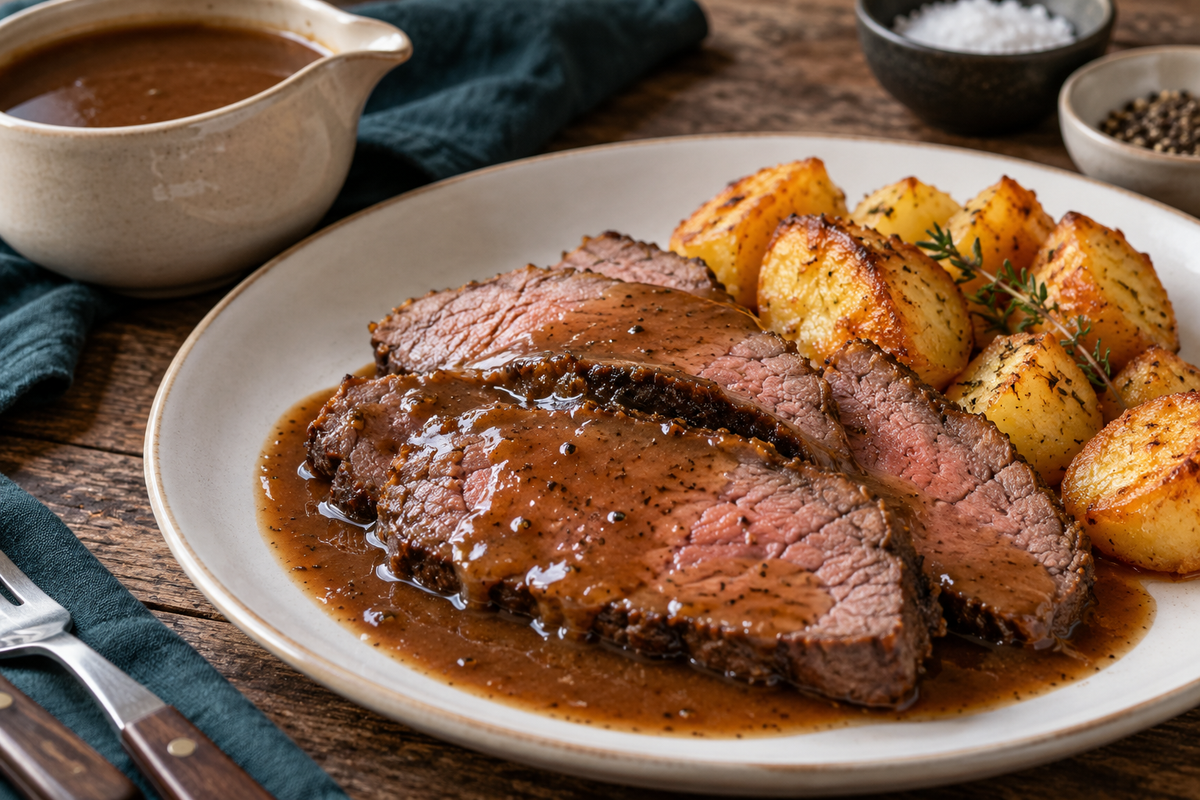
Beef gravy is made by cooking flour in the fat left in a roasting tin, then whisking in beef stock and the roast's own juices and simmering until smooth and glossy.
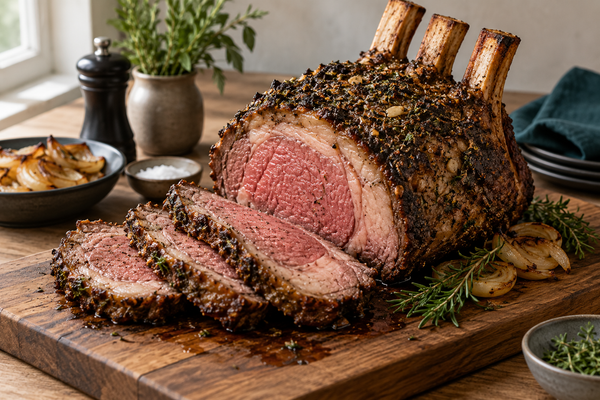
Those caramelised pan juices carry more flavour than any packet or cube, which is why gravy made straight from the tin tastes so much richer. It works with any roast you cook, from a lean grass-fed rostbiff to a whole rump or scotch fillet.
This recipe makes about 500ml, enough for six, and covers deglazing, a lump-free method, quick fixes and a no-drippings version for nights when there is no roast in the oven.
Ingredients
For 6 servings
- pan juices and fat from a 1.5 to 2kg roast beefsuch as grass fed rostbiff, rump or scotch fillet
- 2 tbspbeef fat from the roasting tintopped up with butter if needed
- 2 tbsp (20g)plain flour
- 125mldry red wineoptional (or extra stock)
- 500mlsalt-reduced beef stockhot
- 1 tspWorcestershire sauce
- 1 sprigthymeoptional
- resting juices from the roast
- 15gcold butterto finish
- sea salt and freshly ground black pepperto season
Utensils
8 items to gather · Tap to tick off
- Stovetop-safe roasting tin
- Heatproof bowl and spoon for skimming
- Balloon whisk
- Wooden spoon
- Ladle
- Fine sieve
- Small saucepan
- Gravy jug
Cooking Steps
Rest the roast
Lift the roast onto a board, cover loosely with foil and rest for 15 to 20 minutes. Save every drop of juice that collects on the board for the gravy.
Skim the fat
Tilt the roasting tin and spoon the clear fat into a heatproof bowl, leaving the dark juices and browned bits behind. Return 2 tbsp of fat to the tin, topping up with butter if the roast was lean. Leave out anything that has burnt black, as it will make the gravy bitter.
Cook the flour
Set the tin over medium heat, straddling two burners if needed. Whisk the flour into the fat and cook for 1 to 2 minutes, stirring, until it smells nutty and turns light brown.
Deglaze the tin
Pour in the red wine, or 125ml of the stock, and scrape up the browned bits with a whisk or wooden spoon. Let it bubble for about 1 minute until reduced by half.
Whisk in the stock
Add the hot stock a ladle at a time, whisking constantly so each addition is smooth before the next goes in. Stir in the Worcestershire sauce and thyme and bring to a simmer.
Simmer to thicken
Simmer for 5 to 8 minutes, stirring often, until the gravy coats the back of a spoon. Add the resting juices from the board and bring back to a simmer.
Strain and season
Pour the gravy through a fine sieve into a saucepan or warmed jug, whisk in the cold butter for a glossy finish, then taste and season with salt and pepper. Serve hot.
Nutrition
Per Serving
Recipe serves 6Nutritional values are estimates only and may vary based on specific ingredients, brands, cuts, cooking method, and portion sizes. For medical or dietary purposes, please consult a qualified nutritionist.
Tips and Pairing
People Also Ask
How do you make a good beef gravy? +
Make a good beef gravy by starting with the fat and browned juices from a roast. Cook flour in the fat for a minute or two, deglaze the tin with wine or stock, then whisk in hot stock gradually so it stays smooth. Simmer until it coats a spoon, add the resting juices, strain, and season at the very end.
What is beef gravy made of? +
Beef gravy is made of pan juices and fat from roast beef, plain flour to thicken it and beef stock for body, often with red wine and Worcestershire sauce for depth. A knob of butter at the end adds gloss. It is different from gravy beef, which in Australia is beef shin, a slow-cooking cut rather than a sauce.
How can I make quick beef gravy without drippings? +
Melt 30g butter in a saucepan, stir in 2 tbsp plain flour and cook until golden brown. Whisk in 500ml hot beef stock a little at a time, add 1 tsp Worcestershire sauce and a dash of soy sauce for colour, then simmer for 5 minutes until thickened. It takes about 10 minutes and needs no roast at all.
How do you thicken gravy without lumps? +
Cook the flour in the fat first, then add hot liquid gradually while whisking constantly, letting each addition turn smooth before the next. For gravy that is already made, whisk a slurry of cornflour and cold water into the simmering gravy rather than adding dry flour. If lumps still form, a stick blender or fine sieve fixes them quickly.
What is gravy beef called in Australia? +
In Australia, gravy beef is the butcher's name for beef shin, sometimes sold as stewing beef. It is a slow-cooking cut packed with connective tissue that melts into a rich, silky sauce in stews and casseroles, which is how it earned the name. It is not the sauce itself; for a roast, make gravy from the pan juices instead.