Roast Beef Rump with Winter Vegetables
Introduction
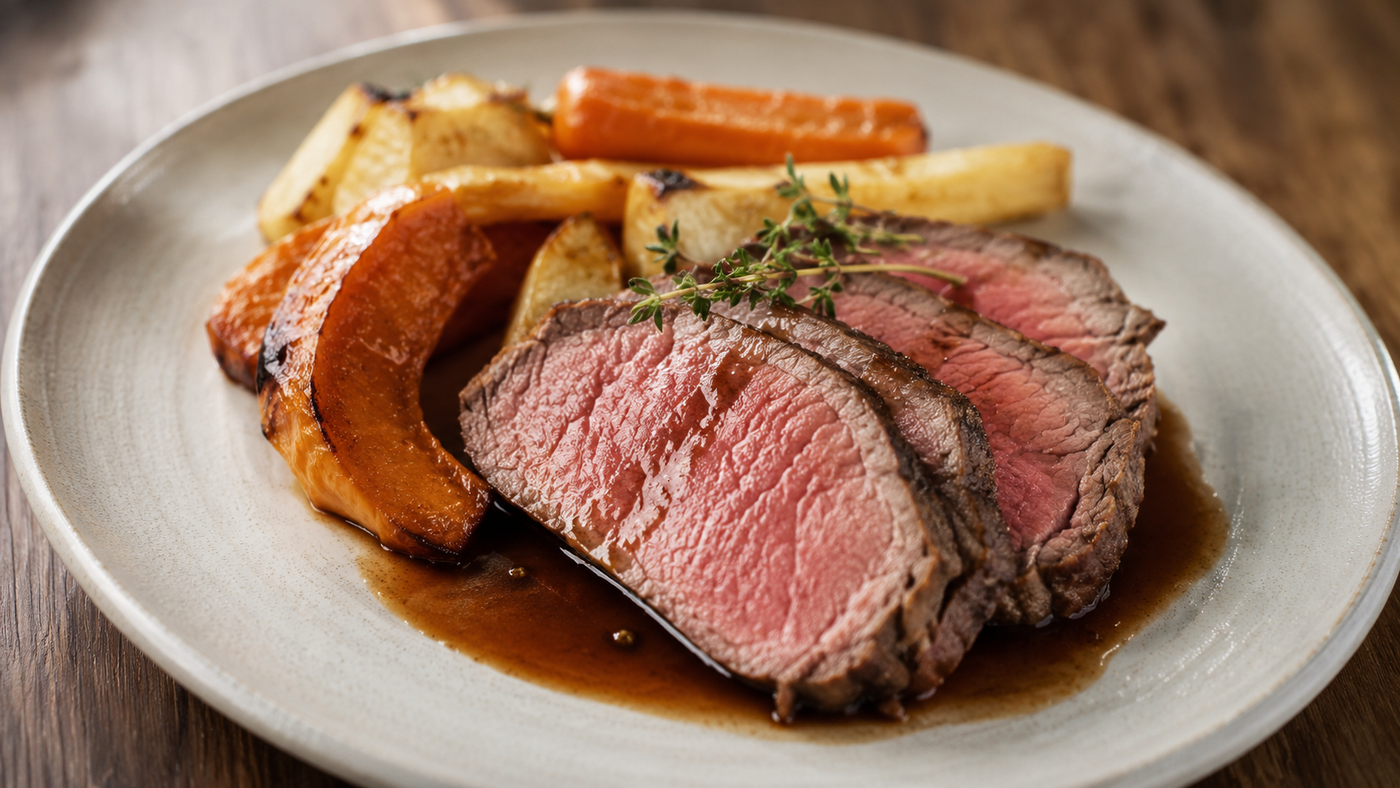
This is the kind of roast that makes a winter Sunday feel like an occasion without keeping you in the kitchen all day. A whole grass fed beef rump is seared hard for colour, then roasted over a tray of pumpkin, carrots, parsnips and red onion so the vegetables soak up the beefy juices as they caramelise. Rump is a lean, full-flavoured cut that rewards a hot oven and a proper rest, giving you a rosy medium rare centre and a deeply savoury crust. Finished with a quick red wine jus built from the pan, it serves six generously and carves beautifully for a family dinner.
Ingredients
For 6 servings
- 1.5kg grass fed beef rump roast
- 3 tbsp olive oil
- 4 garlic clovescrushed
- 2 tbsp fresh rosemarychopped
- 1 tbsp Dijon mustard
- Salt and freshly ground pepperto season
- 800g pumpkincut into wedges
- 4 carrotshalved lengthways
- 3 parsnipsquartered
- 2 red onionscut into wedges
- 1 bulb garlichalved across
- 2 sprigs thyme
- 1 cup red wine
- 300ml beef stock
- 1 tbsp plain flourfor the jus
Utensils
7 items to gather · Tap to tick off
- Large ovenproof pan or roasting tray
- Chopping board
- Sharp knife
- Meat thermometer
- Tongs
- Aluminium foil
- Small saucepan or use the pan for the jus
Cooking Steps
Bring the beef to room temperature
Take the rump out of the fridge 45 minutes before cooking and pat it dry. Mix the crushed garlic, rosemary, Dijon and 1 tbsp olive oil into a paste and rub it all over the beef. Season generously with salt and pepper. Preheat the oven to 200°C.
Sear for colour
Heat 1 tbsp oil in a large ovenproof pan or roasting tray over high heat. Sear the rump on all sides until deeply browned, about 2 minutes per side. This crust is where most of the flavour lives.
Prepare the vegetables
Toss the pumpkin, carrots, parsnips, red onion and halved garlic bulb with the remaining 1 tbsp oil, the thyme, and a good pinch of salt and pepper.
Roast
Sit the seared rump on top of the vegetables, or beside them on a large tray. Roast at 200°C for 15 minutes, then lower to 180°C and roast for a further 45 to 55 minutes, until the internal temperature reads 55 to 58°C for medium rare. Turn the vegetables once during cooking.
Rest the beef
Transfer the rump to a board, cover loosely with foil and rest for 15 minutes. The temperature will climb a few degrees as it rests, and the juices settle back into the meat. Keep the vegetables warm.
Make the red wine jus
Place the roasting pan over medium heat, stir in the flour, then pour in the red wine and scrape up the browned bits. Simmer for 2 minutes, add the stock and reduce for 5 to 6 minutes until glossy. Season to taste and strain if you prefer it smooth.
Carve and serve
Carve the rump against the grain into thin slices. Serve over the roasted winter vegetables with the red wine jus spooned across the top.
Nutrition
Per Serving
Recipe serves 6Nutritional values are estimates only and may vary based on specific ingredients, brands, cuts, cooking method, and portion sizes. For medical or dietary purposes, please consult a qualified nutritionist.
Tips and Pairing
People Also Ask
How long do you roast a beef rump per kilo? +
As a rule, roast beef rump for about 30 to 35 minutes per kilo at 180°C for medium rare, after an initial 15 minutes at 200°C. A 1.5kg rump takes roughly 60 to 70 minutes in total. The only reliable test is internal temperature, so pull it at 55 to 58°C for medium rare and rest before carving.
Should I sear beef rump before roasting? +
Yes. Searing the rump in a hot pan before it goes in the oven builds a deep, savoury crust through the Maillard reaction and adds a lot of flavour. Brown all sides for about two minutes each, then roast. It also gives the red wine jus its rich colour from the browned bits left in the pan.
What is the best temperature for medium rare roast beef? +
Pull roast beef rump from the oven at an internal temperature of 55 to 58°C for medium rare. It will rise another 2 to 3°C while resting to land around 58 to 60°C. Use a meat thermometer in the thickest part, avoiding any fat, for an accurate reading every time.
Can I use a different cut for this roast? +
Yes. This method suits other lean to medium roasting cuts well. A bolar blade, rump cap, or rostbiff all work, with the cooking time adjusted to weight and thickness. Richer cuts like scotch fillet roast beautifully too. Whatever you choose, roast to internal temperature rather than time and rest it well.
How do I keep the vegetables from going soggy? +
Cut the vegetables into even, chunky pieces, give them room on the tray, and avoid crowding so they roast rather than steam. Turning them once halfway through helps them colour evenly. If the beef finishes first, lift it out to rest and push the vegetables back into a hot oven to crisp up.