Roast Picanha (Rump Cap) with Chimichurri
Introduction
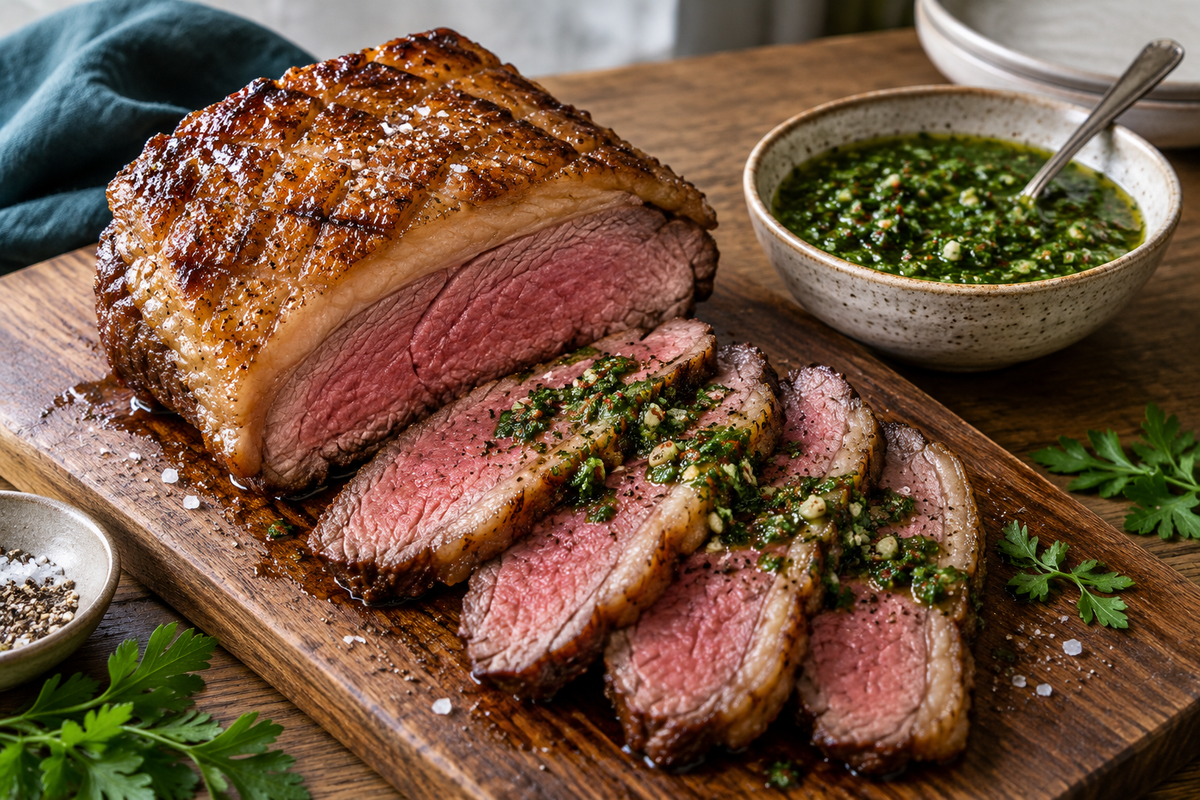
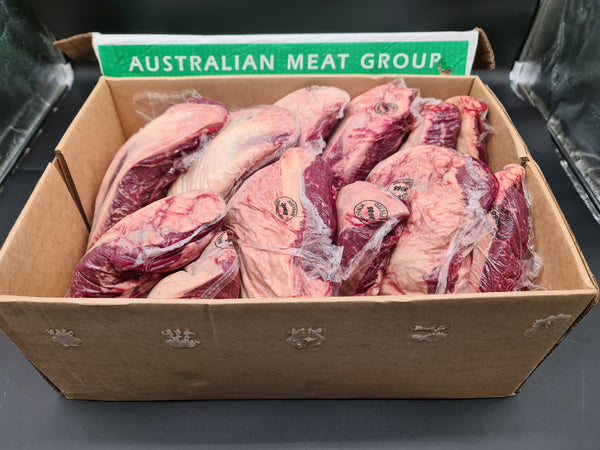
A rump cap roast, also called picanha, is the triangular cap muscle of the rump roasted whole, with its thick fat cap scored, salted and rendered until crisp, then sliced across the grain and finished with sharp, garlicky chimichurri.
The fat bastes the meat as it roasts, so a grass-fed rump cap stays juicy and full of flavour while the centre turns evenly pink.
This oven method needs no BBQ, takes about an hour from pan to plate, and roasts to a probe temperature so you get the doneness you want.
Ingredients
For 6 servings
- 1.4kgwhole grass fed rump cap (picanha)fat cap on
- 1 tbspcoarse sea saltfor salting ahead
- 1 tspfreshly ground black pepper
- 1 tspolive oilfor the pan
- 1 cupflat-leaf parsleyfirmly packed, finely chopped (chimichurri)
- 2 tbspfresh oregano leavesfinely chopped, or 2 tsp dried (chimichurri)
- 3garlic clovesfinely chopped (chimichurri)
- 1long red chillifinely chopped, or 1/2 tsp chilli flakes (chimichurri)
- 60mlred wine vinegarchimichurri
- 125mlextra virgin olive oilchimichurri
- 1/2 tspsea saltchimichurri
Utensils
9 items to gather · Tap to tick off
- Sharp boning or paring knife
- Chopping board
- Wire rack and tray
- Large ovenproof frying pan or cast iron pan
- Heatproof jug for the rendered fat
- Roasting tin with a rack, optional
- Digital probe thermometer
- Mixing bowl
- Carving knife
Cooking Steps
Trim and score
Pat the rump cap dry and trim any silverskin from the meat side. If the fat cap is thicker than about 1cm, trim it back, then score it in a 2cm crosshatch, cutting through the fat but not into the meat.
Salt ahead
Rub the coarse salt all over the rump cap, working it into the scores. Refrigerate it uncovered on a rack for at least 4 hours, or overnight. Take it out 45 minutes before cooking and heat the oven to 200C (180C fan).
Make the chimichurri
Mix the parsley, oregano, garlic, chilli, vinegar and salt in a bowl, then stir in the olive oil. Set it aside for at least 30 minutes so the flavours come together.
Render the fat cap
Place the rump cap fat side down in a large ovenproof frying pan with the oil and set it over medium heat. Cook for 8 to 10 minutes, carefully pouring off the rendered fat as it builds up, until the fat cap is deep golden and crisp. Sear each meat side for about 1 minute.
Roast fat side up
Season with the pepper and turn the rump cap fat side up, either in the pan or on a rack in a roasting tin. Roast for 20 to 30 minutes, until a probe in the thickest part reads 56 to 58C for medium rare. Start checking at 15 minutes.
Rest
Move the beef to a board and rest it uncovered, so the fat stays crisp, for 10 to 15 minutes. The centre climbs another 3 to 5C as it rests.
Slice and serve
Check which way the grain runs, then slice across it into 1cm slices. Arrange on a platter and spoon over the chimichurri.
Nutrition
Per Serving
Recipe serves 6Nutritional values are estimates only and may vary based on specific ingredients, brands, cuts, cooking method, and portion sizes. For medical or dietary purposes, please consult a qualified nutritionist.
Tips and Pairing
People Also Ask
What is the best way to cook rump cap? +
The best way to cook rump cap is to score and salt the fat cap, render it slowly in a pan until crisp, then roast it whole and fat side up at 200C until the centre reaches 56 to 58C. Rest it for 10 to 15 minutes and slice it across the grain. Cooking it whole keeps the meat juicy under its fat.
What is rump cap called in Australia? +
In Australia the cut is usually sold as rump cap, and many butchers and restaurants also use its Brazilian name, picanha. In the United States it is called top sirloin cap or coulotte. Whatever the label, it is the same triangular muscle from the top of the rump, covered by a thick layer of fat.
Should you score the fat on picanha? +
Yes, scoring the fat cap helps it render and crisp evenly and lets the salt season the meat underneath. Cut a 2cm crosshatch through the fat only, stopping before you reach the meat so the juices stay in. Trim the fat to about 1cm first if it is very thick, and keep the trimmings for roasting potatoes.
Do you cook picanha fat side up or down? +
Both, at different stages. Start fat side down in a pan over medium heat to render and crisp the fat cap, then turn it fat side up for roasting so the melting fat bastes the meat. Rest it fat side up and uncovered as well, which stops the crisp crust from turning soft.
What internal temperature should picanha reach? +
For medium rare, take picanha out of the oven at 56 to 58C and rest it until it reaches 60 to 63C in the centre. The Food Safety Information Council recommends whole beef cuts reach at least 63C, so pull at around 60C when serving pregnant women, older guests, young children or anyone with a weakened immune system.