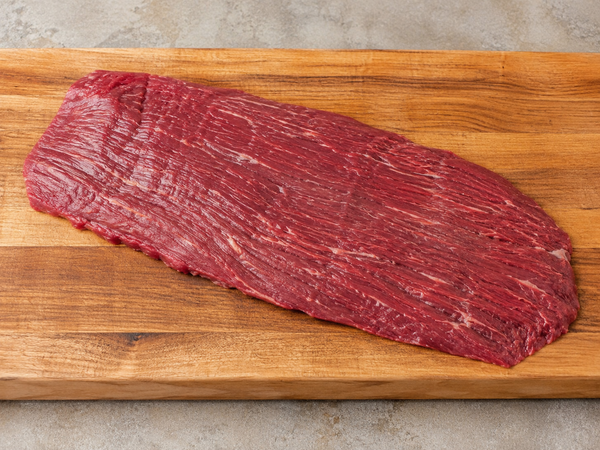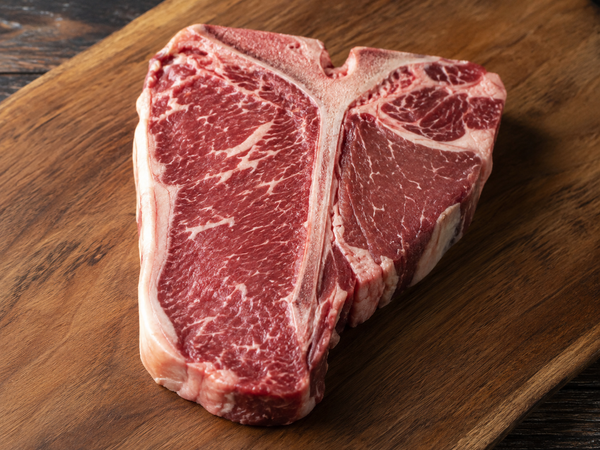

Picanha is the rump cap, a triangular muscle taken from the top of the rump with its thick fat cap left on, and in Australia your butcher will almost always call it rump cap rather than picanha. It is the cut Brazilian steakhouses built their reputation on, and it has quietly become one of the best value premium cuts on the Australian market.
This guide covers what the cut is, how it differs from the rest of the rump, what it costs per kg here, and how to cook and slice it so it eats the way it should.
What is picanha?
Picanha is the biceps femoris, the cap of muscle sitting on top of the rump primal, sold with a thick layer of fat still attached. That fat layer is not trim waste. It is the defining feature of the cut and the reason it behaves differently to everything around it.
The muscle is roughly triangular and tapers to a point at one end. A whole cap usually weighs somewhere around 1 to 1.5kg, which makes it a natural size for feeding a table rather than portioning into single steaks. Ours are sold in bulk packs, so check the pack weight on the product page before you order.
What makes the cut work is the relationship between the meat and the fat. The muscle underneath is lean and firm with a clear grain, while the cap above it is soft and renders readily under heat. Cook it fat side down and that fat melts through the meat as it goes, doing the basting for you. Trim the fat off and you have removed most of what makes picanha worth buying.
What is picanha called in Australia?
In Australia picanha is sold as rump cap, and the two names refer to exactly the same cut. If you ask an Australian butcher for picanha you may get a blank look, but ask for a whole rump cap with the fat on and you will get the right thing.

The naming varies more than most cuts because it travels well and every market adopted it differently.
| Name | Where it is used | Notes |
| Picanha | Brazil | The churrasco name that travelled worldwide |
| Rump cap | Australia and New Zealand | The standard butchery term here |
| Coulotte or top sirloin cap | United States | Same muscle, different primal naming |
| Rump cap or rump tail | United Kingdom | Often sold already trimmed of fat |
| Tapa de cuadril | Argentina and Spain | Common on South American menus |
One practical warning. Because the cut is prized for its fat, some retailers sell rump cap already trimmed down to a thin layer. That is not the same product, and it will not cook the same way.
Picanha, rump and rostbiff: how the rump is broken down
The rump cap is one muscle lifted off the top of a whole rump, and what remains underneath is sold separately as rostbiff. Understanding that split explains why prices and labels vary so much between butchers.
A whole rump primal is a large piece containing several muscles. The cap sits across the top, held on by a natural seam, and comes away cleanly when a butcher works the knife along it. It is a small part of the total weight, which is why it carries a premium over the rump it came from.
Once the cap is removed, the larger remaining muscle is rostbiff, a lean roasting piece with no fat cover. Rostbiff is excellent value and roasts well, but it will never give you the self-basting effect picanha does. Some butchers skip the separation entirely and sell whole rump with the cap still attached, which is worth knowing if you want to break it down yourself.
What does picanha taste like?
Picanha tastes properly beefy with a firm, satisfying chew, sitting well clear of eye fillet on flavour and just under scotch fillet on tenderness. It is a cut for people who want to taste the beef rather than have it melt away.
The lean muscle underneath the cap has a coarser grain than a loin cut, so it eats with more structure. That is a feature rather than a flaw, provided you slice it correctly. Cut it the wrong way and the same piece of meat will feel tough for reasons that have nothing to do with quality.
The rendering fat cap is what lifts it. As the fat melts it carries flavour down through the meat and leaves a crisp, golden edge that most people go for first. Grass-fed and finished Angus, which is what we stock, gives a cleaner and slightly more mineral flavour than grain-fed, with the fat still doing the heavy lifting.
How to cook picanha
Score the fat cap lightly, season generously with salt, and always start with the fat side facing the heat so it renders before the meat overcooks. Everything else is a matter of the format you are working with.

| Method | Best for | Approach |
| Whole roast | A family roast or a crowd | Fat side up, hot start to render, then moderate heat to finish |
| Thick steaks on the grill | Steak night with control over doneness | Cut into thick steaks first, fat edge down to render, then sear both sides |
| Churrasco skewers | Brazilian style, feeding a group | Bend thick strips into a C shape on a skewer, fat facing out, turn over coals |
| Reverse sear | A whole cap you want evenly pink | Low oven to temperature, then a hard sear on the fat |
Whichever method you use, pull it at 52 to 54C internal for medium rare and let carryover heat finish the job. Picanha is lean under the cap and firms up quickly past medium, so a thermometer earns its place here. Then rest it, since resting beef properly is what keeps the juices in the meat rather than on the board.
How to slice picanha against the grain
Cut the whole cap into thick steaks following the direction of the grain, then slice each cooked steak across the grain before serving. Doing it the other way around is the single most common reason people find picanha chewy, and it has nothing to do with the quality of the beef.
How to buy picanha in Australia, and what it costs
Expect to pay roughly $28 to $33 per kg for quality Australian grass-fed rump cap, which makes it one of the better value premium cuts available here. For comparison, scotch fillet in the same grass-fed grade generally runs from around $39 to $54 per kg.
Fat cap thickness is the first thing to check. You want a solid, even layer left on, not a shaved surface. If a product photo shows the muscle bare, it has been over-trimmed and you have lost the point of the cut.
After that, look at the grading and the feeding. MSA grading scores eating quality rather than appearance, and grass-fed and finished tells you the animal stayed on pasture rather than being finished on grain. Our rump cap range is 100% grass-fed and finished Angus, MSA graded, free of added hormones and antibiotics, vacuum sealed and delivered chilled rather than frozen. The AMG rump cap starts at $28 per kg, with the Southern Ranges cap sitting a little above it.
Buying online has one clear advantage with this cut. Supermarket rump is rarely sold as a separated cap, so unless your local butcher breaks rump down properly you may not find a true picanha at all.
Is picanha worth it?
Picanha is worth buying whenever you are cooking for a group and want maximum flavour for the money, and it is the wrong choice if you want a soft, refined steak. The firmness that BBQ cooks love is exactly what some people do not want on a plate.
On price it makes a strong case. At $28 to $33 per kg it undercuts porterhouse and sits well below scotch fillet, while delivering more character than either on a grill. For a backyard BBQ it is difficult to beat, which is why it keeps appearing in guides to the best steak cuts for the barbecue.
Where it loses is on softness. If you are cooking for someone who wants a knife to glide through the meat, eye fillet or scotch fillet will serve you better and nobody should pretend otherwise. Picanha rewards a cook who is happy to score fat, watch temperature and slice with intent. If you would rather roast it whole and carve at the table, our roast beef rump with winter vegetables works well with a cap left on.
Conclusion
Picanha and rump cap are the same cut, and the fat cap is the whole point of it. Score it, cook it fat side first, and slice across the grain. Browse the grass-fed rump cap range at Cost Cut Meats for MSA graded Angus delivered chilled across Australia.