Herb and Mustard Roast Beef with Cauliflower Mash
Introduction
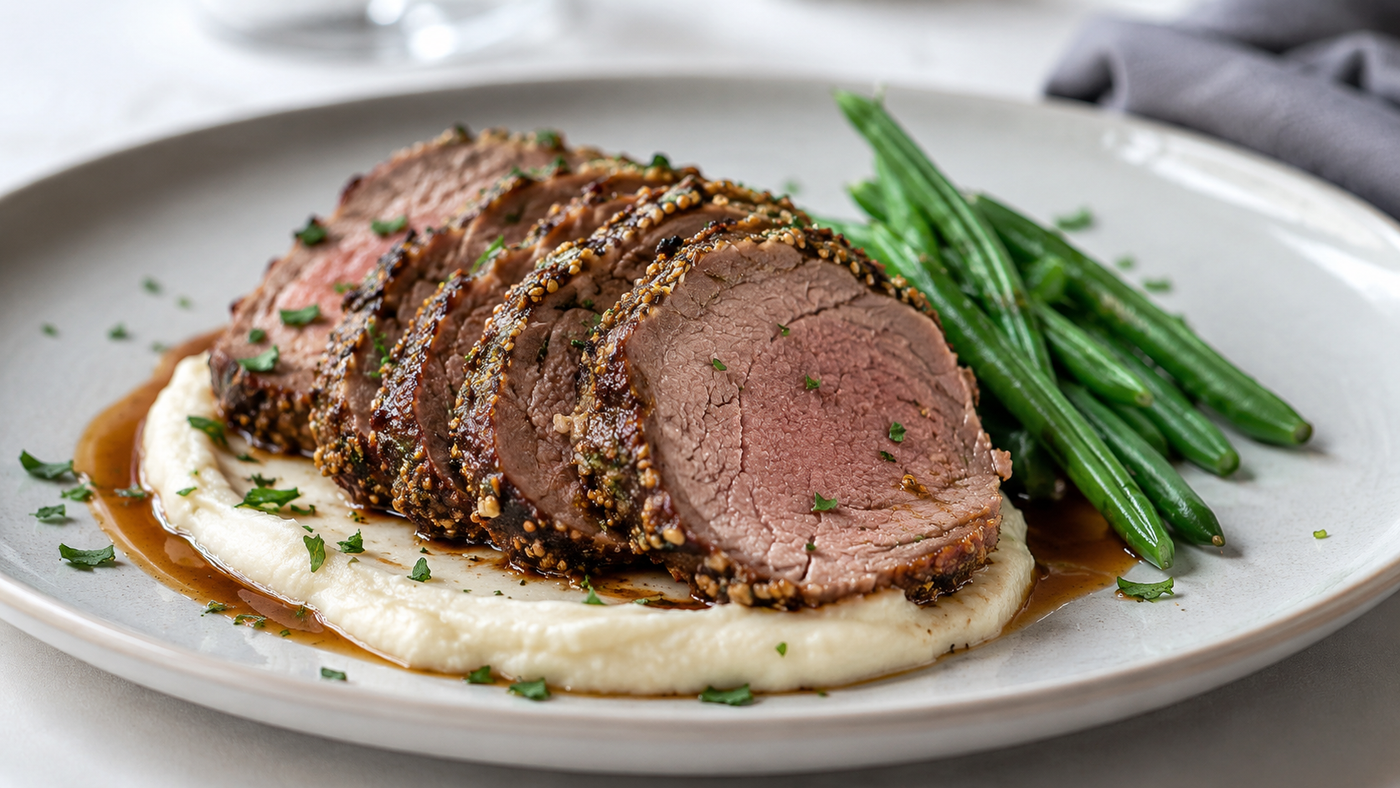
A proper Sunday roast does not have to leave you weighed down. Here a grass fed beef rump roast is brushed with sharp Dijon mustard, then pressed into a fragrant crust of rosemary, thyme, parsley and garlic before it goes into a hot oven. The mustard sets into a savoury, golden coat while the inside stays blushing and medium rare, just as good beef should be. Underneath sits a bowl of cauliflower mash so smooth and buttery it stands in for potato without a second thought, keeping the whole plate light and low carb. It feels indulgent, it carves beautifully at the table, and it lets the quality of the beef do the talking.
Ingredients
For 6 servings
- 1.5kg grass fed beef rump roast (or scotch fillet roast)
- 2 tbsp Dijon mustard
- 3 cloves garlicfinely grated
- 2 tbsp fresh rosemaryfinely chopped
- 2 tbsp fresh thyme leaves
- 3 tbsp fresh parsleyfinely chopped
- 2 tbsp olive oil
- Sea salt and freshly cracked black pepper
- 1 large head cauliflowercut into florets
- 40g butter
- 60ml thickened cream
- 1 clove garliccrushed (for the mash)
Utensils
6 items to gather · Tap to tick off
- Heavy ovenproof pan
- Meat thermometer
- Roasting board
- Steamer or saucepan with steamer basket
- Stick blender or food processor
- Sharp carving knife
Cooking Steps
Bring the beef to room temperature
Take the grass fed beef rump roast out of the fridge 45 minutes before cooking and pat it dry. Season all over with sea salt and pepper. Preheat the oven to 200°C.
Sear for colour
Heat the olive oil in a heavy ovenproof pan over high heat. Sear the roast on all sides until deeply browned, around 2 minutes per side, then lift onto a board to make the crust.
Build the herb and mustard crust
Mix the rosemary, thyme, parsley and grated garlic together. Brush the warm roast all over with Dijon mustard, then press the herb mixture firmly onto the mustard so it forms an even coat.
Roast to medium rare
Return the roast to the pan and into the oven. Roast for about 35 to 40 minutes, until a meat thermometer reads 55 to 58°C at the centre for medium rare.
Rest the beef
Transfer the roast to a board, cover loosely with foil and rest for 15 minutes. The internal temperature will climb 2 to 3°C as it rests and the juices settle back through the meat.
Make the cauliflower mash
While the beef roasts, steam the cauliflower florets until very tender, around 12 minutes. Drain well, then blend with the butter, cream and crushed garlic until silky. Season to taste.
Carve and serve
Slice the rested roast against the grain into thick pieces. Spoon the warm cauliflower mash onto plates, lay the beef over the top and finish with any resting juices and a little extra parsley.
Nutrition
Per Serving
Recipe serves 6Nutritional values are estimates only and may vary based on specific ingredients, brands, cuts, cooking method, and portion sizes. For medical or dietary purposes, please consult a qualified nutritionist.
Tips and Pairing
People Also Ask
What is the best cut for herb crusted roast beef? +
A grass fed beef rump roast is ideal, giving lean, full flavoured slices that take a crust well and carve neatly for a crowd. If you want something richer and more marbled, a scotch fillet roast is an excellent alternative. Both respond beautifully to a hot sear followed by a moderate oven and a proper rest.
How do I get the herb crust to stick to the beef? +
Brush the seared roast with Dijon mustard first, as it acts as the glue for the herbs. Press the chopped rosemary, thyme, parsley and garlic firmly onto the mustard so it forms an even layer. Searing the beef before crusting also helps, since the tacky browned surface grips the coating during roasting.
What internal temperature should roast beef reach for medium rare? +
Pull the roast when a meat thermometer reads 55 to 58°C at the thickest part for medium rare. Rest it for 15 minutes and the temperature will rise another 2 to 3°C from carryover heat. For other levels, aim for 50 to 52°C rare, 63 to 65°C medium and 70°C and above for well done.
Is cauliflower mash actually low carb? +
Yes, cauliflower mash is far lower in carbohydrates than potato mash while still delivering a smooth, comforting texture. This recipe keeps it simple with butter, cream and garlic, landing at around 7g of carbohydrates per serving. It is a natural fit for low carb, keto and lighter eating without sacrificing the feel of a classic roast.
Can I prepare this roast ahead of time? +
You can make the herb mixture and steam the cauliflower a few hours ahead, then blend the mash just before serving. The beef is best seared, crusted and roasted on the day so the crust stays fresh and the meat is perfectly medium rare. Leftovers, however, keep well and are excellent cold.