
The fastest way to save money on groceries is to fix the biggest line on the bill first, and for most Australian households that line is meat. This guide starts there: cut swaps that save $10 to $20 per kg, bulk buying, freezer economics and portioning, then widens to the supermarket tactics that protect the rest of the trolley.
Each move carries an approximate AUD saving so you can see what a disciplined week actually returns.
Where the Grocery Money Actually Goes
Food is one of the largest weekly expenses for Australian households, and meat is usually the single biggest line within it. Most families of four spend $250 to $350 a week on groceries, with meat commonly $55 to $80 of that, ahead of any other category on the docket. Spending patterns tracked by the Australian Bureau of Statistics show food consistently near the top of household budgets.
That concentration is good news for saving. A 15 percent improvement on an $80 meat spend returns more than clipping coupons across twenty smaller items, and the moves below compound: cheaper cuts, bought in bulk, portioned properly, planned into meals.
Swap to Cheaper Cuts Without Losing Quality

Swapping premium cuts for their value cousins saves $10 to $20 per kg with little sacrifice on the plate. These are guide prices, but the gaps hold: swap scotch fillet at around $40 per kg for oyster blade at about $17 and you keep rich, beefy grilling steak; swap rump roasts at $24 for chuck at $16 anywhere the meat cooks slowly; swap chicken breast for thigh and gain juiciness while saving.
The pattern behind every swap is the same: you are paying for tenderness that the cooking method can supply for free. Slow cooking, marinating and resting turn the cheaper beef cuts that eat well into dinners most guests cannot pick from the premium version.
Buy Meat in Bulk and Use Your Freezer
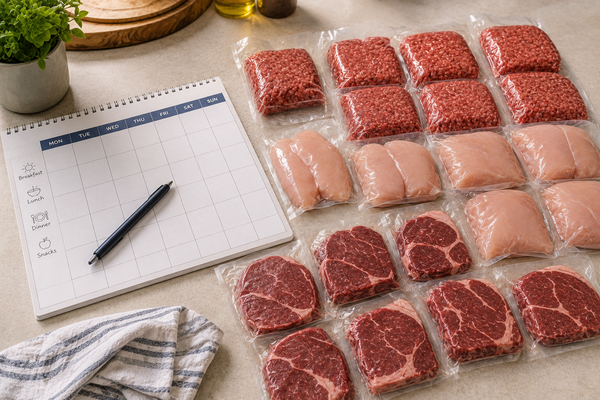
Bulk buying drops the per kg price, and the freezer removes the waste risk that usually stops people. Larger packs of mince, chicken and slow cook cuts routinely cost 10 to 20 percent less per kg; the full numbers are in our guide to bulk meat savings.
The discipline is in the first hour: portion everything into meal-sized amounts before freezing, label with the date, and freeze flat where you can. Raw beef keeps months in a well-run freezer; the exact safe freezer storage times per cut are on our storage guide. A freezer stocked with portioned value cuts is a price you locked in weeks ago, immune to this week's shelf tags.
Plan Meals Around the Meat You Buy
Meal planning saves money because it makes the meat purchase the starting point instead of an impulse. Choose three or four proteins for the week, assign them to nights, and shop once against that list. Unplanned midweek shops are where budgets leak; every extra trip adds items the plan never needed.
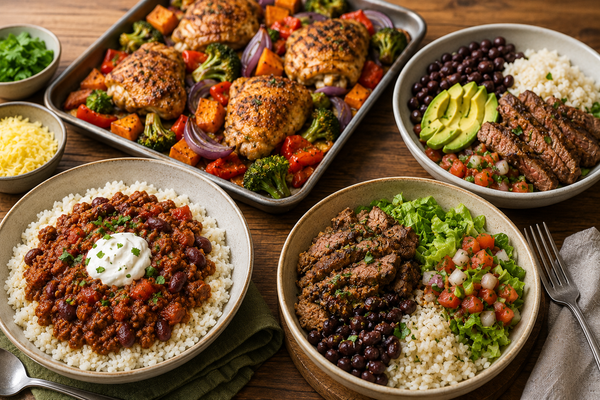
Then cook once and eat twice. A doubled bolognese, casserole or curry turns one cooking session into two dinners, and the second one is the meal that stops a takeaway order. Planned leftovers are the cheapest food in the house.
Portion Correctly and Stop Overbuying
Most households buy more meat than the plate needs, and the excess is an invisible tax on every shop. A standard serve is 150g to 250g of raw meat per adult depending on the cut and the dish; stretched meals like sauces and casseroles sit lower again. Our guide to portion sizes per person gives the numbers by cut and occasion.
Buying to portions rather than habit typically trims 10 to 15 percent off the meat line without changing a single meal. That is $6 to $10 a week for a family of four, saved before anything is cooked.
Supermarket Tactics That Still Matter
Once the meat strategy is set, the classic supermarket habits protect the rest of the bill. Read unit prices rather than shelf prices, since pack sizes are designed to blur comparison. Buy home brand for staples where the product is identical, time purchases to specials cycles, and never shop hungry or without a list.
Waste is the last leak: Australian households throw out a meaningful share of the food they buy, so a weekly fridge audit before shopping, and a freezer that catches anything at risk, effectively earns back money already spent. Where you buy matters too; our honest comparison of online butcher versus supermarket prices shows when delivery wins on the cuts this guide is built on.
A Sample Weekly Savings Plan
Stacked together, these moves return roughly $40 to $50 a week for a typical family of four. The figures below are approximate guides; your numbers will vary with what you already do.
| Move | What it looks like | Approx. weekly saving (AUD) |
| Cut swaps | Oyster blade for scotch, chuck for rump, thigh for breast | $15 |
| Bulk buying | Larger packs of mince and slow cook cuts, portioned and frozen | $8 |
| Correct portioning | Buying 150g to 250g per adult instead of by habit | $7 |
| Meal planning and leftovers | One shop, doubled batches, no unplanned takeaway | $12 |
| Unit pricing and specials | Comparing per 100g and timing staples | $6 |
| Total | $48 |
Held for a year, that is around $2,500 kept, without eating less meat or eating worse.
Conclusion
Saving money on groceries starts with the biggest line on the bill: buy smarter cuts, buy them in bulk, portion properly and plan the week around them. The supermarket habits protect the rest. Order your value cuts and bulk packs from Cost Cut Meats and put the $48 a week back where it belongs.