
Buying meat in bulk is one of the simplest ways to cut your grocery bill, often saving up to around 40% on supermarket shelf prices when you choose the right cuts, store them well, and avoid waste.
This guide explains how to buy meat in bulk and save in Australia without gambling on quality.
We cover what bulk buying really means, how much you can expect to save, whether it suits your household, the freezer space you need, the best cuts to stock, and where to buy.
What Does Buying Meat in Bulk Actually Mean?
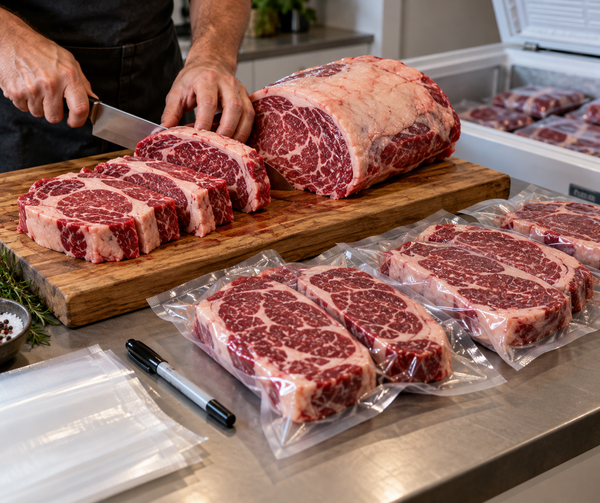
Buying meat in bulk means purchasing larger quantities at a lower price per kilo, then portioning and freezing what you do not use straight away. It can be a bulk box from an online butcher, a wholesale-style pack, or a share of a whole or part carcass.
The savings come from scale. Larger packs cut down on handling, packaging, and the smaller margins layered onto individual retail cuts. When you buy farm-direct from a supplier like Cost Cut Meats, there are fewer steps between the farm and your freezer, which is where a lot of the supermarket mark-up disappears.
There is a difference between buying in bulk and simply buying a lot. Smart bulk buying is planned around cuts you will actually cook, a freezer that can hold them, and prices you have checked. Done well, you eat better meat for less. Done carelessly, you tie up money in cuts that sit in the freezer for a year.
Why Buy Meat in Bulk?
People buy meat in bulk for four main reasons: lower cost per kilo, better quality control, fewer shopping trips, and less last-minute reliance on whatever the supermarket has left.
- The clearest benefit is price. A larger pack almost always works out cheaper per kilo than the same cut bought piece by piece, and buying ahead lets you stock up when a cut is on special rather than paying full price in a rush.
- Quality is the second reason. When you buy bulk from a specialist butcher, you can choose grass-fed and finished, MSA-graded meat instead of settling for an unmarked tray. If you want to understand why that matters, our guide to grass-fed vs grain-fed beef breaks down the difference.
- The rest is convenience. A well-stocked freezer means dinner is always a quick thaw away, fewer midweek shops, and less food waste, since you portion to suit your household rather than buying fixed supermarket pack sizes.
How Much Can You Really Save Buying Meat in Bulk?
Most Australian households save somewhere between 20% and 40% per kilo by buying meat in bulk instead of in single retail packs, with the biggest gains on premium cuts and mince bought in larger quantities.
The saving is easiest to see when you compare price per kilo rather than pack price. The example below is illustrative, since prices vary by season, supplier, and cut, but it shows the shape of the gap.
| Cut | Typical supermarket (per kg) | Buying in bulk (per kg) | Approx. saving |
|---|---|---|---|
| Beef mince | $16 to $18 | $11 to $13 | Around 30% |
| Beef rump | $28 to $34 | $20 to $24 | Around 28% |
| Chuck or gravy beef | $18 to $22 | $13 to $15 | Around 30% |
| Porterhouse | $40 to $45 | $28 to $32 | Around 28% |
| Scotch fillet | $45 to $52 | $33 to $38 | Around 27% |
| Eye fillet | $55 to $65 | $42 to $48 | Around 25% |
| Lamb chops | $22 to $28 | $16 to $19 | Around 28% |
| Pork loin chops | $16 to $20 | $12 to $14 | Around 28% |
| Sausages | $12 to $16 | $9 to $11 | Around 28% |
Example figures only, in AUD. Actual prices vary by supplier and season.
Where does the saving come from? Larger packs spread fixed costs across more meat, farm-direct supply removes middle steps, and buying on sale lets you lock in a lower price and freeze. Stacking all three is how the savings reach the top of that range. For a closer look at value-led options, see our rundown of the cheapest beef cuts worth buying.
Is Buying Meat in Bulk Worth It?
Buying meat in bulk is worth it for most households that cook meat regularly and have freezer space, but it makes less sense for very small households, irregular cooks, or anyone without room to store it.
The honest test is whether the saving beats the cost of holding the meat. If you already own a freezer with spare capacity, the maths is straightforward and the saving is close to pure. If you need to buy a separate freezer, factor that in. A small chest freezer runs from a few hundred dollars, plus roughly $50 to $100 a year in electricity, so the savings need time to catch up.
Bulk buying pays off fastest for families, batch cookers, and meal preppers who get through meat steadily. It pays off slowest for one or two-person households who cook meat occasionally, where cuts risk sitting too long and quality slips.
If you are in between, start small. A single bulk box or a share split with someone else lets you test the routine before committing to a second freezer.
Tips for Buying Meat in Bulk and Saving

The buyers who save the most follow a few simple habits: they know their prices, buy what they will use, buy what they can store, and split larger orders when it helps.
1. Know Your Prices
Before you commit to a bulk order, learn the per-kilo price of the cuts you buy most at the supermarket, a butcher, and online. Without that benchmark you cannot tell a real bulk deal from a big pack at an ordinary price.
2. Buy What You Can Use
Stock cuts your household actually cooks and enjoys, not whatever is cheapest. A bargain you never get around to cooking is not a saving, so match your order to your real weekly meals and how you like to eat.
3. Buy What You Can Store
Only buy what your freezer can hold properly. Overpacking slows freezing and risks quality, so measure your space first and leave room for air to circulate around well-sealed, labelled portions.
4. Go Halves With a Friend
Splitting a large box or a part carcass with family or a neighbour gives you wholesale-style pricing without needing a huge freezer. You share the cost, the cuts, and the storage, which makes premium bulk buying realistic for smaller homes.
5. Portion and Label on Arrival
Portion meat into meal-sized amounts as soon as it arrives, then label each pack with the cut and the date. It keeps your freezer organised, makes thawing easier, and means older packs get used first.
6. Mix Everyday Cuts with a Few Premium Ones
Balance value cuts for weekly meals with a few premium steaks for occasions. You get the everyday savings of bulk buying without giving up the treat of a good steak when you want one.
7. Check Delivery and Cold Chain
If you buy online, check how the meat is packed and shipped. Good cold-chain packaging keeps a bulk order properly chilled or frozen in transit, so it arrives in top condition and ready to store.
One more habit worth building: buy on sale and freeze. Keep an eye on the sale range and stock up when a cut you love drops in price.
How Much Freezer Space Do You Need, and How to Store It

As a rough guide, a small chest freezer of around 200 litres holds the equivalent of a large bulk box, roughly 50 to 70 kg of well-packed meat. Measure your spare capacity before ordering so nothing has to be crammed in.
Good storage protects the saving. Portion meat into meal-sized amounts on arrival, vacuum seal or wrap tightly to push out air, then label every pack with the cut and the date. Tight, airless packaging is the single best defence against freezer burn, which dries and toughens meat over time.
Frozen meat stays safe indefinitely at minus 18C, so storage times are about quality, not safety. The guide below is based on the FSIS freezer storage chart.
| Meat | Best-quality freezer time |
|---|---|
| Beef steaks | 6 to 12 months |
| Beef, pork and lamb roasts | 4 to 12 months |
| Lamb chops and steaks | 6 to 9 months |
| Pork chops | 4 to 6 months |
| Mince and sausages | 3 to 4 months |
Thaw in the fridge rather than on the bench, allowing a day for most cuts, to keep the meat safe and the texture intact.
The Best Cuts to Buy in Bulk
The best cuts to buy in bulk are everyday workhorses that freeze and portion well, plus a few premium cuts worth buying ahead for special occasions.
For regular meals and meal prep, mince, rump, chuck, and other slow-cook cuts are ideal. They freeze cleanly, suit batch cooking, and deliver the most meals per dollar. They are also forgiving, which makes them low-risk to stock in volume.
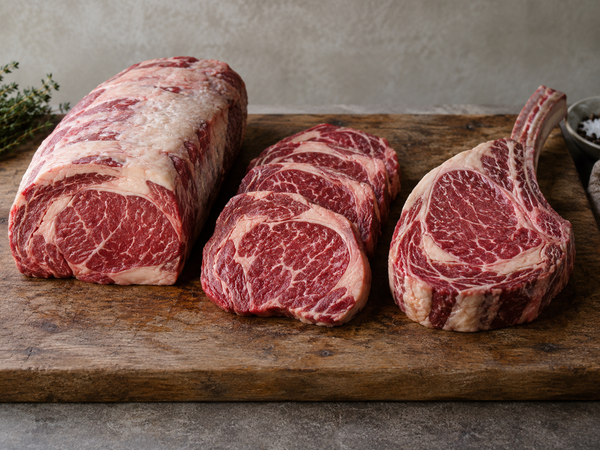
For occasions, premium steak cuts reward buying ahead. Stocking a few Wagyu or scotch fillet steaks means you always have something special on hand without a last-minute premium price. If you are weighing the two grades, our Wagyu vs Angus beef guide helps you choose.
Not sure which cut is which? The Australian beef cuts reference explains where each cut sits and how it cooks, so you can build a bulk order around the meals you actually make.
Where to Buy Meat in Bulk in Australia
You can buy meat in bulk from supermarkets, local butchers, wholesalers, and online farm-direct suppliers, with online specialists usually offering the best mix of price, quality, and convenience.
Supermarkets sell larger family packs, but the per-kilo saving is modest and quality is rarely premium. Local butchers and wholesalers can be excellent value if you have one nearby and can collect, though range and grading vary.
Online farm-direct butchers are where bulk buying makes the most sense for most Australians. Cost Cut Meats delivers 100% grass-fed and finished, MSA-graded meat to your door, with free shipping on orders over $450, which suits a freezer-filling bulk shop. Carnivore Society is another option worth a look for premium bulk boxes. Buying online also gives you cold-chain packaging and the ability to plan an order around exactly the cuts you want.
Conclusion
Buying meat in bulk genuinely saves money when you check your prices, buy cuts you will use, store them properly, and choose a quality supplier. Done well, you eat better meat for less and shop less often. Browse the full range or the current sale to start your first bulk order.