
Choosing between grass fed and grain fed beef comes down to what you value most: a leaner, more robust flavour, or richer marbling and a softer, buttery texture.
Both can be excellent, and in Australia most cattle start on pasture regardless of how they finish.
This guide compares the two on flavour, marbling, nutrition, price and cooking, then gives a clear framework for which to buy depending on the meal, your budget and the result you want on the plate.
What's the difference between grass fed and grain fed beef?
The main difference between grass fed and grain fed beef is diet, which shapes flavour, marbling and fat. Grass fed beef is leaner with a robust, earthy flavour, while grain fed beef is more marbled, milder and more tender. Buy grass fed for leaner everyday meals and a beefier taste, and grain fed for richly marbled steaks and special occasions.
What is grass fed beef?
Grass fed beef comes from cattle that graze on pasture, and grass finished beef means they stay on grass right up to processing. This pasture diet produces a leaner carcass with a distinctive flavour.
Because the cattle eat a natural forage diet, the beef tends to be leaner with less intramuscular marbling, a firmer texture and a deeper, more mineral, earthy flavour. The fat is often a touch more yellow, thanks to beta-carotene from the grass.
Most Australian beef is raised on pasture for the majority of its life, so grass fed is the everyday backbone of the market, with flavour that varies a little by season and region.
What is grain fed beef?
Grain fed beef comes from cattle that are finished on a grain-based ration, usually in a feedlot, for a period before processing. In practice most Australian grain fed cattle are grain finished, spending the majority of their life on pasture first.
That finishing period, often somewhere between 50 and 120 days, adds energy to the diet and builds more intramuscular fat, which is why grain fed beef is typically more marbled, more tender and milder in flavour.
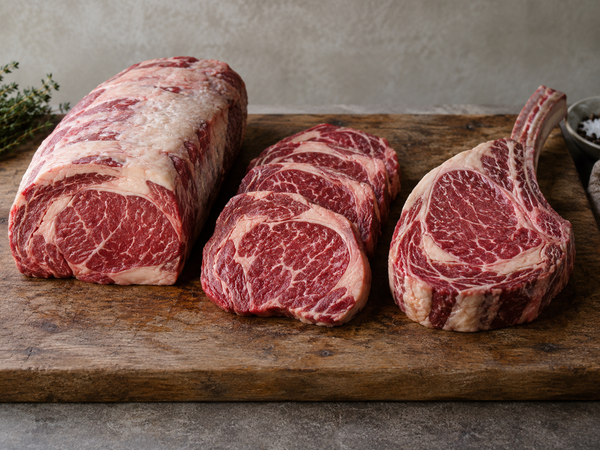
The fat is usually whiter and the eating experience more consistent batch to batch. This is also why grain fed beef tends to score higher for marbling under Australia's grading system, a topic worth understanding before you buy a premium steak.
Grass fed vs grain fed beef: side-by-side comparison

The clearest way to compare grass fed and grain fed beef is across flavour, fat, nutrition, price and cooking, since each diet has genuine strengths.
| Factor | Grass fed | Grain fed |
|---|---|---|
| Flavour | Robust, earthy, mineral, beefier | Milder, sweeter, buttery |
| Marbling | Leaner, lighter marbling | More marbled, higher marble scores |
| Texture | Firmer | Softer, more tender |
| Fat colour | Slightly yellow | Whiter |
| Nutrition | Leaner, more omega-3 and CLA | Richer, higher total fat |
| Price | Often a premium | Varies, Wagyu sits at the top |
| Best cooking | Lower or medium heat, do not overcook | High-heat searing and grilling |
Taste and texture: which is better?
Neither is better, since taste is a matter of preference: grass fed tastes beefier and firmer, while grain fed tastes milder, sweeter and more tender.
If you love a robust, full beef flavour and a satisfying bite, grass fed delivers it, especially in steaks and roasts where the character of the meat shines. If you prefer a softer, buttery steak that melts a little more easily, the extra marbling in grain fed beef is what you are after. Many keen cooks keep both on hand and choose by dish rather than picking a side for good.
Nutrition: is grass fed beef healthier?
Grass fed beef is generally leaner and contains more omega-3 fatty acids and CLA than grain fed, though the overall difference in a normal diet is modest. Both are nutritious, high-protein foods.
Research suggests grass fed beef carries higher levels of omega-3s and conjugated linoleic acid, along with more beta-carotene and vitamin E, as summarised by sources such as Healthline. It is also typically lower in total fat. That said, Meat and Livestock Australia notes the nutritional value of grass fed, grain finished and different breeds is broadly similar and within natural variation, so it is fair to call grass fed leaner and a little higher in certain nutrients without overstating the health gap.
If leanness is your priority, grass fed has the edge; if you mostly want flavour and tenderness, feed type matters less.
Price and value in Australia
Grass fed beef often carries a price premium, because pasture finishing can take longer and use more land per animal, while grain fed pricing varies and Wagyu sits at the very top.
Certified grass fed and grass finished beef can cost more to produce, which is sometimes reflected at the till. Grain fed beef spans a wide range, from everyday cuts to heavily marbled premium steaks.
The most expensive beef of all, Wagyu, is grain fed with an extended finishing period to build its intense marbling. Use feed type as one factor alongside the cut and marble score when you weigh up value, and compare current AUD pricing when you order, since it shifts with supply and season.
How to cook grass fed and grain fed beef
Cook leaner grass fed beef more gently and grain fed beef with confident high heat, because their fat levels respond differently to the pan.
Grass fed beef is leaner, so it cooks a little faster and dries out if pushed too far. Favour medium heat, pull it a touch earlier, and rest it well. Grain fed beef has more fat to render, so it stands up to a hot sear or grill that builds a deep crust. Resting matters for both, letting the juices settle back through the cut, as covered in our guide on how to rest beef. Leaner cuts and grass fed roasts also do well with slow cooking.
Which should you buy?
Buy grass fed beef for leaner, everyday meals and a bold beef flavour, and grain fed beef for marbled, tender steaks and special occasions. The best choice depends on your goal.
For health-focused, lean cooking, choose grass fed. For the richest, most tender steak experience, choose grain fed or Wagyu. For value, both have everyday options, so let the cut and marble score guide you as much as the feed type. If you are still deciding, the eye fillet and other cuts are explained in our Australian beef cuts guide.
Conclusion
Grass fed and grain fed beef are both excellent, just different. Grass fed is leaner, beefier and a little higher in some nutrients, while grain fed is more marbled, tender and milder. Choose by the meal and your taste rather than treating one as better. Browse our range and pick the beef that suits how you cook.