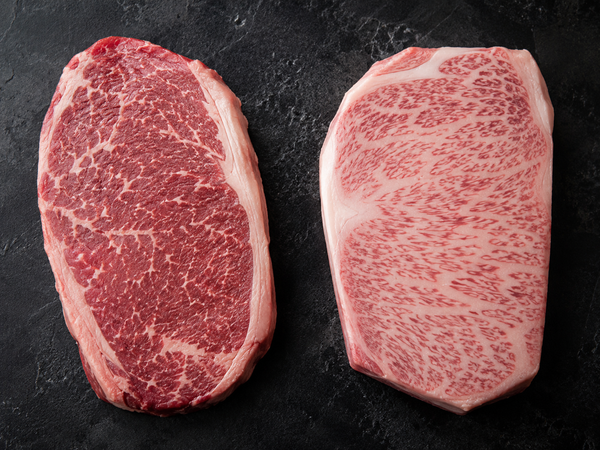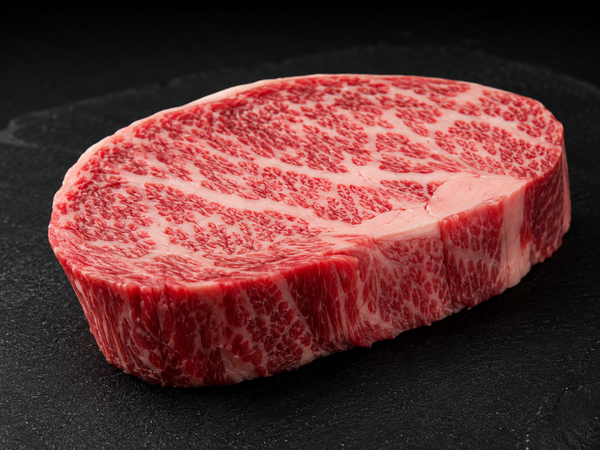

MSA beef is beef graded under Meat Standards Australia, a system that predicts how tender and flavoursome a specific cut will be when cooked a specific way.
It is not a marketing badge and it is not a measure of marbling alone. It is a quality prediction built from measurements taken on every carcase.
This guide explains what the grade guarantees, how the star ratings work, how MSA differs from marble score, and how to actually use it when you are buying beef.
What does MSA actually mean?
MSA stands for Meat Standards Australia, a grading program run by Meat and Livestock Australia that scores beef on predicted eating quality rather than on appearance. It was built by testing how real consumers rated cooked beef, then working backwards to the carcase measurements that predicted those scores.
That origin is what makes it unusual. Most grading systems around the world describe what a carcase looks like and leave the buyer to infer how it will eat. MSA does the inference for you, and it does it cut by cut rather than for the whole animal.
The practical guarantee is narrow but useful. An MSA grade tells you the beef came from an animal handled to defined standards, was processed and aged within set parameters, and has been assessed as likely to deliver a particular eating experience. Carcases that fail the minimum requirements are excluded from the program entirely rather than graded low.
How MSA grading works
Grading combines a set of measurements taken at the processor into a single prediction for each cut and each cooking method. No single factor decides the outcome.

The main inputs are marbling, ossification (a measure of bone maturity that stands in for the age of the animal), ultimate pH, hump height, rib fat depth, carcase weight, whether the carcase was hung conventionally or tenderstretched, and how long the meat is aged. Handling before slaughter matters too, since stress affects pH and pH affects tenderness.
Those measurements feed the MSA Index, a single number summarising the eating quality potential of the whole carcase. The Index is mainly a producer tool, useful for comparing herds and management decisions rather than something you will see at the counter.
What reaches the buyer is the cut-level grade. Because different muscles behave differently, the same carcase can produce a five star result in one cut and a three star result in another, and a cut can grade differently depending on whether it is grilled, roasted or slow cooked. That cut-by-cut precision is the part most explanations leave out.
MSA star grades explained
MSA sorts graded cuts into three bands: 3 star for good everyday quality, 4 star for premium, and 5 star for supreme. The bands describe the eating experience you should expect, not the size or appearance of the cut.
| Grade | What it predicts | Suits |
| 3 star | Good everyday eating quality, reliably tender for its cooking method | Weeknight steaks, roasts, braising cuts |
| 4 star | Premium eating quality, noticeably more tender and flavoursome | Steak nights, entertaining, better cuts |
| 5 star | Supreme eating quality, the top band in the system | Special occasions and premium cuts |
The important nuance is that a grade always attaches to a cut and a cooking method together. A blade cut might reach four star when slow cooked and fall short when grilled, because the grading reflects how the muscle actually performs under that heat. A steak labelled MSA with no further detail is telling you it passed grading, not that it sits in a particular band.
MSA vs marble score: what is the difference?
Marble score measures one thing, the amount of intramuscular fat in a cut, while MSA is a prediction of overall eating quality that uses marbling as just one of several inputs. They answer different questions and neither replaces the other.
Marble score comes from the AUS-MEAT system and is usually expressed on a 0 to 9 scale, with higher numbers meaning more fat flecking through the muscle. It is a descriptive measure. It tells you what the meat looks like, which correlates with richness and juiciness but says nothing about the animal's age, the pH, or how the carcase was hung and aged.
MSA takes marbling into account and then adds everything else that moves tenderness. That is why two cuts with the same marble score can grade differently, and why a well-managed grass-fed carcase with modest marbling can out-grade a fattier one that was handled poorly.
In practice, use both. Marble score tells you how rich the eating will be, and our guide to what a beef marble score actually means covers how to read it. MSA tells you how reliably tender the cut should be for the way you plan to cook it.
Is MSA beef grass fed?

MSA grades eating quality regardless of feeding system, so MSA beef can be grass fed, grain fed, or grain finished. The grade says nothing about what the animal ate.
This trips people up because premium beef marketing often bundles the two ideas together. They are separate claims. Feeding affects flavour profile and marbling potential, while MSA measures the outcome across a wider set of factors including age, pH and processing.
Both systems can produce excellent beef, and the differences are covered properly in our comparison of grass fed and grain fed beef. If a feeding claim matters to you, look for it stated explicitly rather than assuming the MSA grade implies it. A product described as 100% grass fed and finished and MSA graded is making two separate promises, and both are worth having.
How to use MSA when buying beef online
Treat MSA as a floor rather than a ceiling: it tells you the beef met an independently assessed standard, then use marble score, breed and feeding to choose between graded options. That order of operations saves a lot of second-guessing.
When you cannot see or handle the meat, verified signals matter more than photographs. Look for the MSA reference alongside the specifics: the breed, whether it is grass fed and finished or grain fed, the marble score where one is given, and the ageing. A listing that states all of those is telling you considerably more than one that says premium quality.
Our range is built on that principle. The Southern Ranges scotch cube roll is 100% grass fed and finished Angus, MSA graded and free of added hormones and antibiotics, with the grade stated rather than implied. The same detail runs across the Australian beef we source.
One last practical note. Because grading is cut and method specific, match the cut to how you will cook it rather than buying the highest-sounding grade and hoping. Our overview of Australian beef cuts lays out which cuts suit which methods, and buying larger formats is often better value, as covered in our guide to buying meat in bulk.
Conclusion
MSA beef is beef graded on predicted eating quality rather than appearance, cut by cut and method by method. Use the grade as your baseline, then let marble score, breed and feeding guide the final choice. Browse the MSA graded Australian beef range at Cost Cut Meats, delivered chilled nationwide.