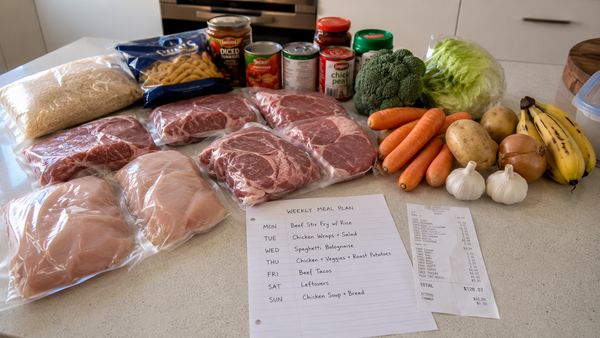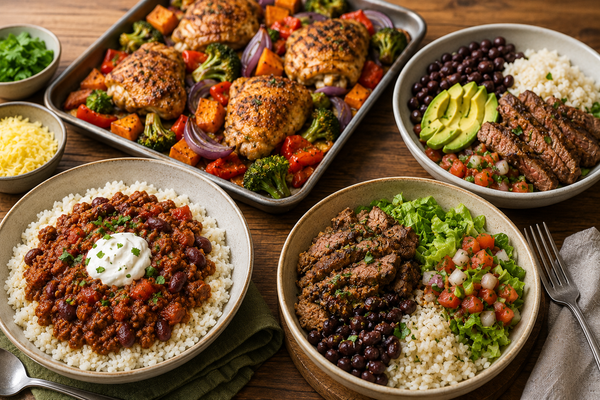

Plan family meals by choosing the week's meat first, buying it once, portioning it, and then assigning meals to nights.
Meat is the biggest line on the grocery bill and the anchor of almost every dinner, so planning around it beats planning around recipes every time.
This guide gives you the repeatable 5-step system, a Monday to Sunday template, the portion maths for a family of four, and the budget habits that make one weekly shop cover everything.
Why Plan Meals Around Meat First?
Meat is both the most expensive item in the trolley and the centre of the plate, so deciding it first settles the budget and the menu in one move. Recipe-first planning works backwards: you pick seven dishes, then buy seven proteins in small expensive amounts.
Meat-first planning flips it. Three or four proteins, bought once in the right quantities, fan out into seven dinners. The mince becomes two meals, the slow cooked chuck becomes two more, and the chicken covers the rest. Fewer packs, lower per kg prices, no midweek top-up shops, and nothing dying in the crisper.
The 5-Step Meat-First Meal Planning System

The system is five steps, run once a week, in the same order.
Step 1: Choose 3 to 4 Proteins for the Week
Pick from the value core: beef mince, chicken thigh or drumsticks, a slow cook cut like chuck, and sausages. Rotating within those keeps variety up and the total cost predictable.
Step 2: Work Out Portions Per Person
Multiply 150g to 250g of raw meat per adult by the household, with children at roughly half. Our guide to how much meat to buy per person gives the numbers by cut.
Step 3: Buy Once, In Bulk Where It Saves
One weekly or fortnightly order at bulk pack prices beats four supermarket visits. The per kg savings are laid out in our guide to fortnightly bulk meat orders.
Step 4: Assign Meals to Nights
Match the meat to the night: slow cooks on the weekend, tray bakes on busy weeknights, a freezer meal on the worst night, leftovers on Friday. The template below shows the shape.
Step 5: Cook Once, Eat Twice
Double the batch dishes and bank the second half. Bolognese becomes Thursday's pasta bake, the chuck casserole covers a freezer night next week, and the plan starts feeding itself.
A Sample Weekly Family Meal Plan
Here is the system as a week, for a family of four on three proteins plus sausages.
| Night | Protein | Meal | Note |
| Monday | Beef mince | Spaghetti bolognese | Double the sauce for Thursday |
| Tuesday | Chicken thigh | Tray bake with vegetables | Roast extra thighs for lunches |
| Wednesday | Sausages | Curried sausages and rice | Fastest night, no attention needed |
| Thursday | Beef mince | Pasta bake from Monday's sauce | Cook once, eat twice in action |
| Friday | Leftovers | Clear the fridge night | Everything gets eaten, nothing binned |
| Saturday | Chuck steak | Slow cooked casserole | Double it; half goes to the freezer |
| Sunday | Chicken drumsticks | Roast drumsticks | Cheapest roast dinner there is |
Swap dishes freely; the structure is the point. One batch night, one freezer deposit, one leftovers night, every week.
How Much Meat to Buy for a Week
A family of four typically needs 3.5kg to 4.5kg of meat for a week of dinners. Using the plan above as the example: 1kg of mince covers the two pasta nights, 1kg of chicken thigh and 1kg of drumsticks cover the chicken nights, 500g of sausages covers Wednesday, and 1kg of chuck covers Saturday with a freezer half banked.
Adjust for appetites: teenagers push the numbers toward the top of the range, younger children pull them down. Weigh the plan against reality for a fortnight and the quantities settle. Once the meat is home, portion anything not cooking within two days and freeze it; our guides to storing the week's meat safely and meat freezing timelines cover the details.
Planning on a Budget

Built on value cuts, the weekly meat spend for a family of four lands around $50 to $65 as an approximate guide. The rotation does the work: mince, drumsticks, thigh, sausages and chuck all sit at the value end of the market, and the value cuts that still eat well mean the budget never shows on the plate.
Watch specials for the rotation proteins and buy ahead into the freezer when prices dip. A premium cut then becomes a deliberate occasion rather than a budget leak, which is exactly where it belongs.
Making It Stick: Picky Eaters, Busy Nights and Leftovers
Plans fail on the hard nights, so build the hard nights in. For picky eaters, keep the protein constant and vary the format: the same mince is bolognese, tacos or a pasta bake, and familiarity does the persuading. For busy nights, the tray bake and the frozen casserole are the plan, not the fallback.
Leftovers night is the quiet hero. One night a week where the fridge gets cleared converts every doubled batch and roast surplus into a free dinner, and it is the single biggest waste-killer in the system.
Conclusion
Family meal planning gets simple when the meat comes first: three or four proteins, bought once, portioned properly and assigned to nights. The system saves money, time and the nightly what's-for-dinner debate. Order the week's mince, chicken and slow cook cuts from Cost Cut Meats and run the plan from delivery day.