How to Make Beef Jerky from Lean Rump
Introduction
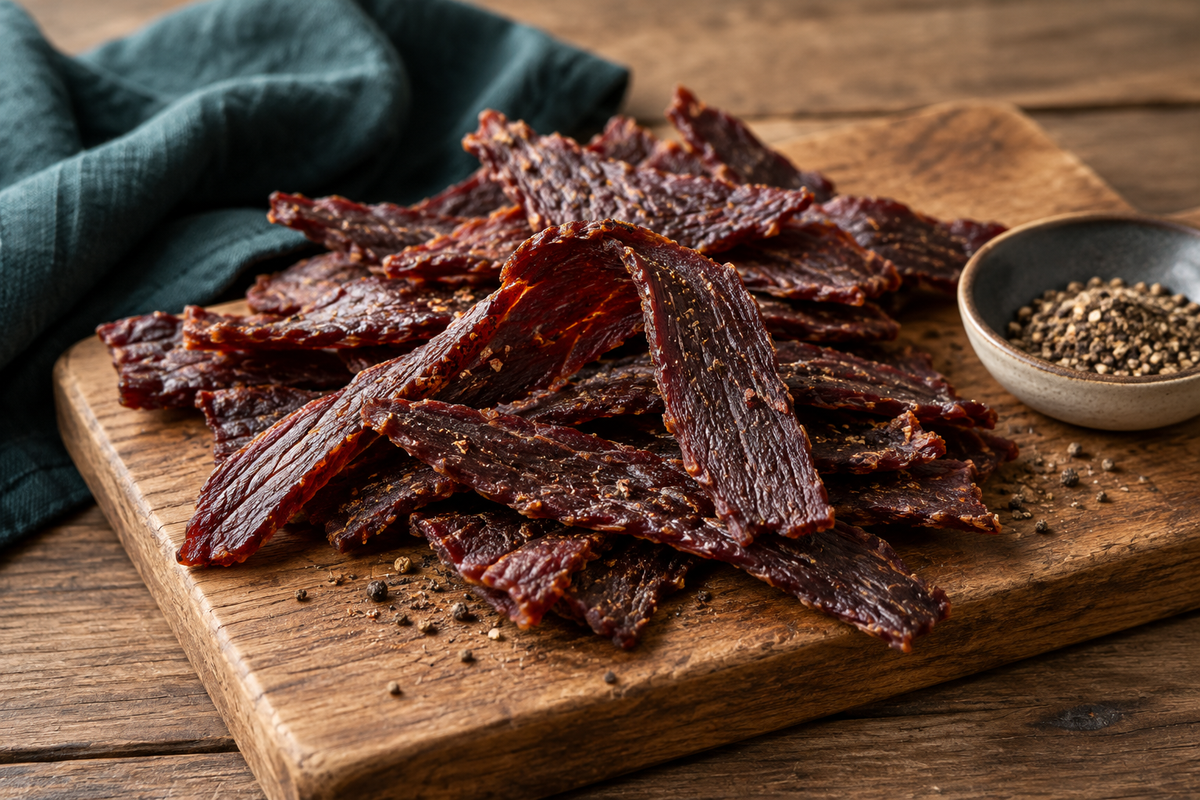
To make beef jerky, slice lean beef about 5mm thick, marinate it overnight in the fridge, heat the strips to 71C, then dry them at 55 to 60C for 4 to 6 hours until they bend and crack without snapping.
Homemade jerky is chewy, smoky and deeply savoury, and you control exactly how much salt, sugar and spice goes in. Lean grass-fed rostbiff or rump is ideal, because it carries very little fat to turn rancid and slices into long, even strips.
This recipe covers both the oven and dehydrator methods, the food-safety steps that matter and how to store the finished jerky.
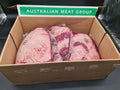
Ingredients
For 10 servings
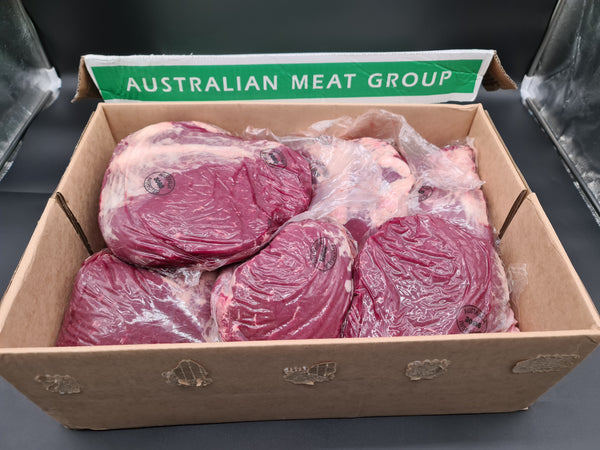
- 1kglean grass fed rostbiff or rumpall visible fat and sinew trimmed
- 125mlsalt-reduced soy sauce
- 60mlWorcestershire sauce
- 2 tbspbrown sugar
- 3garlic clovescrushed
- 2 tspblack pepperfreshly ground
- 2 tspsmoked paprika
- 1 tsponion powder
- 1/2 tspchilli flakesoptional
Utensils
10 items to gather · Tap to tick off
- Sharp chef's knife and chopping board
- Cling film
- Large sealable container or zip-lock bags
- Paper towel
- Wire racks and lined oven trays
- Food dehydrator with an adjustable temperature dial, optional
- Thin-tipped digital probe thermometer
- Oven thermometer
- Wooden spoon to prop the oven door
- Airtight storage containers
Cooking Steps
Trim every bit of fat
Trim all visible fat and sinew from the beef. Fat does not dry and turns rancid, which shortens how long your jerky keeps.
Part-freeze
Wrap the beef in cling film and freeze for about 1 hour, until firm but not frozen through.
Slice into strips
Slice the beef 4 to 5mm thick. Slice with the grain for classic chewy jerky, or across the grain for a more tender bite that tears easily. Keep the strips an even thickness so they dry at the same rate.
Marinate in the fridge
Whisk the soy sauce, Worcestershire sauce, brown sugar, garlic, pepper, paprika, onion powder and chilli flakes together. Combine with the beef in a sealed container or zip-lock bag and refrigerate for 8 to 24 hours, turning once. Never marinate at room temperature, and throw away the used marinade.
Pat dry and lay out
Drain the strips and pat each one dry with paper towel. Lay them in a single layer, not touching, on wire racks set over lined oven trays, or on dehydrator trays.
Heat the strips to 71C
Heat the oven to 160C (140C fan). Put the racks of strips in the oven for 8 to 12 minutes, until a thin probe thermometer slid into the thickest strip reads at least 71C. This kills bacteria before drying begins. If you are using a dehydrator, move the hot strips to the dehydrator trays straight away.
Dry at 55 to 60C
For the oven method, open the door for a few minutes to let the heat out, then set the oven to hold 55 to 60C on an oven thermometer and prop the door open slightly with a wooden spoon so moisture can escape. Dry for 3 to 5 hours. For a dehydrator, set it to 60C and dry for 4 to 6 hours. Rotate the trays halfway.
Test for doneness
Remove a strip, let it cool for 5 minutes, then bend it. It is ready when it bends and cracks on the surface without snapping, with no moist or soft spots. Blot any beads of fat with paper towel.
Cool and store
Cool the jerky completely on the racks, then pack it into airtight containers or zip-lock bags with the air pressed out and store it in the fridge.
Nutrition
Per Serving
Recipe serves 10Nutritional values are estimates only and may vary based on specific ingredients, brands, cuts, cooking method, and portion sizes. For medical or dietary purposes, please consult a qualified nutritionist.
Tips and Pairing
People Also Ask
How do you make beef jerky at home? +
Slice lean beef such as rump about 5mm thick, marinate it overnight in the fridge, then pat it dry and lay it on racks. Heat the strips to 71C in a hot oven to kill bacteria, then dry them at 55 to 60C in the oven or a dehydrator for 4 to 6 hours, until they bend and crack without snapping.
What cut of meat is best for beef jerky? +
The best cut for beef jerky is a lean, whole-muscle cut with very little marbling, such as rump or rostbiff, the trimmed centre of the rump. Lean beef dries evenly and keeps longer, because fat does not dry and can turn rancid. Trim every bit of visible fat, and avoid mince, which is a riskier choice for homemade jerky.
Do you need a dehydrator to make beef jerky? +
No, you do not need a dehydrator. A home oven works well as long as it can hold 55 to 60C, with the door propped open slightly so moisture escapes. A dehydrator makes it easier to hold a steady temperature for several hours. Either way, heat the strips to 71C first and check the temperature with a thermometer.
What temperature should beef jerky be dried at? +
Dry beef jerky at a steady 55 to 60C, after first heating the strips to 71C internal to kill bacteria. This follows US Department of Agriculture guidance, because drying at low temperatures alone may not make raw meat safe. Use an oven or dehydrator thermometer to check the real temperature, since dial settings are often inaccurate.
How long does homemade beef jerky last? +
Homemade beef jerky lasts 1 to 2 months, the storage time the US Department of Agriculture gives for home-dried jerky. Keep it in an airtight container in the fridge, and freeze it if you want to keep it longer. Throw out any jerky that smells off, feels damp or shows signs of mould, and always cool it completely before packing.