Beef Tataki with Ponzu
Introduction
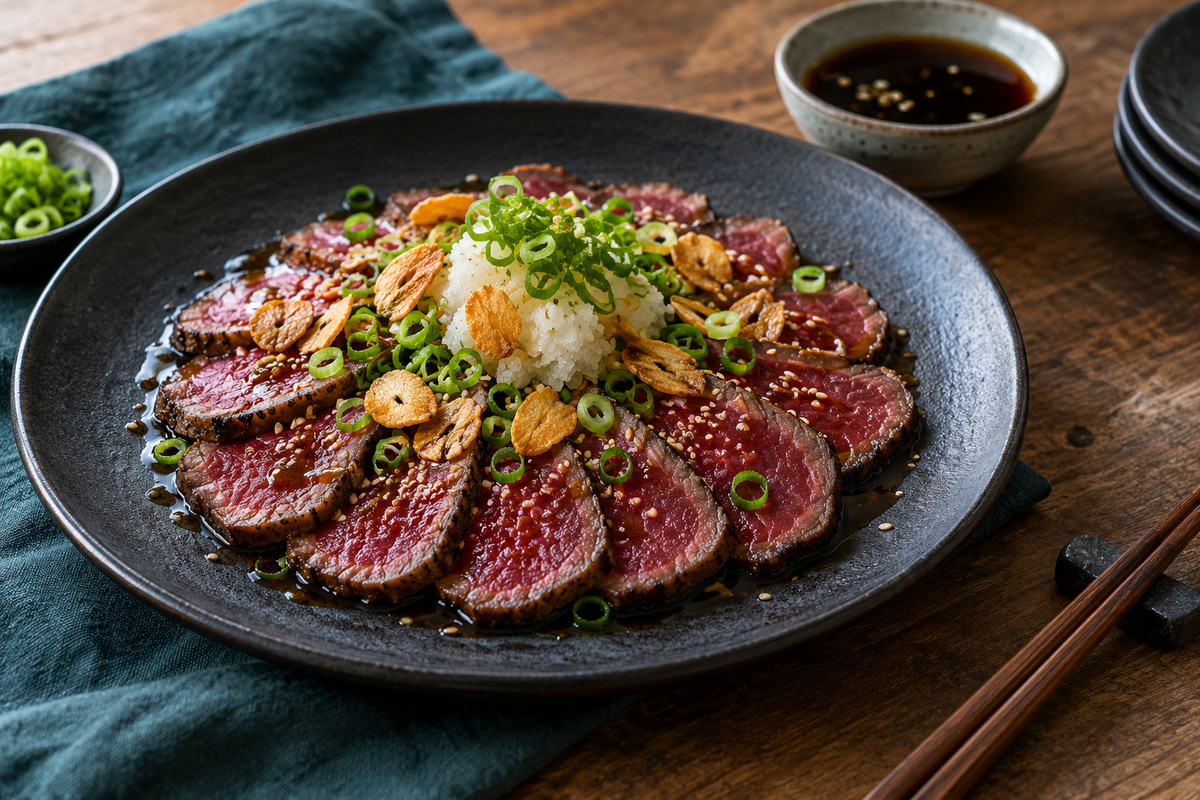
Beef tataki is a Japanese dish of beef seared hard on the outside, left rare in the centre, chilled, then sliced thin and dressed with a tangy ponzu sauce.
The contrast is the point: a savoury, caramelised edge, a silky centre and a sharp citrus and soy dressing with crunchy garlic chips on top.
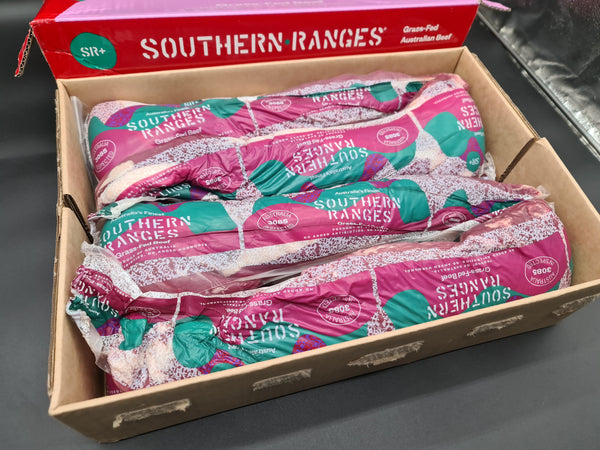
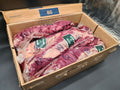
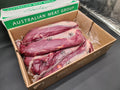
A centre-cut grass-fed eye fillet gives an even round that sears uniformly and slices cleanly, while a Wagyu tenderloin makes a richer wagyu tataki.
Because the centre is served rare, use the freshest whole cut and handle it carefully; it is not suitable for pregnant women, older people, young children or anyone with a weakened immune system.
Ingredients
For 4 servings
- 500gcentre-cut grass-fed eye filletin one piece, or a piece of Wagyu tenderloin
- 1 tbspneutral oilsuch as rice bran oil
- sea salt and freshly ground black pepperto season
- 60mlsoy sauceponzu
- 2 tbsplemon juiceponzu
- 1 tbsplime juiceponzu
- 1 tbspmirinponzu
- 1 tbsprice vinegarponzu
- 2garlic clovesthinly sliced (garlic chips)
- 2 tbspneutral oilgarlic chips
- 2spring onionsthinly sliced
- 60gdaikonfinely grated
- 1 tsptoasted sesame seeds
Utensils
10 items to gather · Tap to tick off
- Heavy cast-iron frying pan
- Tongs
- Digital probe thermometer
- Large bowl for an iced water bath
- Cling film
- Paper towel
- Small frying pan
- Long, sharp slicing knife
- Two clean chopping boards, one for raw and one for seared beef
- Chilled serving platter
Cooking Steps
Trim and season
Wash your hands and use a clean board and knife. Take the fillet straight from the fridge, remove all the silverskin and any fat, then pat it dry, rub with the oil and season well with salt and pepper.
Sear every side hard
Heat a heavy cast-iron pan over high heat until smoking. Sear the fillet for 60 to 90 seconds on each side, turning with tongs until every surface, including the ends, is deeply browned, about 6 to 8 minutes in total. The centre should stay rare, at about 45C or below on a probe.
Chill quickly
Plunge the seared fillet into a bowl of iced water for 1 to 2 minutes to stop the cooking, then pat it completely dry. Wrap it tightly in cling film and refrigerate for at least 30 minutes so it slices cleanly.
Make the ponzu and garlic chips
Stir the soy sauce, lemon juice, lime juice, mirin and rice vinegar together. Heat the garlic and oil in a small frying pan over medium-low heat for 3 to 4 minutes, until the garlic is pale golden, then drain on paper towel.
Slice thinly
Unwrap the beef on a clean board and slice it across the grain into 3mm slices with a long, sharp knife, using single long strokes.
Plate and dress
Arrange the slices overlapping on a chilled platter. Just before serving, spoon over the ponzu and top with daikon, spring onion, garlic chips and sesame seeds. Serve straight away.
Nutrition
Per Serving
Recipe serves 4Nutritional values are estimates only and may vary based on specific ingredients, brands, cuts, cooking method, and portion sizes. For medical or dietary purposes, please consult a qualified nutritionist.
Tips and Pairing
People Also Ask
Is beef tataki raw? +
Beef tataki is not fully raw, but the centre is served rare, close to raw. The outside is seared hard on every side, then the beef is chilled and sliced thin, so each slice has a thin cooked edge and a deep red centre. Because the centre is barely cooked, handle and serve it with the same care as carpaccio.
Is tataki the same as carpaccio? +
No. Tataki is Japanese, and the beef is seared hard on the outside before it is chilled and sliced, so each slice has a browned edge and a rare centre. Carpaccio is Italian, and the beef is completely raw, sliced paper-thin and dressed with olive oil and lemon. Both are best made with a fresh, centre-cut eye fillet.
What is the best sauce for beef tataki? +
Ponzu is the best and most traditional sauce for beef tataki. It is a thin Japanese dressing of soy sauce and citrus juice, often with mirin and rice vinegar, and its sharp, salty tang cuts through the seared beef. Top it with garlic chips, spring onion and grated daikon for crunch and freshness.
What cut of beef is best for tataki? +
The best cut for beef tataki is the centre of a whole eye fillet, also called tenderloin. It is lean, very tender and evenly round, so it sears uniformly and slices into neat rounds. For wagyu tataki, a marbled Wagyu tenderloin gives richer, more buttery slices. Avoid thin or uneven cuts, which cook through too quickly.
Is beef tataki safe to eat? +
Beef tataki carries a food-poisoning risk because the centre is served rare. Lower it by using the freshest whole cut, keeping it cold, working with clean hands and boards, searing every surface, never using mince and serving straight away. The Food Safety Information Council warns raw or rare meat is risky, and pregnant women, older people, young children and anyone with weakened immunity should avoid it.