Gyudon (Japanese Beef Rice Bowl)

Introduction
Gyudon is a Japanese rice bowl of thinly sliced beef and onion simmered in a sweet, savoury sauce of dashi, soy sauce and mirin, then spooned over steamed rice.
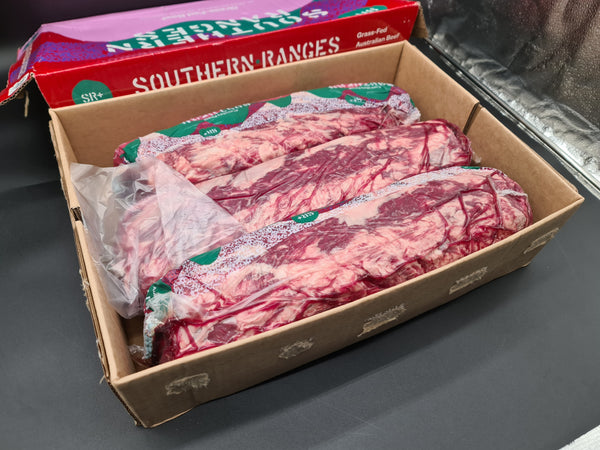
It is fast, comforting and all about the beef, so the cut matters. Shaved grass-fed scotch fillet has enough marbling to stay tender and juicy in the sauce, and for a richer Wagyu bowl you can shave a cut from our Roam grass-fed Wagyu range.
Part-freezing the beef makes it easy to slice paper thin at home, and once it is firm, dinner is ready in about 30 minutes.
Ingredients
For 4 servings
- 400ggrass fed scotch filletcut from a scotch cube roll and shaved paper thin
- 1 largebrown onionhalved and thinly sliced
- 250mldashi stocksauce
- 4 tbspsoy saucesauce
- 3 tbspmirinsauce
- 2 tbspsakesauce
- 1 tbspcaster sugarsauce
- 2 tspgingerfinely grated (sauce)
- 4 cupshot steamed Japanese short-grain ricefrom about 2 cups uncooked
- 4eggssoft-boiled or fully cooked (see notes)
- 2spring onionsthinly sliced
- pickled red ginger (beni shoga)to serve
- shichimi togarashito serve
Utensils
8 items to gather · Tap to tick off
- Very sharp chef's knife and chopping board
- Cling film
- Wide, shallow frying pan or saute pan
- Chopsticks or tongs
- Rice cooker or heavy saucepan with a lid
- Small saucepan, for the eggs
- Ladle
- 4 serving bowls
Cooking Steps
Part-freeze the beef
Wrap the scotch fillet tightly in cling film and freeze for 45 to 60 minutes, until firm on the outside but not frozen solid. Meanwhile, cook the rice and boil the eggs: 6 to 7 minutes for a jammy yolk or about 10 minutes for a fully set yolk, then cool them in iced water and peel.
Shave the beef
Unwrap the beef and, with your sharpest knife, slice it across the grain as thinly as you can, about 2mm. Cut any very wide slices in half so they sit neatly in the bowl.
Make the sauce
Combine the dashi, soy sauce, mirin, sake, sugar and ginger in a wide, shallow pan. Bring to a simmer over medium heat and stir until the sugar dissolves.
Soften the onion
Add the onion to the sauce and simmer for 5 to 6 minutes, until it is soft, sweet and translucent.
Cook the beef
Add the beef, separating the slices with chopsticks, and simmer for 1 to 2 minutes, skimming off any foam, until every slice has changed colour and is cooked through. Take the pan off the heat straight away so the beef stays tender.
Build the bowls
Divide the hot rice between 4 bowls and spoon over the beef, onion and some of the sauce. Top each bowl with a halved egg, spring onion, pickled ginger and a pinch of shichimi togarashi.
Nutrition
Per Serving
Recipe serves 4Nutritional values are estimates only and may vary based on specific ingredients, brands, cuts, cooking method, and portion sizes. For medical or dietary purposes, please consult a qualified nutritionist.
Tips and Pairing
People Also Ask
What is gyudon made of? +
Gyudon is made of thinly sliced beef and onion simmered in a sauce of dashi, soy sauce, mirin, sake and a little sugar, served over steamed Japanese short-grain rice. It is usually topped with spring onion and pickled red ginger, and often an egg. The name combines gyu, meaning beef, and don, short for donburi, a rice bowl.
Is gyudon the same as bulgogi? +
No, gyudon and bulgogi are different dishes. Gyudon is Japanese: thin beef and onion simmered in a light dashi, soy and mirin sauce and served over rice. Bulgogi is Korean: thin beef marinated in soy, garlic, sesame and pear, then seared over high heat for a caramelised finish. Both work beautifully with shaved scotch fillet.
What is the secret to good gyudon sauce? +
The secret to good gyudon sauce is balance, built on a good dashi. Dashi gives savoury depth, while soy sauce, mirin, sake and sugar add salt and gentle sweetness. Simmer the onion in the sauce first so it turns sweet and soft, then add the beef for only a minute or two, so it soaks up the flavour and stays tender.
Is a gyudon beef bowl healthy? +
A gyudon bowl can be part of a balanced diet. The beef provides protein, iron and zinc, and the rice supplies energy. The sauce is fairly high in sodium, so use salt-reduced soy sauce, spoon over a little less sauce and add steamed greens or a cucumber salad on the side for a lighter, more balanced meal.
What cut of beef is best for gyudon? +
Scotch fillet is the best cut for gyudon in Australia. Its marbling keeps thin slices tender and juicy as they simmer, and a whole cube roll is easy to shave at home after part-freezing. For a richer Wagyu bowl, use a more marbled cut such as a Wagyu porterhouse, and simmer it for just a minute.