
A meat subscription box delivers a selection of cuts to your door on a regular schedule, and it is worth it if you value convenience, variety and a stocked freezer, and the price per kilo beats your usual shop. If you want full control or the lowest price per kilo, buying bulk cuts to order often wins instead. This guide explains how a meat subscription box works in Australia, what you get, what it really costs in AUD, the pros and cons, and who each option suits.
What is a meat subscription box?
A meat subscription box is a set of cuts sold together and delivered on repeat, rather than bought one cut at a time. There are two main styles. A curated box is chosen by the butcher, a mix of steaks, mince, sausages and roasts built around a theme or a price. A build-your-own box lets you pick the cuts yourself.
Boxes also come as one-off purchases or recurring subscriptions. A one-off box is a single order, while a subscription reorders automatically on a schedule you set, usually with the option to change the contents each time.
How meat subscription boxes work
Meat subscription boxes work on a simple cycle: you choose a box, set a delivery frequency, and it arrives cut, sealed and cold on repeat. Most services let you pick weekly, fortnightly or monthly deliveries and adjust the contents before each dispatch.
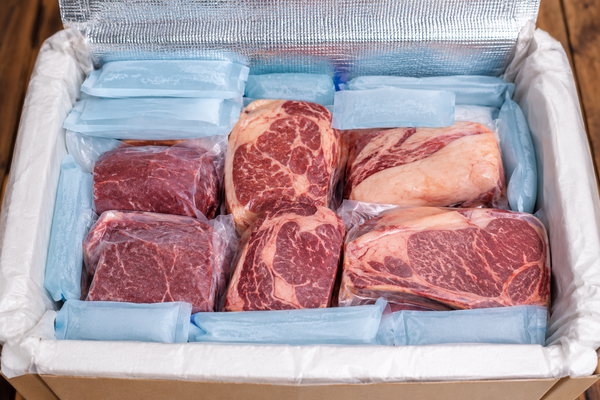
The flexibility is the point. Nearly all let you skip a delivery, pause for a while, or cancel from your account, usually with a cut-off a few days before dispatch. There is normally a minimum spend, and the meat is vacuum sealed and packed in an insulated box so it holds the cold chain to your door.
What you get and what it costs

A typical box holds a mix of everyday and premium cuts, often several kilos across steaks, mince, sausages and a roast or two. Prices vary by size and butcher, but most run from around $100 for a small selection to $250 or more for a large one.
The number that actually matters is the cost per kilo. Divide the box price by its total weight and compare it to buying the same cuts individually or in bulk. As a benchmark, farm-direct grass-fed value cuts can start from around $26 a kilo, so a box only makes sense if its per-kilo price is competitive once you account for delivery.
Pros and cons of a meat box
A meat box trades a little control for a lot of convenience. Here is the honest balance.
| Pros | Cons |
| Convenient, regular delivery | An ongoing commitment to manage |
| Curated variety you might not pick | Less control over the exact cuts |
| Often good value per kilo | Needs freezer space |
| Less frequent shopping | A set price that may not suit every week |
Are meat subscription boxes worth it?
Whether a meat box is worth it comes down to your household and how you cook. For busy families and meal preppers who go through a lot of meat and value not thinking about it, a good box is genuinely worth it: the convenience and the stocked freezer pay for themselves.
For smaller households, occasional cooks, or anyone who wants specific cuts and the lowest price per kilo, a subscription can be more than you need. In that case, buying exactly the cuts you want, or a bulk primal to portion and freeze, usually gives better value and no commitment.
How to choose a meat box
Choose a meat box the same way you would choose any butcher, on sourcing, flexibility, delivery and price. Look for 100% grass-fed, MSA-graded meat and clear provenance, since quality is the whole point of trading up from the supermarket.
Then weigh the practical side: how easily you can skip, pause or cancel, whether it delivers to your postcode and how it keeps the meat cold, and above all the cost per kilo once delivery is included. Knowing grass fed versus grain fed beef and the cheapest beef cuts that still taste great helps you judge whether a box is really good value.
The Cost Cut Meats approach: bulk value without the subscription

Cost Cut Meats is not a subscription box, and that is deliberate. Instead of a set box on a schedule, you buy premium grass-fed cuts by the kilo in bulk formats, so you get the freezer-stocking value of a meat box without locking into a commitment. Whole primals like grass-fed rump from around $26 a kilo, porterhouse from $32, and scotch cube roll from $39 fill your freezer with MSA-graded, 100% grass-fed beef for less.
Every cut is farm-direct, vacuum sealed and delivered chilled, ready to portion and freeze on arrival. Its sister brand, Carnivore Society, which also exports Australian beef, covers the premium and Wagyu end if you want to trade up. Learn how to stretch a big order with how to buy meat in bulk and save, plan your freezer with how long you can freeze meat, and browse the full range at Cost Cut Meats to build your own value box.
Conclusion
Meat subscription boxes are worth it when convenience and a stocked freezer matter to you and the price per kilo stacks up. If you would rather skip the subscription and buy premium grass-fed cuts by the kilo at real value, Cost Cut Meats delivers that Australia wide. Browse the range and stock your freezer on your own terms.