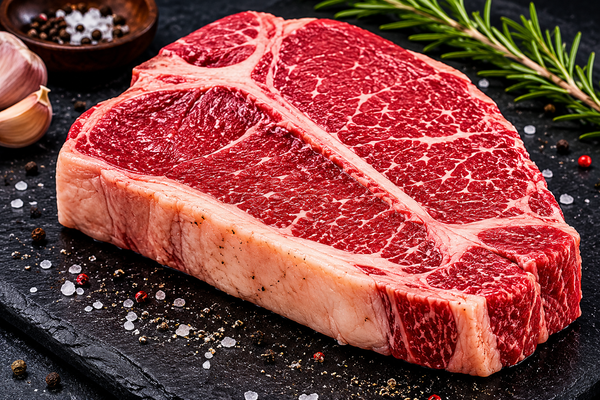
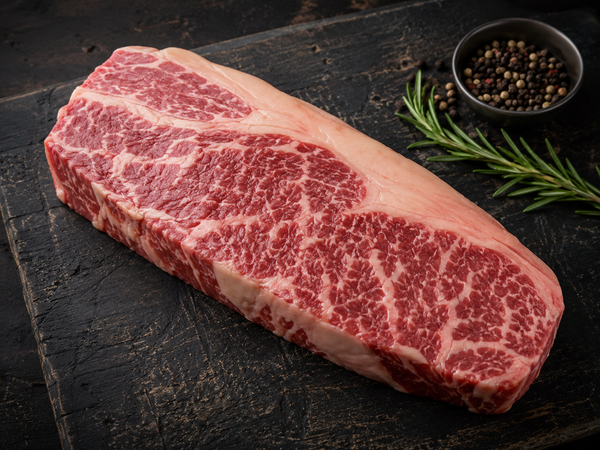
Oyster blade is one of the best-value steaks in the butcher's case, yet most shoppers walk straight past it. This well-marbled cut from the shoulder is surprisingly tender, full of flavour, and costs a fraction of premium steaks.
The catch is a line of sinew down the middle, which is exactly why it stays cheap. This guide explains what an oyster blade steak is, why it is such good value, and how to cook it brilliantly either fast or slow.
What Is Oyster Blade Steak?
Oyster blade steak is a well-marbled cut taken from the shoulder, or chuck, of the cow, named for its rounded oyster-like shape. It is the same cut sold overseas as flat iron in the US and feather or butler's steak in the UK.
Despite coming from a hard-working part of the animal, the oyster blade muscle is genuinely tender, often rated among the most tender cuts after the eye fillet. It carries good marbling, which gives it a rich, beefy flavour that punches well above its price.
The one feature that defines this cut is the line of connective tissue, or sinew, that runs down the centre. It is the reason the steak is so affordable, and the reason it has a bit of a reputation. Handled the right way, that sinew is no problem at all, and as you will see below it can even be turned into an advantage.
In Australia you will usually find oyster blade sold as whole steaks with the sinew left in. Trim that seam out and you are left with two lean, tender steaks, which is exactly what a flat iron steak is.
Why Oyster Blade Is Such Good Value
Oyster blade is cheap because it comes from the chuck, a primal associated with stewing cuts, even though the muscle itself is tender enough to grill. The market prices the whole shoulder as budget meat, so the oyster blade rides along at a low price despite eating like a premium steak.
That mismatch is the whole opportunity. You get marbling, big beefy flavour, and real tenderness for far less than you would pay for scotch fillet or eye fillet. For anyone cooking on a budget without wanting to give up a proper steak, it is one of the smartest buys going.
The other reason it stays cheap is the central sinew. Many shoppers see it, assume the steak will be chewy, and reach for something else. Once you know how to work around it, that hesitation works in your favour at the checkout.
The Catch: That Line of Connective Tissue
The sinew running through the middle of an oyster blade is firm and chewy if cooked quickly, so you either cut around it, trim it out, or cook it long enough to melt. Knowing which approach to take is the key to loving this cut.
For a fast steak, the simplest fix is to trim the seam of sinew out before cooking, leaving two clean, tender pieces. This is the flat iron steak, ready for a hot, quick sear. Alternatively, cook the whole steak and simply cut around the sinew on the plate.
For slow cooking, leave the sinew in. Over a few hours of gentle heat it breaks down into gelatine, melting into the meat and adding a rich, silky quality. In a braise or stew, the part that scares people off becomes the best bit.
How to Cook Oyster Blade Steak

Oyster blade can be cooked fast as a steak or slow as a braise, and both work beautifully as long as you treat the central sinew correctly. That versatility is part of why it is such a useful cut to have in the fridge.
For a quick steak, trim out the sinew, bring the meat to room temperature, and season well. Sear in a very hot pan or grill for about 2 to 3 minutes a side for medium rare, then rest for a few minutes. Slice thinly against the grain to keep every bite tender.
For slow cooking, leave the sinew in and cook the steak low and slow in a braise, casserole, or slow cooker for two to three hours, much like a good brisket. The connective tissue melts and the meat turns meltingly tender. Thinly sliced across the grain, oyster blade is also excellent in a fast, hot stir-fry.
| Method | How to do it | Best for |
|---|---|---|
| Pan or grill | Trim the sinew, sear 2 to 3 minutes a side to medium rare, then rest | Quick steak dinners |
| Braise or slow cook | Leave the sinew in, cook low and slow for 2 to 3 hours | Stews, curries, pulled beef |
| Stir-fry | Slice thinly across the grain, cook fast over high heat | Asian-style dishes |
Cooked as a steak, aim for medium rare, removing it from the heat at around 52°C and resting before serving.
Oyster Blade vs Flat Iron and What to Look For
A flat iron is simply an oyster blade with the central sinew removed and split into two steaks, so they are the same cut prepared two different ways. If you buy a flat iron, the work has been done for you and it is ready to grill.
Compared with other budget cuts, oyster blade is more tender than rump and far more tender than most chuck, while costing much less than rib or loin steaks. That combination of price, tenderness, and flavour is what makes it such a clever choice.
When buying, look for good marbling through the meat and a steak of even thickness. Decide first how you plan to cook it, since that tells you whether to trim the sinew for a fast steak or leave it in for a slow braise. You can browse the full range of Australian beef cuts or explore other value-friendly options like rump and brisket.
Conclusion
Oyster blade is the cut savvy cooks keep quiet about: tender, well-marbled, and cheap, with a sinew that is easy to manage once you know how. Trim it for a fast steak or braise it slow for melting richness. Either way, it is one of the best-value pieces of beef you can buy. Ready to give it a go? Shop quality beef delivered across Australia.