
Cheap meat has a reputation problem, and most of it is deserved.
The way to spend less without eating worse is not to hunt harder for markdowns, it is to change where and how you buy.
This guide compares the five places Australians buy meat, explains why price per kilogram misleads almost everyone, and works through what a bulk primal actually costs per serve once trimming, freezer space and delivery are counted.
The Five Places Australians Buy Meat, Compared
Supermarkets win on convenience, independent butchers on advice, and buying whole primals in bulk wins on cost per serve by a clear margin.
| Where you buy | Price per kilo | Quality control | Minimum spend | Best for |
|---|---|---|---|---|
| Supermarket | Highest on premium cuts | Variable, little information | None | Buying one meal at a time |
| Independent butcher | Mid to high | Good, with real advice | None | Specific cuts, custom thickness |
| Wholesale or market butcher | Low | Variable, often ungraded | Often bulk only | Volume, if you know cuts |
| Online butcher, portioned | Mid | Good, usually graded | Delivery threshold | Convenience with information |
| Online butcher, whole primals | Lowest per serve | Good, usually graded | Box size and delivery | Households with freezer space |
The two rows that matter are the last two. Buying the same graded beef as a whole primal rather than as pre-cut steaks removes the labour cost of portioning from the price, and that labour is a meaningful share of what a steak costs at retail. Our comparison of meat delivery against supermarket meat goes through the trade-offs in more detail.
Why Price Per Kilo Is the Wrong Number

Cost per serve, not price per kilogram, is the number that decides whether meat is cheap, because bone, fat and trim loss are all sold to you by weight.
A bone-in cut at $18/kg and a boneless cut at $26/kg can land at the same cost per plate once you account for what you throw away. The same applies to heavily trimmed supermarket packs, where you pay a premium precisely because someone else absorbed the waste.
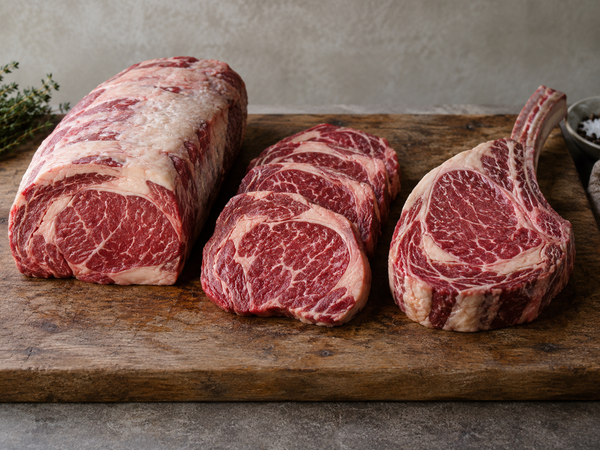
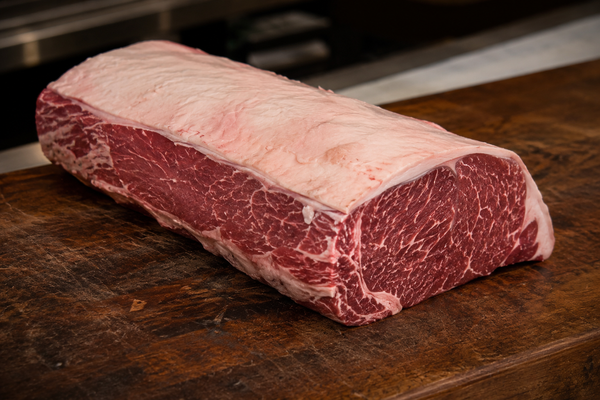
Here is the maths on a real example. A whole grass-fed rump from Cost Cut Meats is listed at $216 for a 6kg box, which is $36/kg. Allowing roughly 10 per cent for trimming, an estimate rather than a guaranteed yield, that leaves about 5.4kg of usable meat. Cut into 225g steaks, that is around 24 steaks at close to $9 each.
The per-kilo price also drops as the box gets larger, which is the mechanism behind bulk buying rather than a marketing device. The same rump is listed from $26/kg at the largest box size. Buying more at once lowers the unit cost, so the real question is how much your freezer holds, not how little you can spend today.
Supermarket Specials, and What They Are Actually Worth
Supermarket markdowns are genuinely cheap on the day, but they are unreliable, unpredictable and rarely available on the cut you actually planned to cook.
Markdown stickers appear when stock approaches its use-by date, which means the discount is real and so is the shortened window. If you can cook or freeze it that evening, a marked-down steak is good value. If you are buying for a specific meal on a specific night, you are at the mercy of what happens to be reduced.
The deeper issue is information. Supermarket labels rarely tell you the grade, the feeding regime or the marble score, so two packs at the same price can eat very differently. Buying on price alone works when the only variable is price, and with beef it never is.
Where supermarkets do win is on small quantities and immediacy. Nothing beats them for one dinner tonight.
Buying From a Butcher, Wholesale or Online
Independent butchers are the best source of advice, wholesale butchers the cheapest per kilo if you know your cuts, and online butchers the best balance of price and information.
A good butcher will cut steaks to the thickness you ask for, tell you what came in that week, and steer you towards the cut that suits your budget. You pay a little more for that, and for most people it is worth it on the occasions where getting it right matters.
Wholesale and market butchers sell volume at low prices, though grading information is often thin and you are usually buying what they have rather than what you wanted. It suits confident buyers who can judge a cut on sight.
Online butchers sit in between, and the thing to watch is the delivery threshold rather than the headline price. At Cost Cut Meats, delivery is free on orders over $450 and a flat $30 otherwise, so a small order carries a real per-kilo penalty while a full box does not. Our roundup of the best online butchers in Australia covers how the main players compare.
Bulk Boxes and Meat Packs

Buying a whole primal is the cheapest reliable way to eat well, provided you have the freezer space and are willing to spend twenty minutes portioning it.
A primal arrives cryovaced and chilled, usually between 3kg and 7kg depending on the cut. You break it down into steaks or roasts, vacuum seal or wrap them in portions that suit your household, and freeze what you will not use in the next few days. That single session is the entire trade-off.
Freezer capacity is the real constraint, not money. A 6kg box takes up meaningful room, so measure before you order rather than after. Meat frozen properly holds its quality for months, and our guide to how long you can freeze meat sets out the timelines by cut.
Value cuts stretch a box further again. If you want to lower the average cost per serve without dropping to a lower grade, mix a premium primal with a cheaper one rather than buying a lower grade of the same cut. Our guide to the cheapest beef cuts covers which cuts deliver most for the money, and how to buy meat in bulk walks through the process end to end.
How to Buy Cheap Meat Without Buying Badly
Set a quality floor first, then shop for the best price that clears it, rather than shopping on price and hoping the quality follows.
For Australian beef, MSA grading is the most useful floor available. It assesses eating quality across a range of factors and gives you a reliable baseline that a price tag cannot. Marble score tells you how much intramuscular fat to expect, which matters most on rib and loin cuts and least on slow-cooking cuts.
Beyond grading, three things are worth checking. Look for a clean, deep colour rather than a dull grey surface. Check the cryovac is intact and the pack is cold on arrival. And read the cut name properly, since names vary between shops and the same cut can appear under three different labels at three different prices.
A price that looks too good usually reflects an older animal, an ungraded carcass, or a cut being sold under a name that flatters it. Cheap is a legitimate goal. Cheap without knowing what you bought is how people end up believing all budget meat is poor. Browse the full range of cuts to compare per-kilo pricing across grades.
Conclusion
Cheap meat is a buying problem, not a quality problem. Set a grading floor, judge on cost per serve rather than price per kilo, and buy whole primals if you have the freezer space. Browse the full range of cuts and compare per-kilo pricing.