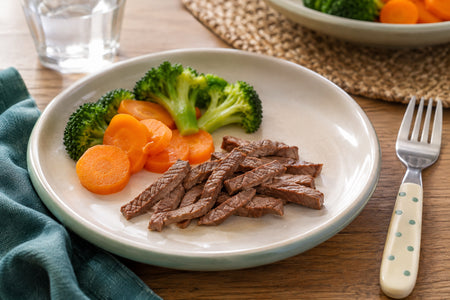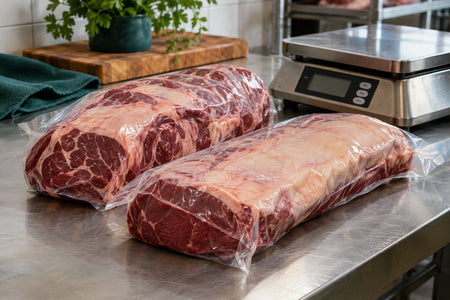

Scotch fillet is the richer, more forgiving steak, while porterhouse gives a leaner, firmer bite for a lower price per kg.
That is the quick verdict on porterhouse vs scotch fillet, two of Australia's favourite everyday premium steaks.
This guide explains why they eat differently, how to cook each one and what they really cost per kg and per steak.
Prices come from Cost Cut Meats box rates, checked 18 October 2026, and the verdict gives a clear pick for every kind of cook.
Porterhouse vs Scotch Fillet: What Is the Difference?
Porterhouse is cut from the striploin along the back, while scotch fillet comes from the rib section in front of it, so the two share one long muscle but eat quite differently.
That shared muscle runs along the spine through both cuts. In the rib it carries more fat and the rib cap, while in the striploin it is leaner and tighter.
In Australia, porterhouse is also called sirloin, so sirloin vs scotch fillet is this same comparison, and Americans know the pair as New York strip and ribeye.
| Quick answer | Porterhouse | Scotch fillet |
|---|---|---|
| Also called | Sirloin, striploin, New York strip | Rib eye, ribeye |
| Where it sits | Striploin, behind the ribs | Rib section, ahead of the striploin |
| Fat | Firm outer fat edge | Marbling plus a rib cap seam |
| Tenderness | Firm, tender when sliced thin | Tender and juicy |
| Flavour | Clean and beefy | Rich and buttery |
| From (full box) | $32/kg, AMG | $39/kg, AMG A Budget |
| Best for | BBQs, steak sandwiches, leaner plates | Weeknight steaks, BBQs, roasts |
Prices checked 18 October 2026.
Flavour, Tenderness and Fat
Scotch fillet tastes richer because its fat runs through the meat, while porterhouse keeps most of its fat in an outer edge you can render or trim.
The difference starts with how scotch fillet is cut: the cube roll keeps the rib cap, a crescent of well-marbled muscle wrapped around the eye and prized for its flavour. That fat melts into the steak as it cooks, which is why scotch stays juicy even a little past medium rare.
Porterhouse has a tighter grain and a leaner eye, so it eats firmer with a clean, beefy flavour. Its fat sits in a band along one side that crisps when rendered, and sliced across the grain at medium rare it is still tender.
All Cost Cut Meats beef is grass-fed, so both eat leaner and beefier than grain-fed equivalents. Marble score shifts the picture: the Roam grass-fed Wagyu porterhouse, graded MB2 to MB3+, brings porterhouse closer to scotch for richness, while the Southern Ranges SR+ scotch cube roll is MSA graded MB2+ and wet aged for 21 days.
Which Is Better on the BBQ, in the Pan or as a Roast?

Both suit hot, fast cooking, but scotch fillet is more forgiving and porterhouse needs its fat edge rendered to taste its best.
For either steak, take it off the heat 3 to 5C below your target and rest it: for medium rare, pull at about 57C so it finishes at 60 to 63C. The Food Safety Information Council recommends cooking whole cuts of beef to at least 63C and resting them for 3 minutes, and mince, sausages and rolled or stuffed roasts to 75C. Rarer beef is a personal choice that pregnant women, older people, young children and anyone with a weakened immune system are safest avoiding.
On the BBQ
Scotch fillet drips fat that can flare, so keep a cooler zone to move it to. Porterhouse is steadier over the coals; stand it on its fat edge first so the fat renders and crisps.
In a Hot Pan
Start porterhouse fat edge down until the fat turns golden, then sear both sides, while scotch fillet goes straight in flat. Thicker steaks need a gentler finish, and cooking porterhouse by thickness takes the guesswork out of timing.
As a Whole Roast
A whole striploin roasts evenly into neat, lean slices for sandwiches and platters, while a whole cube roll carves into juicier ones. For a crowd, a garlic and rosemary roast scotch makes an easy, generous centrepiece.
Price per kg and Cost per Steak
Porterhouse is the better value per kg, costing $7 to $20/kg less than scotch fillet from the same supplier at full box, as of 18 October 2026.
| Supplier | Porterhouse, full box | Scotch fillet, full box | Gap per kg |
|---|---|---|---|
| AMG | $32/kg | $39/kg (A Budget) | $7 |
| Southern Ranges SR+ | $40/kg | $53/kg | $13 |
| Roam | $34/kg (grass-fed Wagyu, MB2 to MB3+) | $54/kg (MB2+, not Wagyu) | $20 |
The Roam pairing sets a grass-fed Wagyu porterhouse against an Angus and Angus-cross scotch, so it compares breed as well as cut. A single piece costs $10/kg more than a full box, and a half box $5/kg more.
| Cost per 250g steak | Before trimming |
|---|---|
| AMG porterhouse | $8.00 |
| AMG A Budget scotch | $9.75 |
| Southern Ranges SR+ porterhouse | $10.00 |
| Southern Ranges SR+ scotch | $13.25 |
| Roam grass-fed Wagyu porterhouse | $8.50 |
| Roam MB2+ scotch | $13.50 |
Trimming the porterhouse fat edge and the fat seams in a cube roll changes the real cost per steak, so treat the before-trimming figures as a starting point.
Porterhouse or Scotch Fillet: Which Should You Buy?
Buy porterhouse for value and a leaner bite, and scotch fillet when flavour, juiciness and an easy cook matter more than price.
| Situation | Better pick | Why |
|---|---|---|
| BBQ for a crowd | Porterhouse | Lower cost per kg, steady over coals |
| Weeknight steak | Scotch fillet | Forgiving and full of flavour |
| Date night | Scotch fillet or Wagyu porterhouse | Richness on the plate |
| Leaner choice | Porterhouse | Trim the edge for a lean steak |
| Whole roast | Scotch fillet | Juicier slices for a crowd |
| Best value per serve | AMG porterhouse | $8.00 per 250g before trimming |
Porterhouse also stretches further in the kitchen, and porterhouse recipes beyond the grill include steak salads and sandwiches.
The Southern Ranges SR+ porterhouse striploin is halal certified, with certificates available on request from orders@costcutmeats.com.au.
Three whole striploins sit in the porterhouse range, from budget AMG to grass-fed Wagyu.
The scotch fillet range holds four whole cube rolls, and a portioned striploin and cube roll in the freezer suits both moods.
Conclusion
Porterhouse vs scotch fillet is really value against richness.
Porterhouse wins on price per kg and suits leaner plates and big BBQs, while scotch fillet rewards you with more flavour and an easier cook.
Both arrive chilled as whole grass-fed primals, so choose your cut, portion it at home and stock the freezer.