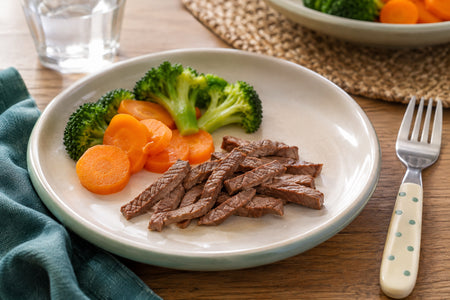

How much protein in steak comes down to the cut and how you weigh it, but the main Australian cuts carry 20 to 24g of protein per 100g raw and 27 to 32g per 100g grilled.
Across those cuts, calories run from 108 kcal per 100g for trimmed raw rump to 241 kcal for a grilled porterhouse with its fat left on.
Every number below comes from the Australian Food Composition Database or USDA data, with raw and cooked figures side by side so you log the right one. Choosing between lean steak cuts for a diet is a separate question, so this page sticks to the macros.
How Much Protein in Steak? Protein, Fat and Calories per 100g

A 100g raw steak gives you 20 to 24g of protein, and the same cut grilled gives 27 to 32g, because cooking drives out water, not protein. These figures come from the Australian Food Composition Database (AFCD), run by Food Standards Australia New Zealand, which tested composite samples of each cut bought in Melbourne and Sydney.
Lean means all visible fat removed, and untrimmed means the steak as sold, fat and all. Grilled figures are for steaks cooked for 6 to 10 minutes to medium with no added fat.
| Cut | Trim | Raw protein (g) | Raw fat (g) | Raw kcal | Grilled protein (g) | Grilled fat (g) | Grilled kcal |
|---|---|---|---|---|---|---|---|
| Rump | Lean | 20.4 | 2.8 | 108 | 32.0 | 4.5 | 170 |
| Rump | Untrimmed | 20.0 | 5.6 | 130 | 29.9 | 10.8 | 217 |
| Eye fillet | Lean | 22.2 | 5.2 | 136 | 31.9 | 5.5 | 178 |
| Eye fillet | Untrimmed | 21.4 | 9.3 | 170 | 30.8 | 8.8 | 203 |
| Scotch fillet or rib eye | Lean | 23.8 | 2.8 | 121 | 31.9 | 4.5 | 169 |
| Scotch fillet or rib eye | Untrimmed | 22.4 | 10.0 | 179 | 29.4 | 12.3 | 228 |
| Porterhouse (sirloin) | Lean | 24.1 | 1.9 | 115 | 30.5 | 3.8 | 158 |
| Porterhouse (sirloin) | Untrimmed | 23.4 | 5.4 | 143 | 27.3 | 14.7 | 241 |
Calories are converted from the AFCD kilojoule values at 4.184 kJ per kcal. The AFCD files rib eye under scotch fillet and porterhouse under sirloin, so use those rows for either name, and weigh only the meat on a bone-in rib eye.
Two patterns stand out. Trimmed and grilled, rump, eye fillet and scotch fillet all land at about 32g of protein per 100g, so the trim does far more to the calories than the choice of cut. Eye fillet is the fattiest of the trimmed steaks, at 5.2g of fat per 100g raw against 2.8g for rump and scotch fillet.
Untrimmed figures depend on how much fat was left on the samples, so treat them as a guide rather than an exact count.
Rump Cap and Wagyu: Protein and Calories per 100g
The AFCD has no entries for rump cap or wagyu, so these figures come from USDA FoodData Central, which has tested both, including imported Australian wagyu. Rump cap is sold in the US as top sirloin cap, and the USDA rows are for US beef of all grades, trimmed to about 3mm of fat. The wagyu rows are raw Australian wagyu striploin at marble scores 4/5 and 9.
| Cut | Raw protein (g) | Raw fat (g) | Raw kcal | Grilled protein (g) | Grilled fat (g) | Grilled kcal |
|---|---|---|---|---|---|---|
| Rump cap, lean only | 21.4 | 5.4 | 134 | 28.3 | 7.2 | 181 |
| Rump cap, about 3mm fat on | 19.9 | 12.4 | 191 | 26.0 | 15.0 | 242 |
| Wagyu striploin, marble score 4/5 | 17.7 | 24.2 | 289 | Not published | Not published | Not published |
| Wagyu striploin, marble score 9 | 14.6 | 37.0 | 392 | Not published | Not published | Not published |
Neither database publishes a cooked figure for wagyu, so only raw values are shown.
Wagyu scotch fillet runs slightly higher again, at 317 kcal (marble score 4/5) and 404 kcal (marble score 9) per 100g raw. As the marble score climbs, protein per 100g falls because fat takes up more of the weight, from 17.7g at 4/5 to 14.6g at 9.
Raw vs Cooked Weight: Which Number Should You Log?

Log the number that matches how you weighed the steak: raw weight with raw figures, cooked weight with cooked figures. Steak loses water on the grill, so the same protein ends up in a lighter piece of meat.
The AFCD data shows it clearly. A 100g piece of trimmed raw rump holds 74.6g of water, and once grilled to medium that falls to 61.8g, while protein per 100g climbs from 20.4g to 32g.
The Eat For Health serve size guide puts it in practical terms: 65g of cooked lean red meat starts as about 90 to 100g raw. Expect a steak to lose roughly a third of its weight.
Mixing the two is an easy mistake. Weigh a raw steak, log it with cooked figures, and for trimmed rump you overstate the protein by more than half.
Weighing raw is usually simpler, since the weight is on the pack and doesn't shift with doneness. A steak cooked past medium loses more water than the AFCD samples did, so cooked figures are less exact for well done steak.
How Much Protein Is in a 250g Steak?
A 250g raw steak holds about 50 to 60g of protein, depending on the cut and trim. The table uses untrimmed figures, since that is how a steak comes out of the pack.
| Cut (untrimmed) | Protein, 250g raw | Fat, 250g raw | kcal, 250g raw | Protein, 250g grilled | kcal, 250g grilled |
|---|---|---|---|---|---|
| Rump | 50g | 14g | 326 | 75g | 544 |
| Eye fillet | 53.5g | 23g | 424 | 77g | 507 |
| Scotch fillet | 56g | 25g | 449 | 73.5g | 569 |
| Porterhouse | 58.5g | 13.5g | 358 | 68g | 602 |
| Rump cap (USDA) | 50g | 31g | 478 | 65g | 605 |
Trim the fat before cooking and a 250g raw rump drops from 326 to 269 kcal, with protein almost unchanged at 51g. A 250g cooked portion is a bigger meal than it sounds: it starts as a much heavier raw steak, so it carries 68 to 80g of protein.
Planning a dinner rather than a macro log? Working out how much steak per person starts from the same raw weights.
How Fat Trim and Marbling Change the Calories in a Steak

Fat, not protein, moves a steak's calorie count, because each gram of fat carries 37 kJ against 17 kJ for each gram of protein in the AFCD's energy sums.
Trim is the quick win. Taking the fat off raw scotch fillet drops it from 179 to 121 kcal per 100g, and protein rises slightly, from 22.4g to 23.8g, because beef fat tissue holds only 12.1g of protein per 100g. Lean beef rump starts lower still, at 108 kcal.
Marbling is different. It sits inside the muscle, so no knife can remove it, which is why wagyu climbs so fast with marble score. A 100g piece of marble score 9 wagyu striploin carries more calories (392 kcal) than 250g of trimmed raw rump (269 kcal).
Cooking fat counts too. The AFCD grilled figures assume no added oil or butter, so log whatever you use separately. Some edge fat can render out on the grill, and grilled untrimmed eye fillet actually shows slightly less fat (8.8g) than raw (9.3g).
Is Steak Good for Weight Loss?

Steak can fit a weight loss plan because lean cuts deliver a lot of protein for their calories, but portion size, trim and the rest of the plate matter more than the cut.
A handy number for trackers is protein per 100 kcal. Trimmed raw porterhouse gives about 21g of protein for every 100 kcal, trimmed rump about 19g and untrimmed scotch fillet about 12.5g. Marble score 9 wagyu striploin drops below 4g.
Australia's dietary guidance gives a useful frame. Eat For Health recommends a maximum of around seven serves of lean red meat a week, which at 65g cooked per serve is about 455g. It also says the weekly total is what counts, so a bigger steak on fewer nights works too.
Rotating steak with other cheap high-protein meals keeps that weekly count in check. If you batch cook, weigh the raw steak once, divide the cooked meat evenly and log each container as a share of the raw weight, which makes high-protein meal prep far easier to track.
This is general information, not medical advice. An Accredited Practising Dietitian can set protein and calorie targets for your situation.
Conclusion
Steak gives you 20 to 24g of protein per 100g raw and 27 to 32g cooked, and the trim decides most of the calories.
Log raw with raw and cooked with cooked, and treat wagyu as its own category.
When you're ready to stock the freezer, Cost Cut Meats delivers chilled, vacuum-sealed beef across Australia, except the NT.