Red Wine Jus for Steak and Roast Beef
Introduction
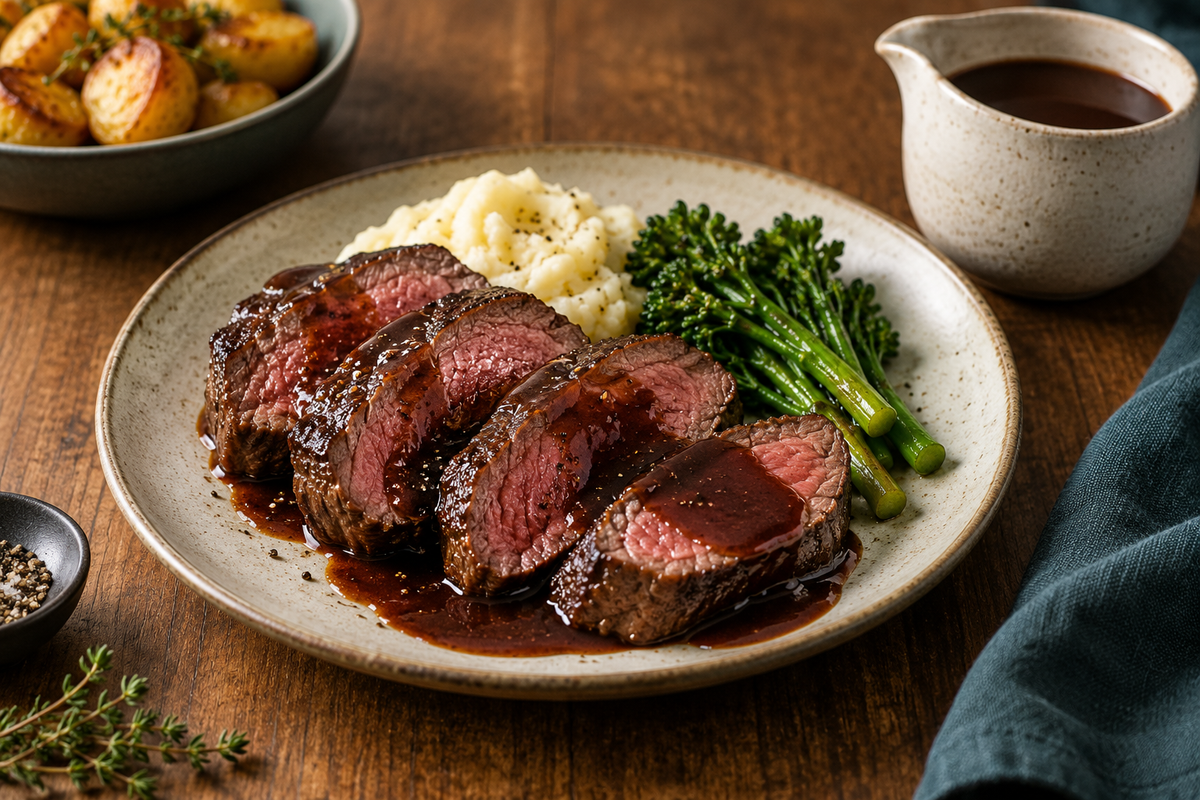
Red wine jus is a glossy, intensely savoury sauce made by reducing red wine and beef stock with shallots and thyme, then finishing it with the meat's resting juices and a little cold butter.
It is thinner and cleaner than gravy, with no flour, so it lets a good steak or roast do the talking.
This recipe builds the jus base in a saucepan while the beef cooks, then deglazes the pan for the flavour of the sear, so it works as well for a weeknight eye fillet or scotch fillet steak as it does for a Sunday roast.
The base can be made days ahead.
Ingredients
For 4 servings
- 4 x 200ggrass-fed eye fillet or scotch fillet steaksto serve (for the pan juices)
- 1 tbspolive oildivided
- 2French shallotsfinely chopped
- 1garlic clovecrushed
- 3thyme sprigs
- 250mldry Australian red winesuch as Shiraz or Cabernet Sauvignon
- 2 tbspportoptional
- 500mlsalt-reduced beef stock
- 30gcold unsalted buttercubed
- sea salt and freshly ground black pepperto season
Utensils
8 items to gather · Tap to tick off
- Small saucepan
- Heavy-based frying pan or roasting tin
- Wooden spoon
- Fine sieve
- Whisk
- Measuring jug
- Digital probe thermometer
- Aluminium foil
Cooking Steps
Soften the aromatics
Heat 1 tsp of the oil in a small saucepan over medium heat. Add the shallots, garlic and thyme and cook for 3 minutes, stirring, until soft but not coloured.
Reduce the wine
Pour in the red wine and port, bring to the boil and cook for 6 to 8 minutes, until reduced by about two-thirds and syrupy.
Add the stock and reduce
Add the stock and simmer briskly for 15 to 20 minutes, until reduced to about 250ml and the jus lightly coats the back of a spoon. Strain through a fine sieve, pressing on the shallots, and discard the solids. The jus base can be cooled and refrigerated at this point.
Cook and rest the steaks
While the jus reduces, heat the remaining oil in a heavy-based frying pan over high heat. Cook the steaks to your liking, pulling them at 52 to 55C in the centre for medium rare, then rest them on a warm plate loosely covered with foil for 5 minutes. For a roast, rest the meat and use its roasting tin instead of the frying pan.
Deglaze the pan
Pour off the fat from the steak pan and return it to medium heat. Add the strained jus, scrape up all the browned bits and simmer for 1 minute, then stir in the resting juices from the plate.
Finish with cold butter
Take the pan off the heat and whisk in the cold butter a few cubes at a time, until the jus turns glossy and slightly thicker. Season to taste and spoon over the sliced beef straight away.
Nutrition
Per Serving
Recipe serves 4Nutritional values are estimates only and may vary based on specific ingredients, brands, cuts, cooking method, and portion sizes. For medical or dietary purposes, please consult a qualified nutritionist.
Tips and Pairing
People Also Ask
What is red wine jus made of? +
Red wine jus is made of red wine and beef stock reduced with shallots, garlic and thyme, then finished with the meat's resting juices and a little cold butter for shine. It has no flour, so it stays thin and glossy. A splash of port adds sweetness, and the browned bits from the steak pan add depth.
What is the difference between jus and gravy? +
Jus is a thin, glossy sauce made by reducing wine, stock and meat juices until the flavour is concentrated, with no flour. Gravy is thickened with flour or cornflour, which makes it thicker and more opaque. Jus suits steaks and lean roasts like eye fillet, while gravy suits a classic roast dinner with all the trimmings.
What red wine is best for red wine jus? +
A dry, medium to full-bodied red you would happily drink is best for red wine jus. Australian Shiraz gives a rich, peppery jus, while Cabernet Sauvignon gives a firmer, more savoury one. Avoid cooking wine, which is often salted, and sweet reds, which turn cloying as they reduce. Pour the rest of the bottle with dinner.
How do you thicken red wine jus? +
The best way to thicken red wine jus is to keep reducing it until it coats the back of a spoon, then whisk in cold butter off the heat for body and shine. If you are short on time, stir in 1 tsp cornflour mixed with 1 tbsp cold water and simmer for 1 minute, which also suits a gluten-free jus.
Can you make red wine jus ahead of time? +
Yes, red wine jus is ideal for making ahead. Reduce the wine and stock, strain the base and keep it in a sealed container in the fridge for up to three days, or freeze it for up to three months. Reheat it gently, deglaze the steak pan or roasting tin with it, then whisk in the cold butter just before serving.