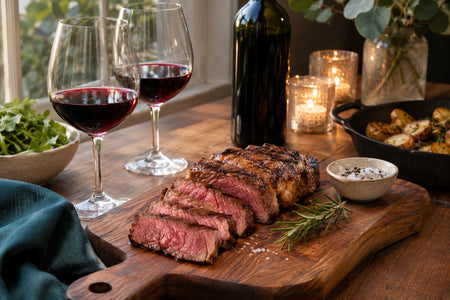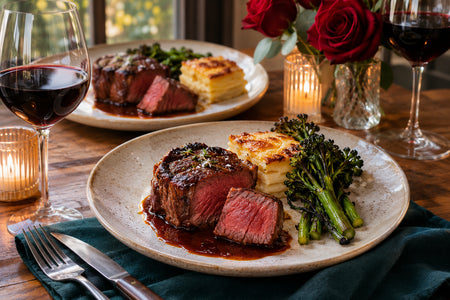

The easiest Melbourne Cup lunch ideas are dishes you cook the day before, and a cold beef menu of sliced roast, sliders, tataki and steak sandwich bites fits that brief perfectly.
Almost everything here is served cold or at room temperature, so you can watch the race instead of watching the oven.
Below is the full menu, a prep timeline, how much beef to buy and how to keep platters safe through a long afternoon.
Why Beef Tops the List of Melbourne Cup Lunch Ideas
Beef tops the list of Melbourne Cup lunch ideas because a roast cooked the day before slices beautifully cold, feeds a crowd and leaves the host free once guests arrive. The Melbourne Cup runs on the first Tuesday in November and is a public holiday in metropolitan Melbourne, so plenty of Victorians host lunch at home while offices elsewhere gather for the sweep and a shared spread.
Chilled roast firms up, so it slices thinner and neater than warm meat. Good Melbourne Cup party food also needs to scale: one roast covers a platter and a tray of sliders, so these race day lunch ideas work as well for six guests as for twenty.
Cold Roast Beef Platter: Eye Fillet or Sirloin

The centrepiece is a roast eye fillet or sirloin, cooked the day before, chilled overnight and sliced thin just before serving. Both are tender, boneless cuts that hold their shape when cold.
Eye fillet is the leanest and most tender option, and its even shape gives neat, uniform rounds. Roast it hot and fast to medium rare, rest it, then cool, wrap and refrigerate it overnight. A well-cooked eye fillet roast stays rosy from end to end.
Sirloin, which Australian butchers usually call striploin (the cut porterhouse steaks come from), has a fat cap that bastes the meat as it roasts and gives a richer, beefier flavour. Roasting a whole striploin in one piece is one of the simplest ways to feed a crowd.
To serve, slice the cold beef against the grain about 3 to 5mm thick and fan it across a board with rocket, cornichons, pickled onions and horseradish cream. Slice in the last hour before guests arrive and keep the platter covered in the fridge until it goes out.
Roast Beef Sandwiches and Sliders

Roast beef sandwiches and sliders turn the same roast into finger food guests can finish in two or three bites. Soft slider buns, small brioche rolls or sliced baguette all work, and a thin layer of butter stops the bread going soggy.
Fill them with cold beef, rocket, pickled onion and horseradish cream or wholegrain mustard. A classic roast beef sandwich needs nothing more, and cold roast stacks far more neatly than warm meat.
Assemble them in the last hour or two before lunch, cover the tray and keep it in the fridge. Trays of sliders also travel well to the office and need no cutlery at all.
Beef Carpaccio or Tataki for a Lighter Plate

Carpaccio and tataki add a lighter, restaurant-style plate to the menu, and both use eye fillet, so one piece can cover the roast and these thinner slices.
Carpaccio is raw eye fillet sliced paper thin. Partly freezing the beef makes slicing easier, then dress the slices at the last minute with lemon, olive oil, shaved parmesan, capers and rocket. Because it is raw, use the freshest beef you can and keep it in the fridge until the moment it is served.
Tataki is the make-ahead choice. Sear an eye fillet hard on all sides, chill it overnight, then slice it thin and dress it with ponzu, spring onion and toasted sesame. A beef tataki platter also suits guests who prefer their beef cooked.
Steak Sandwich Bites
Steak sandwich bites give the menu something heartier, and they hold up well at room temperature.
Cook porterhouse or rump steaks to medium rare on race morning, rest them and slice them thinly across the grain. Pile the strips onto toasted ciabatta squares with caramelised onion, aioli and chimichurri, then secure each bite with a toothpick.
Most of a good steak sandwich can be prepared ahead: caramelise the onions the day before, toast the bread in the morning and assemble the bites shortly before serving.
Build a Beef Grazing Board

A grazing board ties the menu together, with sliced beef sitting alongside the bread, cheese and pickles guests pick at between races.
- Beef: sliced roast, tataki and a few steak sandwich bites
- Bread: sourdough, crackers, grissini and toasted baguette
- Cheese: an aged cheddar plus a soft brie or creamy blue
- Extras: cornichons, olives, roasted capsicum, grapes and cherry tomatoes
- Sauces: horseradish cream, chimichurri and mustard
Two or three smaller boards work better than one huge one. Keep the spares in the fridge and swap them in as the first ones empty.
Sauces: Horseradish Cream and Chimichurri
Two sauces cover the whole menu: horseradish cream for the roast and sandwiches, and a sharp, herby chimichurri for the steak and tataki.
For horseradish cream, stir grated horseradish into sour cream or crème fraîche with lemon and salt, then refrigerate it overnight so the flavours settle.
A classic chimichurri combines parsley, oregano, garlic, chilli, red wine vinegar and olive oil. It keeps overnight, though the parsley stays greenest when you make it on race morning.
Melbourne Cup Lunch Timeline: From the Day Before to Race Time
Split the work across two days: cook and chill everything on the day before, then slice, assemble and plate in the hours before the race.
| When | What to do |
|---|---|
| A few days before | Plan the menu and get the beef into your fridge. Thaw any frozen beef slowly in the fridge. |
| The day before | Roast the eye fillet or sirloin, sear the tataki, caramelise the onions and make the horseradish cream. Cool, wrap and refrigerate. |
| Race morning | Cook the steaks for the sandwich bites, make the chimichurri and toast the bread. |
| One to two hours before guests arrive | Slice the cold beef, assemble the sliders and build the boards, then keep them covered in the fridge. |
| As guests arrive | Put out the first platters and note the time. |
| Race time | Swap in fresh platters from the fridge. |
Check the official race start time on the day and work back from it.
How Much Beef to Buy for a Melbourne Cup Lunch
Plan on about 200g of raw boneless beef per adult when beef is the main protein and the table has plenty of bread, cheese and salad. That starts from the usual 250g of raw boneless roast beef per person, less about 20 per cent because the sides do some of the filling.
For ten adults, that is roughly 2kg of raw beef: one roast for the platter and sliders, plus a couple of steaks for the bites. Count children as about half an adult serve, and allow a little extra for a hungry crowd.
How to Keep a Beef Platter Safe on Race Day
Keep cold platters in the fridge at 5°C or below until they go out, and use the 2-hour/4-hour rule to decide what happens to anything left sitting on the table. Food Standards Australia New Zealand says cold, potentially hazardous food such as sliced cooked meat must be kept at 5°C or colder, because bacteria can grow between 5°C and 60°C.
Its 2-hour/4-hour rule adds up the total time food spends out of the fridge:
- Under 2 hours: serve it, or put it back in the fridge for later.
- Between 2 and 4 hours: it can still be eaten, but it should not go back in the fridge.
- Over 4 hours: throw it out.
FSANZ wrote the rule for food businesses, but it is a sensible guide for any long lunch. Serve small platters and top them up from the fridge, sit boards on trays of ice on warm days and jot down when each one goes out. Raw carpaccio deserves extra care, so put it out last and in small portions.
Conclusion
A make-ahead beef menu does the hard work before the race, so the host enjoys the day as much as the guests.
Roast and chill the beef the day before, slice it in the morning and rotate cold platters through the afternoon.
Cost Cut Meats delivers whole eye fillets and striploins chilled and vacuum-sealed across Australia, except the NT, so order early enough to have your beef ready for roasting day.