Roast Beef Rump with Thyme and Red Onion Gravy
Introduction
This is the Sunday roast that earns its place at the head of the table. A whole grass fed beef rump roast is seared hard for a burnished crust, then roasted gently to a rosy medium rare, the sweet spot where rump is at its most tender and full of flavour. While the beef rests, the roasting pan does the real work. Caramelised red onions, fresh thyme and the deep fond left behind become a glossy, savoury red onion gravy that you will want to pour over everything. It is generous, confident cooking with very little fuss, and it turns an honest cut into something genuinely special.
Ingredients
For 6 servings
- 1.5kg grass fed beef rump roastat room temperature
- 2 tbsp olive oil
- 1 tbsp sea salt flakes
- 1 tsp freshly cracked black pepper
- 4 red onionshalved and thickly sliced
- 4 sprigs fresh thymeplus extra to serve
- 3 cloves garliclightly crushed
- 30g unsalted butter
- 1 tbsp plain flour
- 250ml dry red wine
- 500ml good beef stock
- 1 tsp brown sugar
- 1 tsp Worcestershire sauce
Utensils
7 items to gather · Tap to tick off
- Heavy ovenproof roasting pan or large frying pan
- Meat thermometer
- Tongs
- Carving knife and fork
- Wooden spoon
- Chopping board
- Aluminium foil
Cooking Steps
Bring the beef to room temperature
Take the grass fed beef rump roast out of the fridge 45 minutes before cooking and pat it completely dry. Rub all over with 1 tbsp of the olive oil, then season generously with the sea salt and black pepper. Preheat the oven to 200°C.
Sear for a deep crust
Heat a heavy ovenproof roasting pan or large frying pan over high heat with the remaining oil. Sear the rump on every side, including the fat cap, until darkly burnished, about 8 to 10 minutes in total. This crust is where the flavour lives, so do not rush it.
Build the bed of onions
Lift the beef out briefly. Add the red onions, thyme sprigs and crushed garlic to the same pan and toss through the rendered fat. Sit the seared rump on top of the onions, fat side up.
Roast to medium rare
Transfer the pan to the oven and roast for 30 to 35 minutes, until a meat thermometer reads 55 to 58°C in the thickest part for medium rare. Remember the beef will climb another 2 to 3°C while it rests.
Rest the beef properly
Move the rump to a warm plate or board, cover loosely with foil and rest for 20 minutes. Resting is not optional; it lets the juices settle so every slice stays moist.
Caramelise the onions
Return the roasting pan with its onions to a medium heat on the stovetop. Add the butter and brown sugar and cook, stirring, for 6 to 8 minutes until the onions are soft, glossy and deeply caramelised.
Make the red onion gravy
Stir the flour through the onions and cook for 1 minute. Pour in the red wine, scraping up every bit of fond from the base of the pan, and let it reduce by half. Add the beef stock and Worcestershire sauce, then simmer for 5 to 8 minutes until the gravy is glossy and coats the back of a spoon. Stir any resting juices back in and taste for seasoning.
Carve and serve
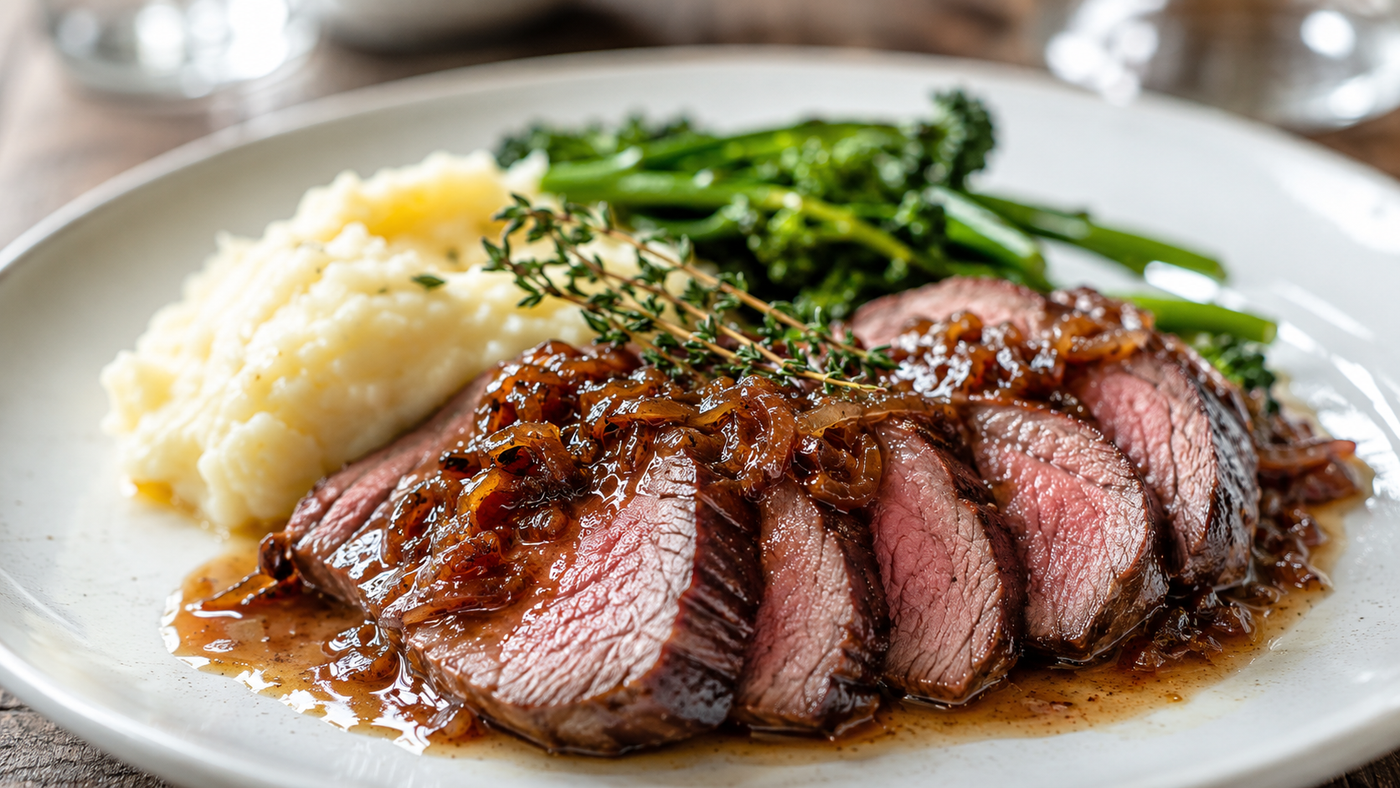
Carve the rump against the grain into thick slices. Arrange on a warm platter, spoon over the red onion and thyme gravy and scatter with fresh thyme leaves.
Nutrition
Per Serving
Recipe serves 6Nutritional values are estimates only and may vary based on specific ingredients, brands, cuts, cooking method, and portion sizes. For medical or dietary purposes, please consult a qualified nutritionist.
Tips and Pairing
People Also Ask
What is the best internal temperature for a rump roast? +
For a rosy medium rare, pull the beef rump roast from the oven at 55 to 58°C measured in the thickest part. It will rise another 2 to 3°C while resting, settling into the ideal range. For medium, aim for 63 to 65°C. Always use a meat thermometer rather than relying on time, as rump thickness varies.
Why is my roast beef tough? +
Toughness usually comes from overcooking or skipping the rest. Rump is leanest at medium rare, so cook to temperature and stop at 55 to 58°C. Resting for a full 20 minutes lets the juices redistribute. Finally, always carve against the grain into thick slices to keep each piece tender.
How do I make gravy from the roasting pan? +
The roasting pan holds the fond, the caramelised brown bits left after searing and roasting, and that is pure flavour. After resting the beef, caramelise the onions in the same pan, stir in flour, then deglaze with red wine, scraping up every bit. Add stock and simmer until glossy. This pan gravy needs no shop bought help.
Can I make the red onion gravy ahead? +
Yes. Make the gravy up to two days ahead and store it in an airtight container in the fridge. Reheat gently on the stovetop with a splash of beef stock to loosen it back to a pourable consistency. The flavour actually deepens overnight, so it is a smart way to get ahead for a Sunday roast.
Should I cook rump roast covered or uncovered? +
Roast it uncovered so the crust stays crisp and the fat cap renders properly. Covering traps steam and softens that hard won sear. Only cover the beef loosely with foil after it comes out of the oven, during resting, which keeps it warm without steaming the crust.