
Yes, it is safe to order meat online in Australia, as long as you buy from a reputable butcher and your order arrives cold to the touch. Good online butchers vacuum seal every cut and pack it with a coolant inside an insulated box, so the cold chain holds from their fridge to yours. This guide explains why ordering meat online is safe, what Australian food safety rules require, how to spot a trustworthy butcher, and exactly what to check when your box lands.
The short answer: yes, when the cold chain holds
Ordering meat online is safe whenever the cold chain stays unbroken and your order reaches you cold. The cold chain is the run of low temperatures that keeps meat out of the bacterial danger zone from packing to delivery, and it is the single thing that matters most. A butcher who vacuum seals each cut, packs it with gel packs or dry ice in an insulated box, and ships it quickly by express courier keeps that chain intact. If the meat arrives cold and sealed, it is as safe as anything from a shop counter, and often fresher because it was cut to order.
What Australian food safety rules require
Australian food safety rules require chilled meat to be kept at or below 5°C, and reputable butchers pack to hold that limit the whole way. This comes from the Food Standards Australia New Zealand code, which sets 5°C as the safe limit for chilled food and treats the range between 5°C and 60°C as the danger zone where bacteria multiply fastest.
That 5°C figure is the one to remember, and it is the same temperature your own fridge should hold. It matters because online butchers use it as their benchmark: the packaging is designed to keep your order under 5°C for the full transit window plus a buffer, so the meat is never left sitting in the danger zone. If your box arrives cold, the rule has been met.
How online butchers keep your meat safe in transit

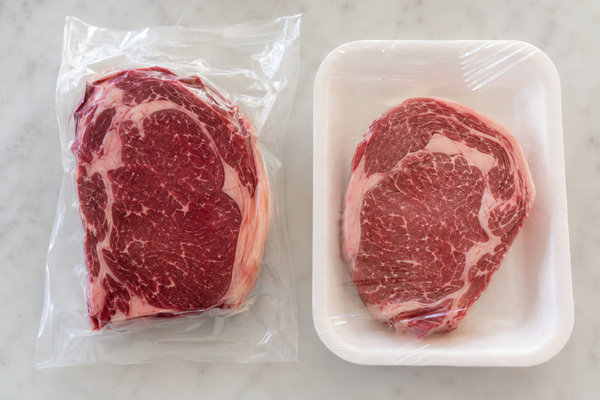
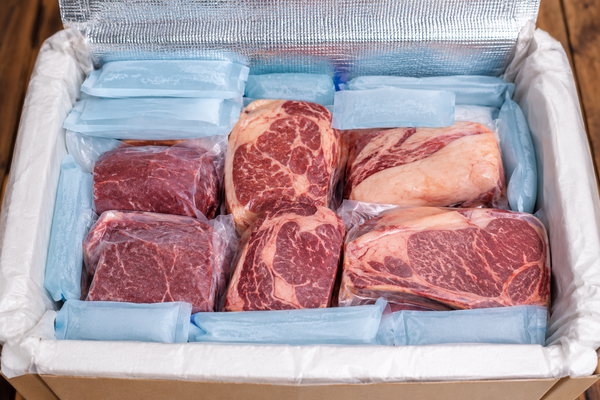
Online butchers keep your meat safe by building a proper cold chain around every order. Each cut is vacuum sealed to lock out air and stop leaks, then packed into an insulated box that works like an esky to hold the cold in.
The temperature is held by a coolant: chilled gel packs on most routes, or dry ice for the longest interstate and remote runs. Orders travel by express courier on set dispatch days, so the meat spends as little time in transit as possible, and good packaging keeps it cold for around 12 hours after it arrives. Many butchers also work to HACCP food safety standards and cut to order, which means less handling and less time exposed than meat sitting in an open display.
How to tell a safe online butcher
A safe online butcher is easy to spot once you know the signals to look for. Before you order, check for these:
- Australian sourcing and grading. Clear detail on where the meat comes from, ideally farm-direct and MSA graded.
- A published cold-chain and packaging policy. The butcher should explain how they keep meat cold and how long the packaging holds.
- A satisfaction or money-back guarantee. A promise to refund or replace anything that arrives in poor condition.
- Real customer reviews. Independent reviews that mention delivery condition, not just taste.
- Clear delivery timing and tracking. Set dispatch days, transit estimates, and an SMS or email tracking link.
- Secure delivery. Signature or authority-to-leave options so your order is not left in the sun.
If a butcher is upfront about all of these, you can order with confidence.
Red flags and what to check when it arrives
When your box arrives, a 30 second check tells you whether the cold chain held. The meat and packs should feel cold, the seals should be intact, and there should be no excess liquid pooling in the box. One thing not to panic about: vacuum-sealed beef often looks dark or purplish, which is normal and turns bright red within minutes of opening.
Genuine red flags are different. Watch for packs that feel warm, split or leaking seals, a sour or ammonia-like smell, or a dull grey-green, slimy surface. If the meat is cold, sealed and smells clean, you are good to store it. If several of these red flags show up together, do not use the meat and contact the butcher.
What to do if your meat arrives warm or thawed
If your meat arrives warm or thawed, check the temperature before you decide anything. If it is still cold to the touch, at or below 5°C, it is safe to refrigerate or freeze, even if a pack has partially thawed in transit. That is normal for longer deliveries and does not affect quality.
If the meat is warm and no longer cold, do not eat it, and do not try to refreeze it. Take a clear photo of the box and the packs, then contact the butcher. A reputable online butcher will ask you to report any problem within 24 hours and will arrange a refund or replacement without a fuss.
Why Cost Cut Meats is safe to order from
Cost Cut Meats is built around a cold chain you can trust. Every order is 100% grass-fed, MSA-graded and farm-direct, cut to order and vacuum sealed, then packed into an insulated box with chilled gel packs, or dry ice for the longest routes, so it arrives cold and ready to refrigerate or freeze.
Orders are despatched Monday, Wednesday and Friday by express courier and tracked to your door, and the packaging holds a safe temperature for around 12 hours after delivery. If anything arrives in less than perfect condition, a photo and a message within 24 hours gets it refunded or replaced. Shipping is a flat $30 Australia wide and free on orders over $450 to most metro areas, so buying safely online is easy and good value.
Conclusion
Ordering meat online in Australia is safe when the cold chain holds, and a reputable butcher makes that the norm, not the exception. Check that your order arrives cold and sealed, store it quickly, and you can buy with total confidence. Browse the range at Cost Cut Meats for premium, farm-direct meat delivered safely to your door.