Scotch Fillet with White Bean Puree
Introduction
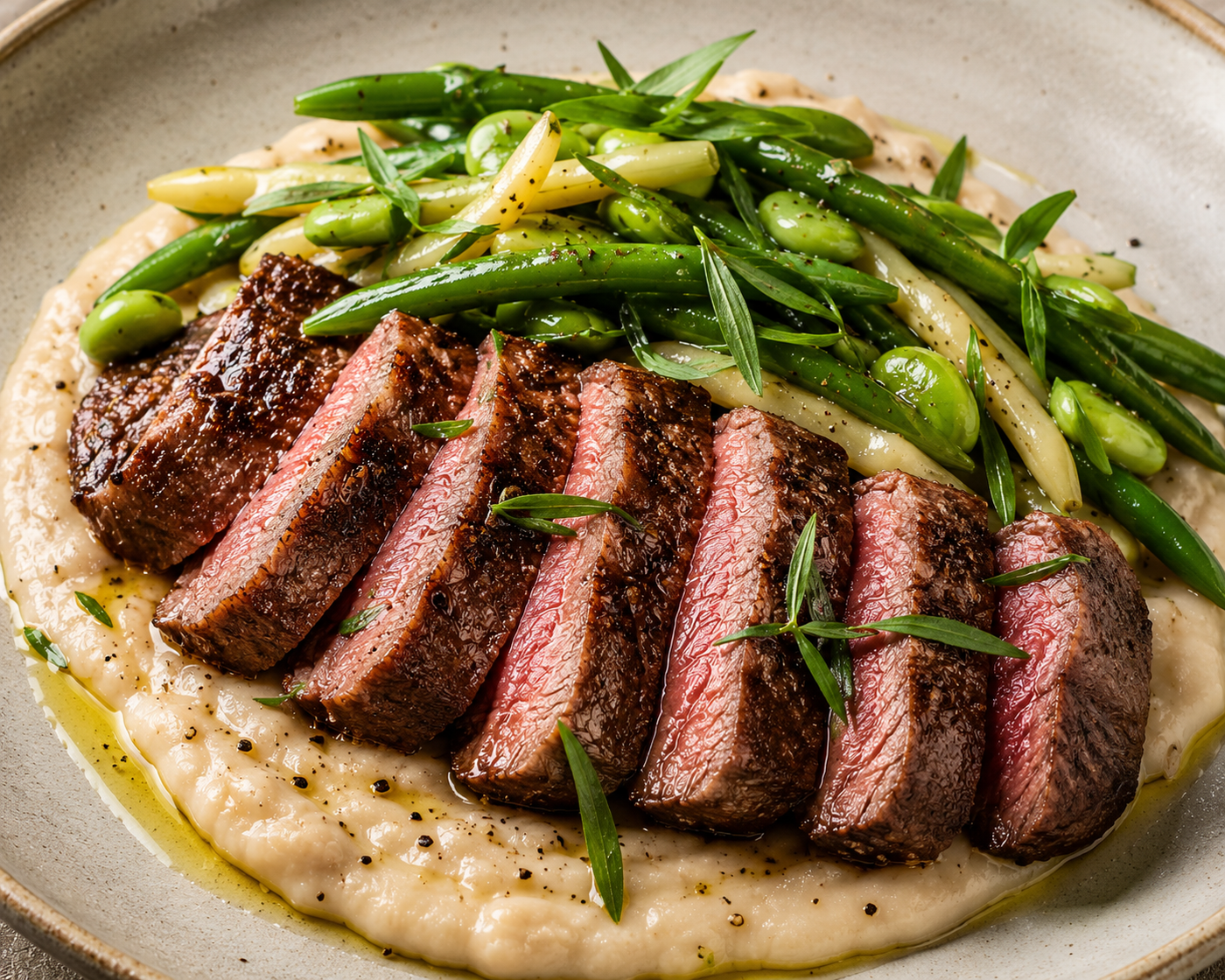
This is a fast, generous steak dinner that lets a well-marbled grass fed scotch fillet do the heavy lifting. The steak is seared hard on a chargrill or barbecue until the fat caramelises, rested, then sliced over a silky cannellini white bean puree sharpened with lemon, garlic, and fresh tarragon.
A scatter of blanched green beans, broad beans, and edamame keeps the plate bright and fresh, while a final drizzle of extra virgin olive oil ties it together. The puree is smooth and savoury rather than heavy, so it carries the rich, beefy flavour of the scotch fillet without competing with it. It looks like a restaurant plate, but it is on the table for four in about 20 minutes.
Ingredients
For 4 servings
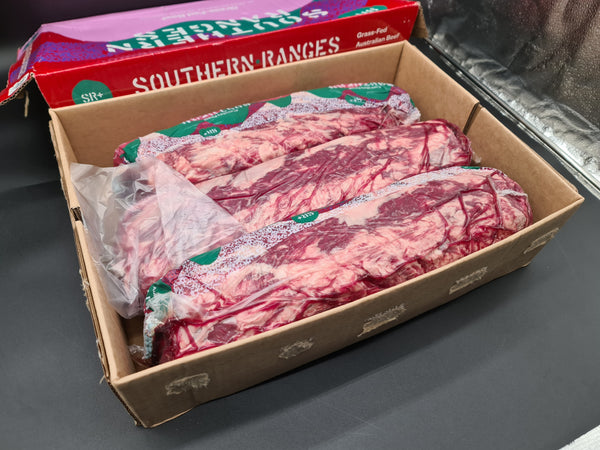
- 4 x 200g grass fed scotch fillet steaks
- 2 x 400g cans cannellini beansdrained and rinsed
- 2 tbsp lemon juice
- 1 small garlic clovecrushed
- 2 tbsp extra virgin olive oilplus extra to serve
- 2 tbsp tarragonchopped, plus extra to serve
- 2 tbsp water
- 200g mixed green beans, broad beans, and edamameto serve
- salt and pepperto season
Utensils
8 items to gather · Tap to tick off
- Food processor
- Chopping board and knife
- Barbecue or chargrill pan
- Tongs
- Mixing bowl
- Small saucepan
- Aluminium foil
- Meat thermometer (optional)
Cooking Steps
Make the white bean puree
In a food processor, combine the cannellini beans, lemon juice, garlic, half the olive oil (1 tbsp), and 2 tbsp water. Process until smooth and silky. Transfer to a bowl, stir through the chopped tarragon, and season with salt and pepper. Set aside.
Bring the steaks to room temperature
Take the scotch fillet out of the fridge 20 to 30 minutes before cooking so it sears evenly. Pat the steaks dry, brush with the remaining 1 tbsp olive oil, and season well with salt and pepper.
Sear the scotch fillet
Heat a barbecue or chargrill pan to medium-high. Cook the steaks for 3 to 4 minutes each side for medium rare, or until cooked to your liking. For accuracy, pull them at 52 to 54°C for medium rare.
Rest the steaks
Transfer to a clean plate or board, cover loosely with foil, and rest for 5 minutes so the juices settle and the temperature finishes rising. Thinly slice against the grain.
Blanch the greens and serve
Blanch the mixed beans in boiling water for 1 to 2 minutes, then drain. Spread the white bean puree across the plates, top with the sliced steak and greens, scatter with extra tarragon, and finish with a drizzle of extra virgin olive oil.
Nutrition
Per Serving
Recipe serves 4Nutritional values are estimates only and may vary based on specific ingredients, brands, cuts, cooking method, and portion sizes. For medical or dietary purposes, please consult a qualified nutritionist.
Tips and Pairing
People Also Ask
What is scotch fillet? +
Scotch fillet is the boneless rib eye, cut from the rib section of the beef and also sold as cube roll. It is one of the most tender, well-marbled steaks, with ribbons of intramuscular fat that melt during cooking to give it a rich, beefy flavour. That marbling makes it forgiving to cook and ideal for searing on a barbecue or chargrill pan.
Can I use a different cut of steak for this recipe? +
Yes. Scotch fillet is ideal for its marbling, but porterhouse, rump, or eye fillet all work well over white bean puree. Keep the steaks an even thickness so they cook at the same rate, and adjust the time to suit the cut. Leaner cuts like eye fillet need slightly less time and benefit from a careful rest.
How do I cook scotch fillet medium rare? +
For 200g scotch fillet steaks, sear for 3 to 4 minutes each side over medium-high heat, then rest for 5 minutes. For accuracy, use a meat thermometer and pull the steaks at 52 to 54°C, since the temperature rises a couple of degrees during the rest to land at a perfect medium rare of around 60 to 65C.
Can I make the white bean puree ahead of time? +
Yes. The white bean puree can be made up to a day ahead and stored in an airtight container in the fridge. Warm it gently in a saucepan or microwave before serving, or bring it to room temperature, and loosen with a splash of water or olive oil if it has thickened. Cook the steaks fresh just before serving for the best result.
What beans are best for white bean puree? +
Cannellini beans are the classic choice for white bean puree because they blend into a smooth, creamy texture with a mild, buttery flavour. Butter beans, also called lima beans, work well too and give an even silkier result. For a change, you can swap in cooked lentils, though the texture will be a little coarser and earthier.