Ginger, Honey and Soy Oyster Blade Roast
Introduction
This is the roast that turns a humble grass fed beef oyster blade into the centrepiece of a Sunday table. Oyster blade is a value blade cut from the shoulder, threaded with a line of connective tissue that melts into silk when you cook it low and slow. Here it is seared hard, then nestled into a ginger, honey and soy glaze and roasted gently at 160°C until fork-tender, basted again and again so the outside turns deep, sticky and glossy. The pan juices reduce down to a glaze you will want to spoon over everything. Sweet, savoury and quietly impressive, it feeds four to six without stretching the budget.
Ingredients
For 4 servings
- 1.2kg grass fed beef oyster blade (in one piece)
- 2 tablespoons neutral oil
- 60ml light soy sauce
- 60ml dark soy sauce
- 80ml honey
- 50g fresh gingerfinely grated
- 4 garlic clovescrushed
- 2 tablespoons rice wine or dry sherry
- 1 tablespoon sesame oil
- 1 teaspoon Chinese five spice
- 250ml beef stock
- 2 spring onionssliced, to serve
- 1 teaspoon toasted sesame seedsto serve
Utensils
8 items to gather · Tap to tick off
- Heavy ovenproof pan or casserole with lid
- Tongs
- Fine grater or microplane
- Basting spoon
- Meat thermometer
- Chopping board
- Sharp knife
- Foil
Cooking Steps
Bring the beef to room temperature
Take the oyster blade out of the fridge 30 minutes before cooking and pat it thoroughly dry. Season lightly with salt. Heat your oven to 160°C.
Sear the roast
Heat the neutral oil in a heavy ovenproof pan or casserole over high heat. Sear the oyster blade hard on all sides until deeply browned, about 8 minutes total. A good crust here builds the flavour of the finished glaze. Lift the beef out and set aside.
Build the glaze
Lower the heat to medium. Add the ginger and garlic to the same pan and cook for 1 minute until fragrant. Pour in both soy sauces, the honey, rice wine, sesame oil and five spice, then stir in the beef stock. Let it come to a gentle simmer and scrape up any browned bits from the base.
Slow roast and baste
Return the beef to the pan, spooning the glaze over the top. Cover and roast at 160°C for 3 hours, basting every 45 minutes, until the meat is fork-tender and pulls apart easily. You are aiming for an internal temperature of around 90°C, not medium-rare, so the connective tissue fully breaks down.
Reduce the sauce
Lift the roast onto a board and cover loosely with foil to rest for 10 minutes. Set the pan over medium-high heat and simmer the juices for 5 to 8 minutes until glossy and lightly syrupy, stirring often so the honey does not catch.
Slice and serve
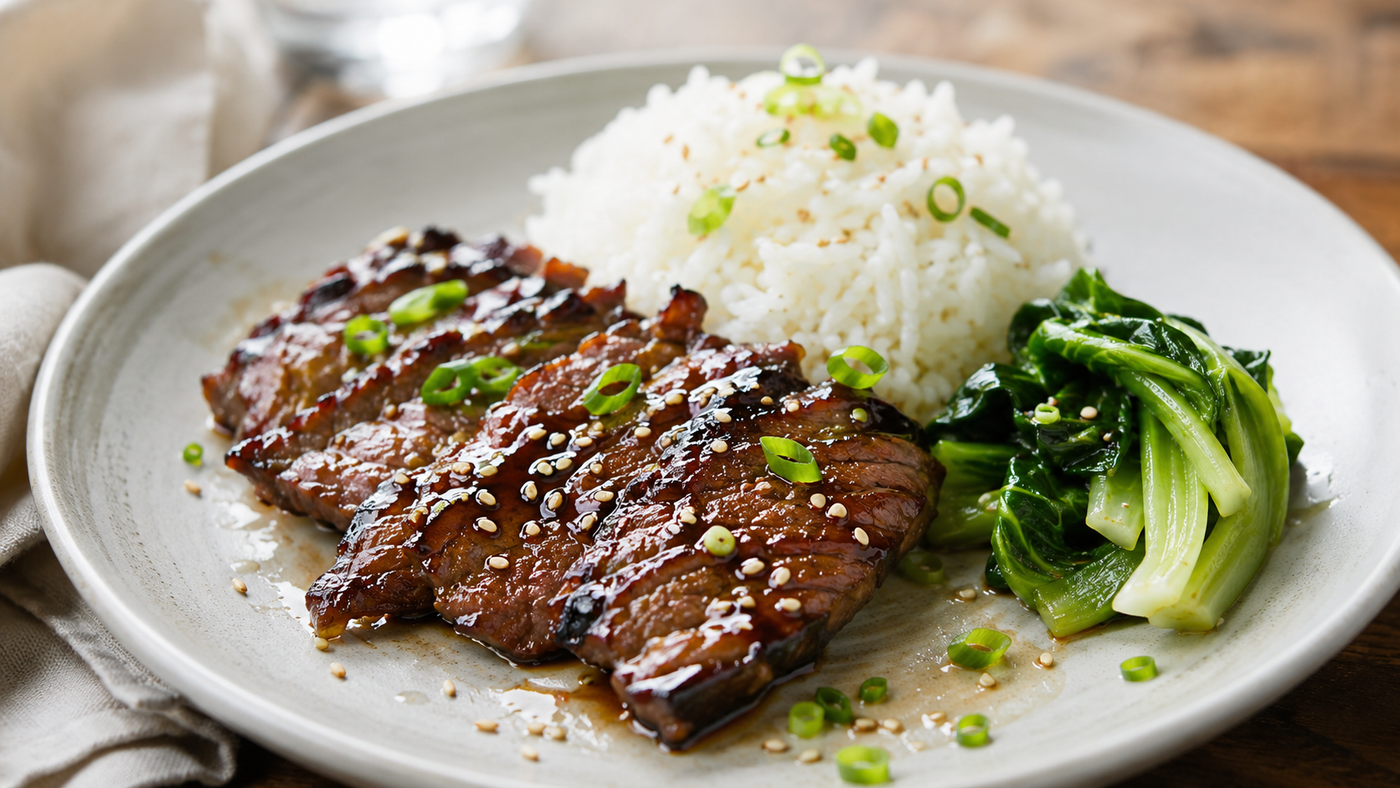
Slice or pull the beef, spoon over the reduced glaze and scatter with spring onion and sesame seeds. Serve with steamed rice and greens.
Nutrition
Per Serving
Recipe serves 4Nutritional values are estimates only and may vary based on specific ingredients, brands, cuts, cooking method, and portion sizes. For medical or dietary purposes, please consult a qualified nutritionist.
Tips and Pairing
People Also Ask
Why cook oyster blade low and slow instead of like a steak? +
Oyster blade is a blade cut from the shoulder with a seam of connective tissue running through it. Cooked quickly to medium-rare it stays chewy, but a long, gentle roast at 160°C breaks that tissue down into gelatine, giving you fork-tender, succulent meat. Aim for an internal temperature of around 90°C rather than a steak doneness.
What internal temperature should the roast reach? +
Take this roast to roughly 90°C internal, well past the rare or medium range you would use for a quick-cooked steak. At that point the connective tissue has fully melted and the beef pulls apart easily. A meat thermometer is the most reliable guide, as timing varies with the thickness of your cut.
Can I make this ginger honey soy roast in a slow cooker? +
Yes. Sear the beef and build the glaze on the stove first, then transfer everything to a slow cooker and cook on low for 7 to 8 hours until fork-tender. Reduce the sauce in a pan on the stove afterwards, as slow cookers will not concentrate the glaze on their own.
What can I substitute for oyster blade? +
Grass fed beef chuck or a boneless blade roast are the closest swaps, as both are shoulder cuts that turn tender with slow cooking. Use a similar weight and keep the same low and slow method. Avoid lean cuts like topside, which can dry out over a long roast.
How do I stop the honey glaze from burning? +
Keep the pan covered for the long roast so the glaze stays loose, and baste regularly to redistribute the juices. When you reduce the sauce at the end, use medium-high heat and stir often, pulling it off the heat as soon as it turns glossy and syrupy. Honey scorches fast once the liquid drops.