Cranberry-Stuffed Oyster Blade Roast
Introduction
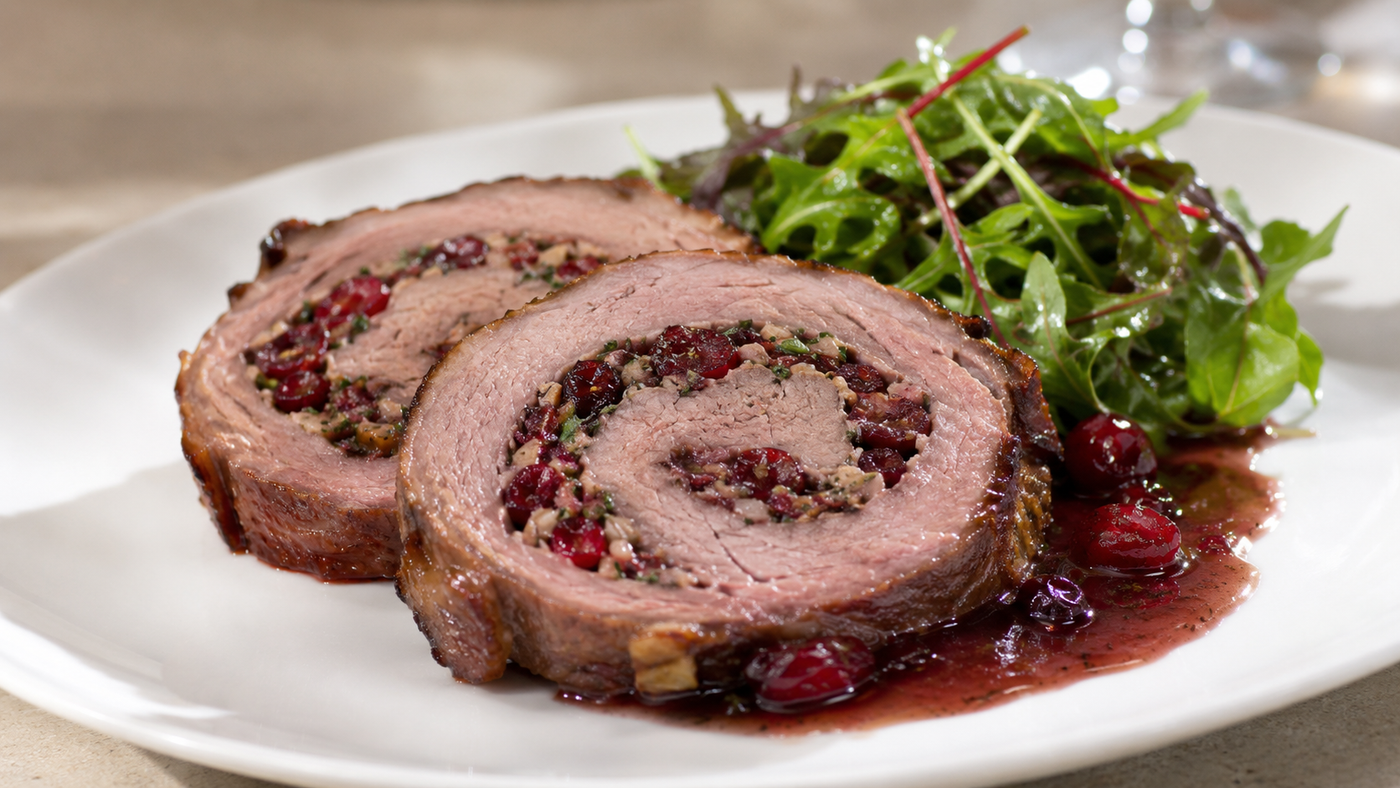
This is the roast that proves a value cut can carry a celebration. A whole grass fed beef oyster blade is butterflied flat, spread with a fragrant cranberry, breadcrumb and herb stuffing, then rolled, tied and seared until deeply burnished. A long, gentle spell at 160°C melts the blade right down, so each slice falls apart against the fork while the tart cranberry cuts through the rich beef. It looks festive and feels generous, yet it leans on one of the most affordable cuts in the butchery. Serve it for a Sunday table or a Christmas in July and let the spiral of stuffing do the talking.
Ingredients
For 4 servings
- 1.2kg grass fed beef oyster bladebutterflied
- 2 tbsp olive oil
- 1 brown onionfinely diced
- 2 garlic clovescrushed
- 50g dried cranberriesroughly chopped
- 80g fresh breadcrumbs
- 2 tbsp chopped fresh parsley
- 1 tbsp chopped fresh thyme
- 1 tbsp chopped fresh rosemary
- 1 egglightly beaten
- Sea salt and freshly ground black pepper
- 250ml beef stock
- 125ml dry red wine
Utensils
8 items to gather · Tap to tick off
- Sharp knife
- Meat mallet
- Kitchen string
- Frying pan
- Ovenproof roasting tray
- Foil
- Meat thermometer
- Mixing bowl
Cooking Steps
Make the stuffing
Heat 1 tbsp of the olive oil in a pan over medium heat and soften the onion and garlic for 5 minutes without colouring. Tip into a bowl and cool slightly, then stir through the cranberries, breadcrumbs, parsley, thyme, rosemary and egg. Season well and bring together into a moist stuffing.
Butterfly and fill
Lay the butterflied oyster blade flat between two sheets of baking paper and gently flatten any thick areas with a meat mallet to an even thickness. Season the surface, then spread the stuffing across it, leaving a 2cm border at the far edge.
Roll and tie
Roll the roast up firmly from one long side, keeping the stuffing snug inside, then tie at 3cm intervals with kitchen string. Season the outside generously with salt and pepper.
Sear
Heat the remaining oil in an ovenproof pan or roasting tray over high heat and sear the rolled roast on all sides until deeply browned, around 8 minutes total. A good crust here builds the flavour of the finished gravy.
Slow roast
Pour the stock and wine around the roast, cover tightly with foil and roast at 160°C for about 3 hours, basting once or twice, until the beef is fork tender. Oyster blade is a tougher blade cut, so cook it low and slow to an internal temperature of around 90°C rather than to medium rare. It is ready when a skewer slides in with no resistance.
Rest and serve
Lift the roast onto a board, cover loosely and rest for 15 minutes while the pan juices reduce into a glossy jus. Remove the string, slice thickly to show the stuffing spiral and spoon the jus over the top.
Nutrition
Per Serving
Recipe serves 4Nutritional values are estimates only and may vary based on specific ingredients, brands, cuts, cooking method, and portion sizes. For medical or dietary purposes, please consult a qualified nutritionist.
Tips and Pairing
People Also Ask
What is an oyster blade roast? +
An oyster blade roast is made from the oyster blade, a value cut from the beef shoulder or blade/chuck area. It is flavourful but contains connective tissue, so it suits low and slow roasting rather than quick high heat. Cooked gently until tender, it makes an affordable, generous roast that slices well, especially when butterflied and stuffed.
How long do you slow roast an oyster blade? +
A 1.2kg stuffed and rolled oyster blade roast needs about 3 hours at 160°C, covered, until fork tender. Time depends on thickness once rolled, so judge by feel rather than the clock. The roast is done when a skewer slides in with no resistance and the internal temperature reaches around 90°C, the point where the connective tissue has broken down.
Why not cook oyster blade to medium rare? +
Oyster blade is a tougher working muscle laced with connective tissue, so cooking it to medium rare leaves it chewy. Unlike tender steak cuts that finish at 55 to 65°C, this blade cut needs to reach around 90°C internal so the collagen melts into gelatine. That long, low cook is exactly what turns an affordable cut into a meltingly tender roast.
Can I prepare the roast ahead of time? +
Yes. You can make the stuffing a day ahead and keep it chilled, and you can butterfly, stuff, roll and tie the roast up to 24 hours before cooking, then store it covered in the fridge. Bring it close to room temperature before searing. This makes it an easy choice for entertaining, since the hands-on work is done in advance.
What can I serve with a stuffed beef roast? +
This roast loves classic roast trimmings. Crisp roast potatoes, honey roasted carrots and parsnips, buttered green beans and a jug of the reduced pan jus all work well. For a festive table add cranberry sauce and a green salad to lighten things. A robust red wine rounds out the meal and complements the rich, slow cooked beef.